Why Small Habits in Marriage Often Come From Childhood — And Why They Matter
The way we grow up leaves fingerprints on everything we do.
Long before we recognize it, childhood rituals become internal rules. They quietly define what feels “normal,” what feels wrong, and what feels strangely uncomfortable. Later, when we build a life with someone else, those invisible rules follow us.
In marriage, the smallest habits — even something as simple as how to cook eggs — can carry deeper meaning.
The Morning That Changed Tone
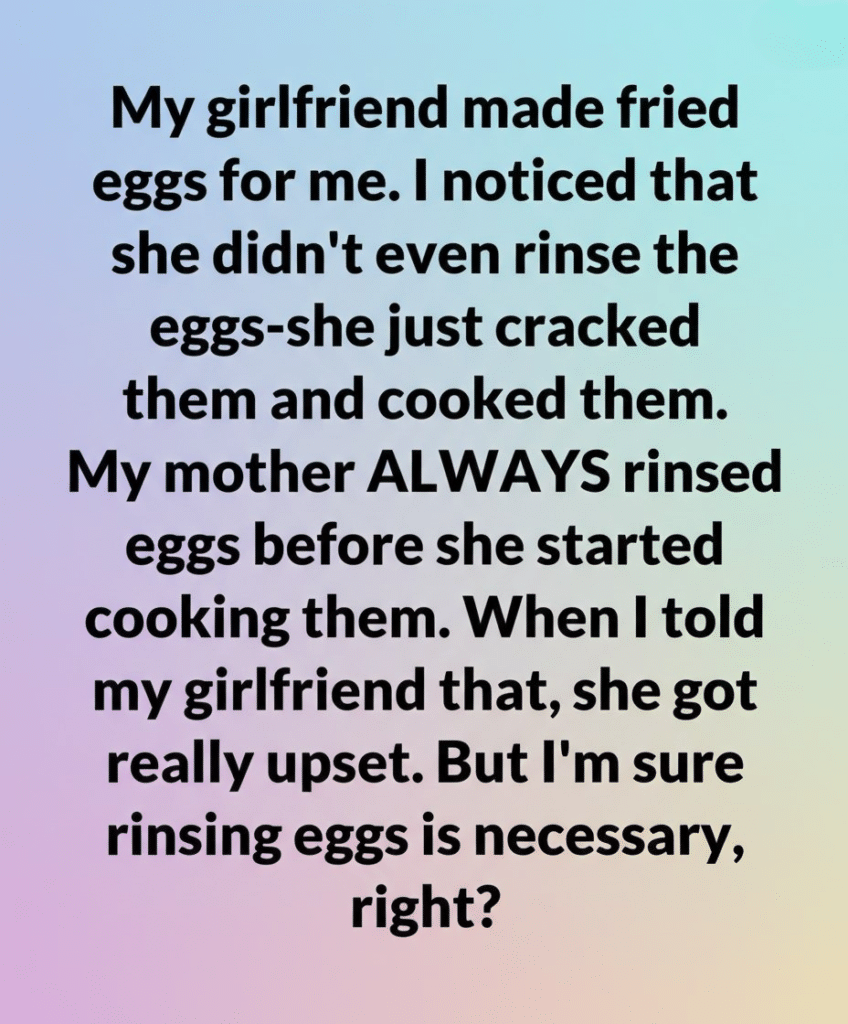
One quiet morning, Mira woke before sunrise to make breakfast for Evan.
The house was still, wrapped in pale blue light. She loved those early hours — predictable, peaceful, hers. She cracked eggs straight into the pan, the sharp sound echoing softly in the quiet kitchen.
Evan wandered in, still half-asleep, and leaned against the counter.
“Shouldn’t you rinse them first?” he asked casually. “My mom always did.”
To him, it was nothing. Just a memory from childhood.
To her, it felt different.
When Habits Feel Like Criticism
Evan wasn’t criticizing. He was remembering.
But inside Mira, something tightened.
It wasn’t about rinsing eggs.
It was about effort.
She had woken early to do something thoughtful. Instead of hearing appreciation, she heard comparison. An invisible measuring stick had entered the room.
Relationship experts say this moment is common in long-term partnerships. Seemingly small comments can trigger deeper emotions because they touch on:
-
Recognition
-
Validation
-
Appreciation
-
Comparison to family traditions
The issue is rarely the surface detail.
It’s what the detail represents.
How Childhood Rituals Shape Adult Reactions
Psychologists note that family habits become emotional anchors.
We inherit routines around:
-
Food preparation
-
Cleanliness
-
Money
-
Time management
-
Communication style
These rituals are rarely questioned in childhood. They simply become “the right way.”
When a partner does something differently, it can feel unsettling — even when there’s no real problem.
In Mira’s case, the suggestion felt like a quiet judgment.
In Evan’s mind, it was just nostalgia.
The Moment of Realization
Evan sensed the shift in her mood.
At first, he didn’t understand why the room felt colder. When he realized, confusion crossed his face. He hadn’t meant to criticize. He had only repeated something familiar.
Later, when emotions softened, he apologized.
He explained that rinsing eggs wasn’t a rule — just a memory stitched into childhood.
Mira admitted her truth too.
She wasn’t upset about the eggs.
She just wanted her effort to be seen.
Why Appreciation Matters More Than Precision
Marriage counselors often emphasize a simple truth:
Gratitude protects connection.
Small acknowledgments prevent misunderstandings from growing.
Instead of “My mom did it this way,” a simple “Thank you for making breakfast” might have changed the entire morning.
It’s not about suppressing habits from the past.
It’s about prioritizing the present relationship.
Building New Rituals Together
That evening, Mira and Evan cooked together.
They laughed about inherited habits and how strange their power can be. They cracked the eggs without rinsing them.
Nothing went wrong.
In that simple act, they did something more important than cooking.
They chose to build a shared ritual instead of defending old ones.
Experts say successful couples often:
-
Create new traditions
-
Discuss inherited expectations openly
-
Avoid automatic comparisons
-
Choose understanding over pride
Shared rituals strengthen intimacy.
Inherited ones, if left unexamined, can quietly divide.
Reflection: It’s Rarely About the Eggs
Moments like this happen in kitchens, living rooms, and car rides every day.
A comment about dishes.
A remark about folding laundry.
A memory about how “we used to do it.”
What matters is not the surface detail.
It’s the emotional meaning underneath.
When partners pause to ask, “What did that really feel like for you?” connection deepens.
Conclusion: Choosing Understanding Over Habit
The way we grow up shapes us. But it doesn’t have to define our future.
Mira and Evan learned something simple but powerful: love is not about preserving childhood rituals unchanged. It’s about creating new ones that reflect mutual respect and care.
Sometimes the smallest misunderstandings reveal the biggest opportunities for growth.
Because in the end, it’s not about how you cook the eggs.
It’s about whether you’re willing to build something new together.