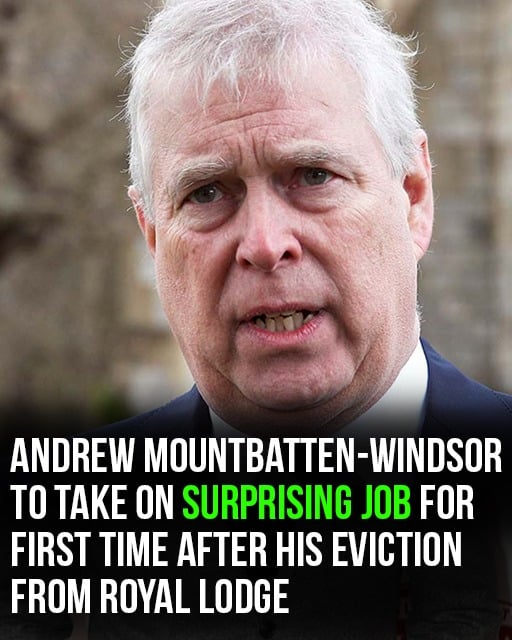
Life has narrowed considerably for Prince Andrew since his departure from Royal Lodge.
Now living quietly on the Sandringham Estate, the former senior royal is adjusting to a far more private existence — one far removed from the visibility and structure that once defined his place within the monarchy.
The shift comes as renewed public attention follows the release of additional U.S. documents connected to the Jeffrey Epstein case. Andrew has continued to deny wrongdoing and stepped away from public duties years ago, yet the resurfacing of the issue has kept his name within global headlines, reminding the public that unresolved harm does not fade simply with time or distance.
A quieter move to Sandringham
On February 2, 2026, Andrew relocated from Royal Lodge to Wood Farm on the Sandringham Estate in Norfolk. The move followed a decision by King Charles III to reassign Royal Lodge — a large royal residence Andrew had occupied for years under a lease arrangement.
Originally expected to leave later in the year, Andrew reportedly moved sooner than planned. Renovations are now underway at Marsh Farm, a smaller five-bedroom property where he is expected to settle permanently once work is complete.
The contrast is striking — from one of the monarchy’s grandest homes to a far more modest residence tucked within the wider estate.
Not as punishment displayed, but as reality reshaped.
Measured voices from the Palace
Senior royals have spoken carefully, keeping attention where it belongs.
Prince Edward emphasized in interviews that public focus should remain on those who were harmed, not on the discomfort of those facing consequences.
A spokesperson for Prince William and Catherine shared that they remain deeply concerned by the continued revelations and hold the affected individuals in their thoughts.
Buckingham Palace also released a statement on behalf of King Charles III, confirming concern over the allegations and expressing readiness to cooperate with authorities if required.
Andrew, no longer a working royal, continues to live outside official public life — though the situation still echoes across the institution he once represented.
A smaller household, a simpler reality
One of the most visible changes has been the reduction in staff.
With the end of the Royal Lodge lease, many employees were let go or offered alternative placements. Some declined relocation, choosing to move on rather than remain connected to Andrew’s household.
Staff at Sandringham were reportedly informed that working directly for him would be voluntary.
The result is a far leaner operation — less ceremony, fewer buffers, and greater personal responsibility.
Not a fall meant to humiliate, but a life recalibrated by circumstance.
Learning to live independently
For the first time in decades, Andrew is expected to manage daily life with minimal institutional support.
Once he settles into Marsh Farm, he will reportedly be responsible for hiring and paying his own private staff — a quiet but profound shift for someone long accustomed to royal infrastructure handling every detail.
It is a simpler life.
Also a lonelier one.
And one shaped by accountability rather than privilege.
The wider meaning for the monarchy
Andrew’s relocation fits within a broader effort by King Charles III to modernize royal finances and redefine who represents the Crown publicly.
More than a housing change, it reflects a monarchy learning — slowly, imperfectly — that status cannot shield wrongdoing from consequence, and that public trust must be guarded with action, not appearances.
Circumstances can change swiftly, even for those once central to power.
And when they do, what remains is not title or residence — but character, responsibility, and the weight of what has been done or left unresolved.