Australian broadcaster Ally Langdon struggled to hold back emotion as she listened to two parents describe the moment their family changed forever.
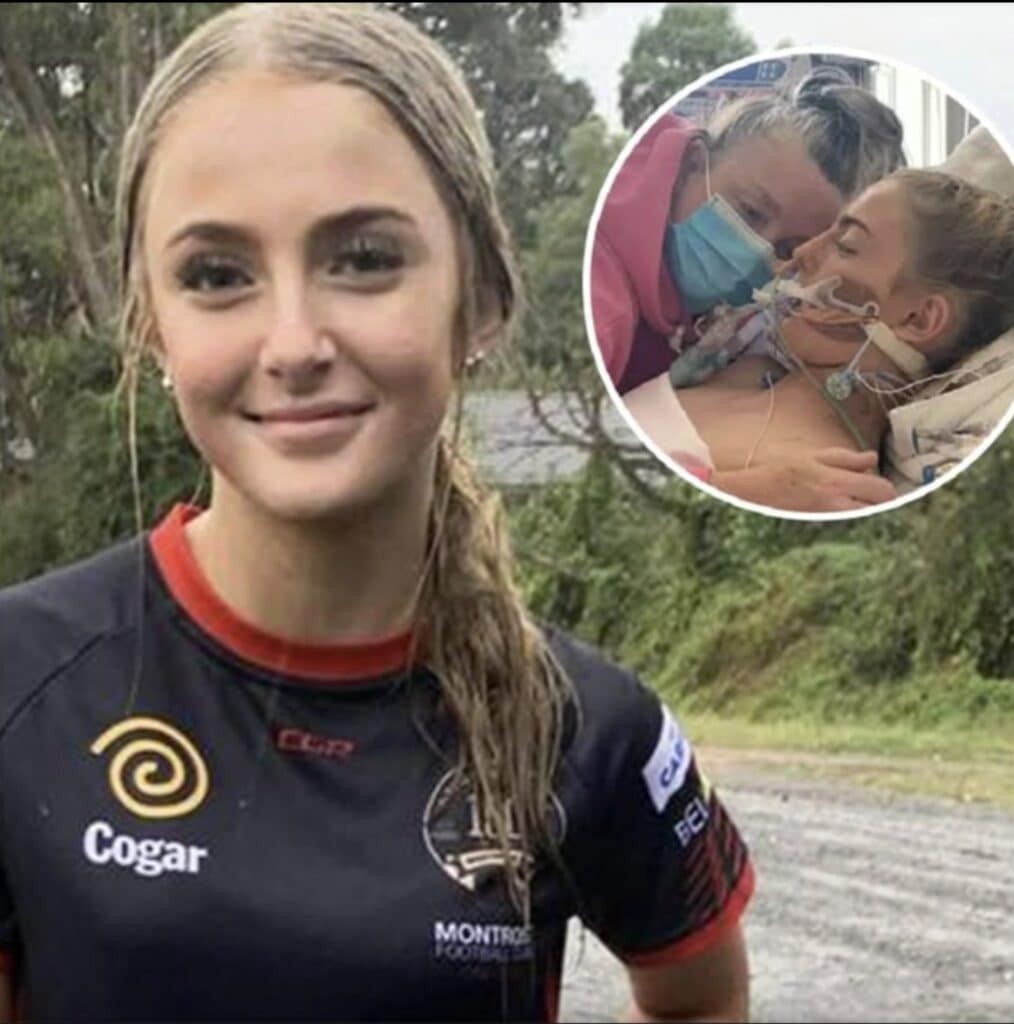
Speaking on A Current Affair, Andrea and Paul Haynes shared how their 13-year-old daughter, Esra Haynes, died only days after what began as an ordinary sleepover with friends.
There was nothing dramatic about the evening. Esra was active, confident, and deeply loved — a BMX rider alongside her brothers, a co-captain of her aerobics team, a child who filled spaces with movement and laughter. To her parents, she was simply a happy teenager doing what teenagers do.
During the sleepover, Esra inhaled aerosol deodorant — part of a dangerous online trend known as chroming. Moments later, her body collapsed into cardiac arrest. The lack of oxygen caused severe brain injury.
Paul described receiving the call no parent is ever prepared for — a request to come quickly, without explanation, into a reality that could not be reversed.
At the hospital, hope lingered. Her heart and lungs were strong. Machines kept her breathing. For days they waited, believing strength might be enough.
Then the doctors spoke gently and clearly. The damage to Esra’s brain was permanent.
The choice that followed was not really a choice at all — only an act of love in the face of what could no longer be changed. Surrounded by family, they held their daughter until her life ended.
Langdon paused, overcome. Not as a presenter, but as a mother.
The loss has rippled through siblings, classmates, teammates, and a wider community that had watched Esra grow. Grief now fills spaces where ordinary routines once lived.
What deepened the parents’ sorrow was learning how easily this could happen — how common household products can become lethal when inhaled, how quickly the heart can fail, how little warning there is. Before that night, they had never heard of chroming.
Now they speak about it with quiet urgency.
Not in anger.
Not in fear.
But in the hope that knowledge might protect another child.
They urge families to talk — calmly, early, without shame — about online trends and risky behaviors before curiosity meets danger.
“If we had known,” Paul said softly, “we would have talked about it at our kitchen table.”
There is no accusation in their voices. Only the ache of parents who loved fully and learned too late.
Esra’s story has become part of a wider conversation about teen safety in a world where harmful challenges travel faster than warnings. It is a reminder that many dangers today arrive disguised as momentary thrills.
What remains strongest is not the tragedy itself, but the love that surrounded her — and the resolve of two parents turning grief into protection for others.
Sometimes the most powerful legacy is not what a life was, but what it quietly teaches.
Esra’s was brief, bright, and deeply meaningful — and through the care her parents now offer to the world, it continues to protect, to guide, and to matter.