
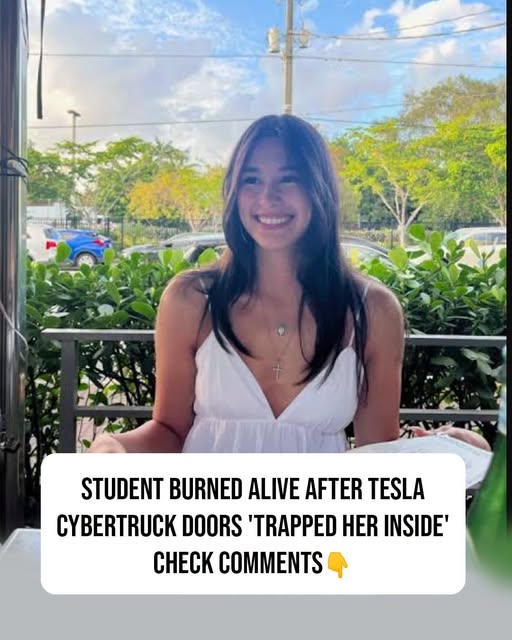
…harrowing struggle for survival. While a Good Samaritan managed to rescue one passenger by frantically smashing a window with a tree branch, the flames moved too quickly to reach the others. Krysta, who had survived the initial impact with only minor injuries, found herself trapped by the very machine designed to protect her. According to legal filings, the Cybertruck’s electronic doors became completely inoperable, sealing her fate as the heat and smoke overtook the cabin.
The aftermath of the crash revealed a devastating reality. The driver, Soren Dixon, was operating the vehicle under the influence of alcohol and drugs. However, for the families of the victims, the tragedy does not end with the driver’s impairment. They argue that the vehicle’s design is a ticking time bomb, alleging that Tesla knowingly released a product with fatal flaws in its emergency exit systems. The lawsuits filed by the Tsukahara and Nelson families claim that the manual override mechanisms are obscure, non-intuitive, and nearly impossible to locate during the chaos of a post-crash fire.
“It’s just a horror story,” said Roger Dreyer, the attorney representing the Tsukahara family. “Tesla knows that it’s happened and that it’s going to happen, and they are doing nothing but selling the car with a system that entraps people and doesn’t provide a way of extraction.” The legal battle now centers on the concept of “conscious disregard,” with the families accusing the trillion-dollar company of prioritizing high-tech aesthetics over the fundamental safety of its passengers. They contend that while the crash itself was a catastrophic error, Krysta’s death was entirely preventable had the vehicle been equipped with accessible, reliable emergency exits.
For Krysta’s father, Carl, the grief is compounded by a profound sense of betrayal. “We’ve had to endure not only the loss of our daughter, but the silence surrounding how this happened and why she couldn’t get out,” he stated. The families are now seeking punitive damages, not just to hold the company accountable for the specific design failures of the Cybertruck, but to force a reckoning regarding the safety standards of modern, software-dependent vehicles. As the legal proceedings unfold, the case has ignited a national conversation about whether the push for innovation is leaving consumer safety in the rearview mirror.
The Cybertruck, launched with massive fanfare, has faced mounting scrutiny, but for the families of those lost on that November night, the controversy is no longer about sales or recalls—it is about the dignity of their children and the demand that no other family should ever have to face such a preventable, agonizing end. The road to justice will be long, but they remain steadfast in their mission to ensure that the machine that became a trap is finally held to account.