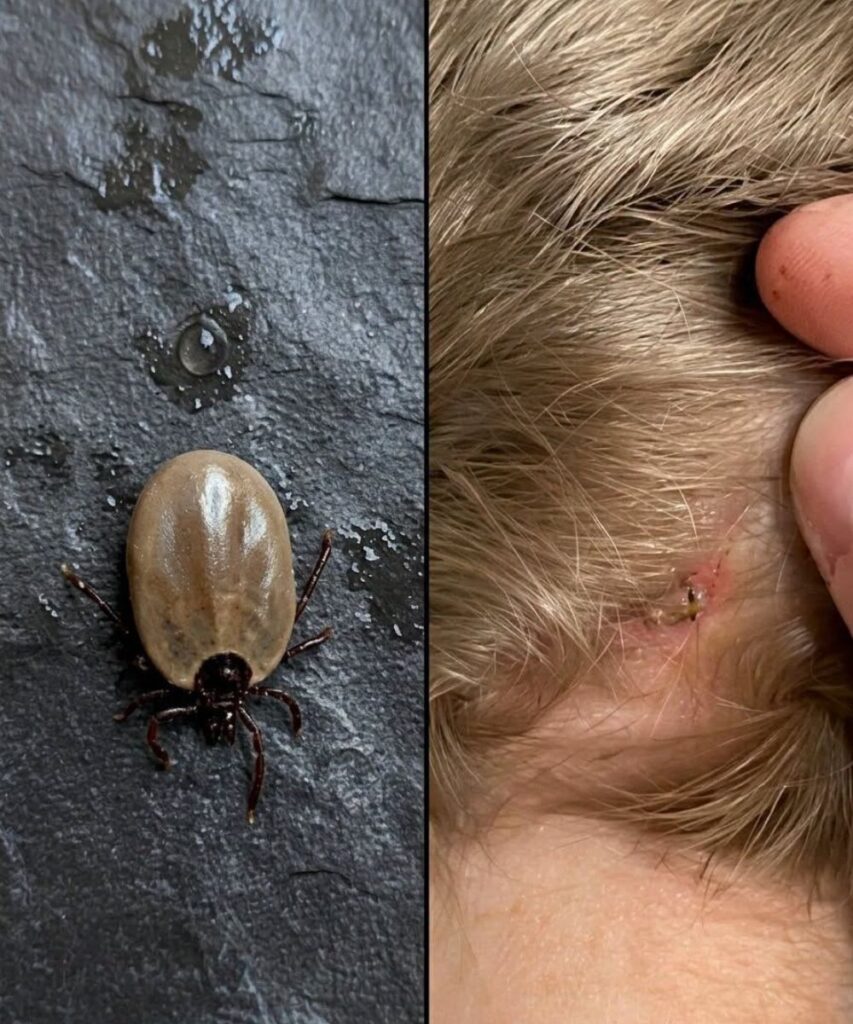
Once a tick bites, it locks onto the skin and begins feeding. At first, the bite may look like a small red bump. Mild itching, swelling, or irritation around the area is also common. However, the real concern is not always the bite itself but the infections certain ticks can transmit while feeding.
The longer a tick stays attached, the greater the risk of disease transmission in some cases. That is why quick removal is so important. Removing the tick carefully and cleaning the area properly can help reduce complications.
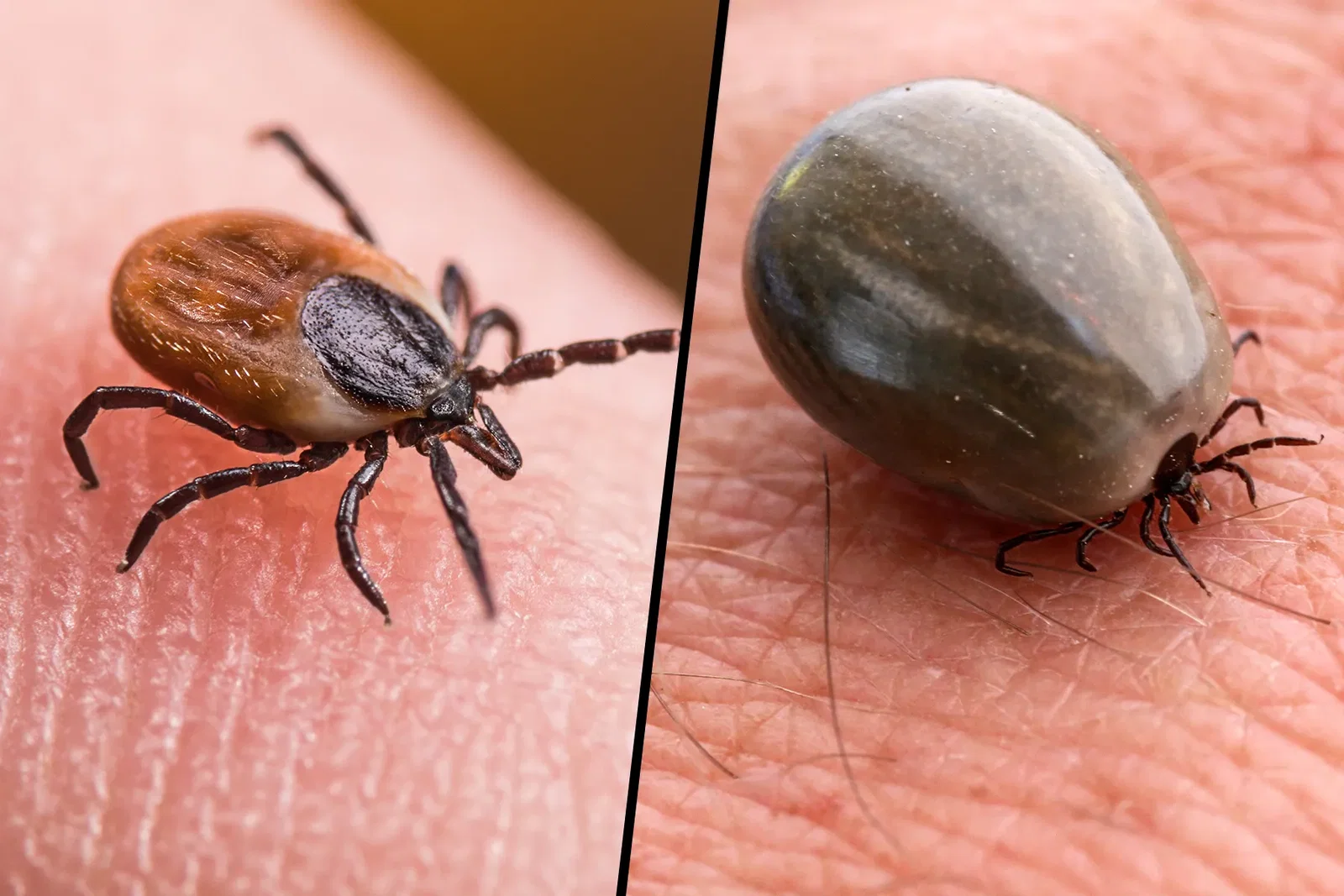
After a tick bite, some redness or irritation may be harmless, but it is important to monitor symptoms closely over the following days and weeks. Warning signs can include fever, headaches, fatigue, swollen lymph nodes, muscle aches, joint pain, or flu-like symptoms. Some people may also develop chills, weakness, or a rash that spreads gradually over time.
A growing rash is particularly important to watch for because it can sometimes indicate a tick-borne illness.
Ticks are known to spread several diseases, with Lyme disease being one of the most recognized. Symptoms may include fever, headaches, tiredness, joint pain, muscle aches, and a spreading skin rash. If left untreated, Lyme disease can eventually affect the joints, nervous system, or even the heart.
Other illnesses associated with ticks include Rocky Mountain spotted fever, ehrlichiosis, anaplasmosis, babesiosis, and tick paralysis. These conditions can become serious, especially for older adults, young children, and individuals with weakened immune systems.
Certain symptoms should never be ignored after a tick bite. Medical attention is recommended if the bite area becomes increasingly swollen, painful, warm, or begins producing pus. Fever, unusual exhaustion, severe headaches, muscle pain, or joint stiffness should also be taken seriously.
Emergency care may be necessary if someone develops breathing difficulties, chest discomfort, paralysis, severe weakness, heart palpitations, or neurological symptoms following a tick bite.
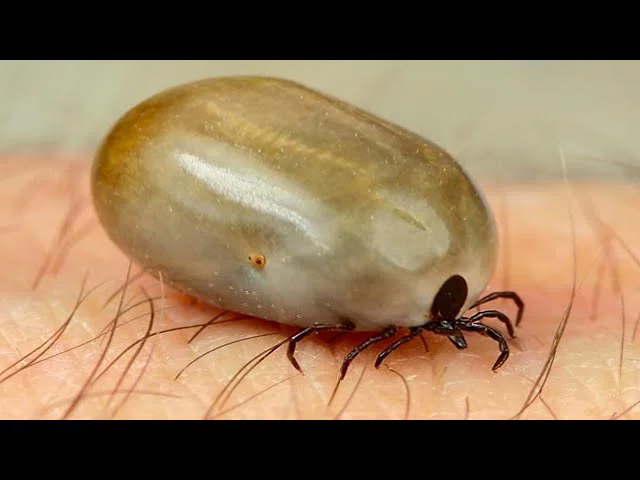
Proper removal of a tick is important to avoid irritation or complications. Experts recommend using fine-tipped tweezers to grasp the tick as close to the skin as possible. Pull upward slowly and steadily without twisting or crushing it. Burning the tick or covering it with oil is not advised because those methods may worsen the situation or make removal more difficult.
Once removed, the area should be cleaned thoroughly using soap and water or rubbing alcohol. Washing your hands afterward is equally important. Some doctors also suggest saving the tick in a sealed container or bag in case identification becomes necessary later.
Preventing tick bites is often easier than dealing with the consequences afterward. Avoiding tall grass, wooded areas, and thick bushes whenever possible can reduce exposure. Wearing long sleeves, long pants, and closed shoes while outdoors provides additional protection.
After spending time outside, it is important to inspect the body carefully, paying close attention to the scalp, behind the ears, under the arms, around the waist, behind the knees, and near the ankles. Pets should also be checked regularly because ticks can attach to their fur and later move indoors.
Ticks may be small, but they should never be underestimated. While not every tick carries disease, every bite deserves attention. Early removal, proper cleaning, and watching for warning signs are the best ways to lower the risk of serious health problems. Something that first appears to be a harmless bite can quickly become more serious if symptoms are ignored.
{"post":102391,"page":2,"next":[{"id":102381,"title":"Forced medications, lost childhood \u2014 but today everyone knows her name","url":"https:\/\/new24.info\/102381"},{"id":102378,"title":"A difficult childhood and years of struggle \u2014 today, the whole world knows her name.","url":"https:\/\/new24.info\/102378"},{"id":102375,"title":"Search Results for \u201cWhy the 1972 Oscars remains one of the the best ever\u201d \u2013 Tbdig","url":"https:\/\/new24.info\/102375"},{"id":102371,"title":"My family forced me to sleep in a freezing garage while I was pregnant, just months after my husband Marine\u2019s funeral \u2014 but less than 12 hours later, black military SUVs pulled into the driveway, armed soldiers saluted me by name, and the same people who had humili:ated me realized they had just destr0yed their own lives.","url":"https:\/\/new24.info\/102371"},{"id":102367,"title":"My 4-Year-Old Pointed at My Husband\u0027s Boss\u0027s Wife and Said, \u0027That\u0027s the Lady Who Bites\u0027","url":"https:\/\/new24.info\/102367"},{"id":102363,"title":"The Middle East Teeters On The Brink Of Absolute Chaos After Iran Vows Devastating Revenge For Operation Epic Fury Strikes On Nuclear Infrastructure","url":"https:\/\/new24.info\/102363"},{"id":102356,"title":"My New Babysitter Was Secretly Wearing A Wig To Hide Her Identity And The Truth I Discovered On My Hidden Camera Changed My Family Forever","url":"https:\/\/new24.info\/102356"},{"id":102355,"title":"I Married My Ex\u0027s Father for the Sake of My Kids \u2013 After the Wedding, He Said, \u0027Now That There\u0027s No Going Back, I Can Finally Tell You Why I Married You\u0027","url":"https:\/\/new24.info\/102355"},{"id":102351,"title":"Neighbors Rush To Save Two Little Girls After Father Puts Them In A Locked Car And Lights A Fire Just Feet Away In A Horrifying Scene That Has Shaken The Entire Nation","url":"https:\/\/new24.info\/102351"},{"id":102347,"title":"THE HARVARD PRODIGY WHO BECAME THE WORLDS MOST WANTED TERRORIST AND THE SHOCKING TRUTH BEHIND THE WALKING BRAIN WHO TERRORIZED A NATION FROM A TINY CABIN IN THE WILDERNESS","url":"https:\/\/new24.info\/102347"},{"id":102344,"title":"These Are Consequences of Sleeping With\u2026","url":"https:\/\/new24.info\/102344"},{"id":102341,"title":"I Sewed a Dress From My Dad\u0027s Shirts for Prom in His Honor \u2013 My Classmates Laughed Until the Principal Took the Mic and the Room Fell Silent","url":"https:\/\/new24.info\/102341"},{"id":102332,"title":"Blue Hawaii bloopers: The funny Elvis moments you didn\u2019t catch","url":"https:\/\/new24.info\/102332"},{"id":102325,"title":"\u2018PATHETIC\u2019 \u2014 Obama Does the Unthinkable as Trump Begins Key China Meeting","url":"https:\/\/new24.info\/102325"},{"id":102322,"title":"Unusual Large Bird Sighted In South Texas: Scientists And Birdwatchers Investigate An Intriguing Observation","url":"https:\/\/new24.info\/102322"},{"id":102307,"title":"Donald Trump Shocks The World With A Massive Two Word Claim That Could Signal The Final Chapter Of The Conflict In Iran","url":"https:\/\/new24.info\/102307"},{"id":102303,"title":"Why you shouldn\u2019t leave a charger in an outlet when not in use","url":"https:\/\/new24.info\/102303"},{"id":102299,"title":"Sally Field\u2019s worst on-screen kiss might be a surprise","url":"https:\/\/new24.info\/102299"},{"id":102295,"title":"I signed the divorce papers \u2013 and my mother-in-law immediately threw a banquet to introduce my replacement. But as soon as the bill came, she called me in a panic: \u201cWhy was my card\u2026 declined?\u2026","url":"https:\/\/new24.info\/102295"},{"id":102291,"title":"I Adopted a 3-Year-Old Girl After a Fatal Crash \u2013 13 Years Later, My Girlfriend Showed Me What My Daughter Was \u0027Hiding\u0027","url":"https:\/\/new24.info\/102291"}]}