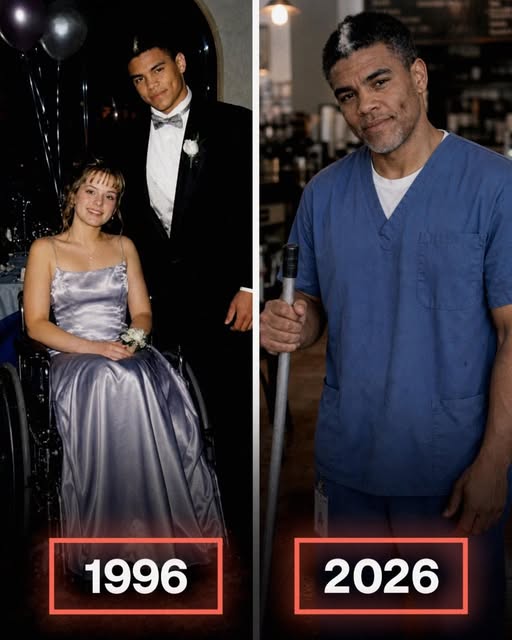
That moment stayed with her for decades.
Inspired by her experiences navigating inaccessible spaces, Emily eventually built a successful career designing inclusive architecture and accessible public environments. Her firm became known for creating spaces where people with disabilities felt genuinely welcomed, not merely accommodated.
Years later, during a visit to a construction site café, she accidentally recognized Marcus working there. Time had clearly been difficult for him. After high school, his mother became seriously ill, his father left, and Marcus abandoned plans for college to support his family. Years of physically demanding jobs and untreated injuries left him with chronic pain and financial struggles.
Instead of offering charity, Emily invited him to join her company as a paid accessibility consultant for a major adaptive recreation center project. Marcus immediately proved invaluable, pointing out how many “accessible” spaces technically met requirements while still making disabled people feel secondary or excluded.
His practical insights transformed the project.
Emily also helped him access proper medical treatment, improving his mobility and reducing years of untreated pain. Over time, Marcus became a mentor for young people with disabilities and rediscovered purpose beyond survival and exhaustion.
Eventually, the emotional connection they had never forgotten resurfaced too. Marcus admitted he had tried to find Emily years earlier after graduation but lost contact when her family moved away.
At the grand opening of the recreation center they helped create together, Marcus once again held out his hand and asked Emily to dance—bringing their story full circle after three decades of separate struggles, resilience, and quiet hope.
The story resonates because it centers less on dramatic romance and more on inclusion, dignity, and how a single compassionate moment can leave a lifelong impact.