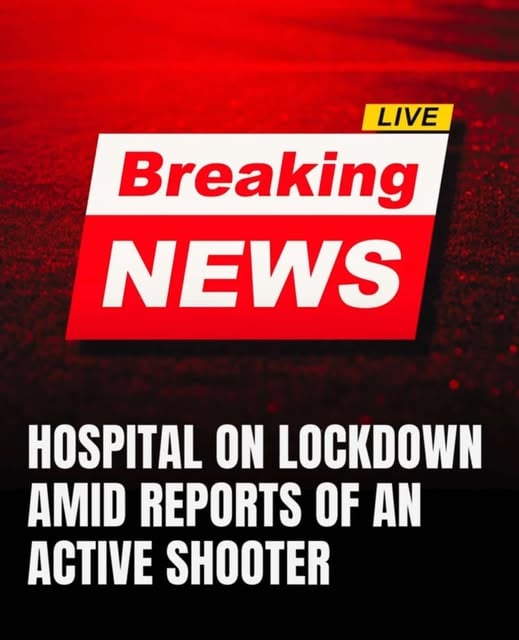
…limbo of uncertainty. For the patients arriving for life-saving treatments and the staff just beginning their shifts, the world suddenly narrowed to the sound of their own frantic heartbeats. As reports of an active shooter flooded the emergency dispatch, the hospital—a sanctuary of care—transformed into a high-stakes tactical zone. The silence of the morning was replaced by the frantic scramble of people diving behind parked cars and the heavy, rhythmic thud of boots as security teams rushed to secure the perimeter.
Inside the facility, the atmosphere was suffocating. Nurses, doctors, and patients barricaded themselves in supply closets and patient rooms, their phones lighting up with desperate messages to loved ones. Every shadow in the hallway felt like a threat, and every muffled sound outside the door triggered a fresh wave of panic. For those inside, the distinction between a place of recovery and a place of peril had vanished in an instant.
Law enforcement arrived with overwhelming force, deploying drones and K-9 units to navigate the sprawling campus. The tactical precision of the response was a testament to the gravity of the situation; they were not just searching for a suspect, they were trying to reclaim a space where human life is the highest priority. The lockdown was total. No one was allowed in, and no one was allowed out, as the police methodically cleared every floor, every stairwell, and every corner of the vast medical complex.
As the investigation unfolded, the terrifying reality of the incident began to emerge. This was not a random act of chaos, but a targeted confrontation between two employees. A young male staff member had been struck, and the suspect had fled the scene in a desperate attempt to escape justice. While the suspect was apprehended shortly after in the vicinity, the damage to the collective sense of security was profound.
The aftermath of such an event is rarely measured in minutes or hours, but in the lingering shadows it casts over those who were there. For the nurses who had to comfort terrified patients while suppressing their own fear, and for the families who spent those agonizing hours waiting for a text message that promised safety, the trauma is a heavy burden. The hospital has since moved to implement rigorous counseling and a comprehensive review of its security protocols, acknowledging that the fragility of peace is a reality they must now confront head-on.
Ultimately, the incident at Corewell Health serves as a harrowing reminder that even in our most protected spaces, resilience is a necessity. It is a story of how quickly the mundane can turn into the monumental, and how, in the face of sudden, senseless violence, the human spirit must lean on the strength of community and the unwavering commitment to healing, even when the walls themselves have been shaken.