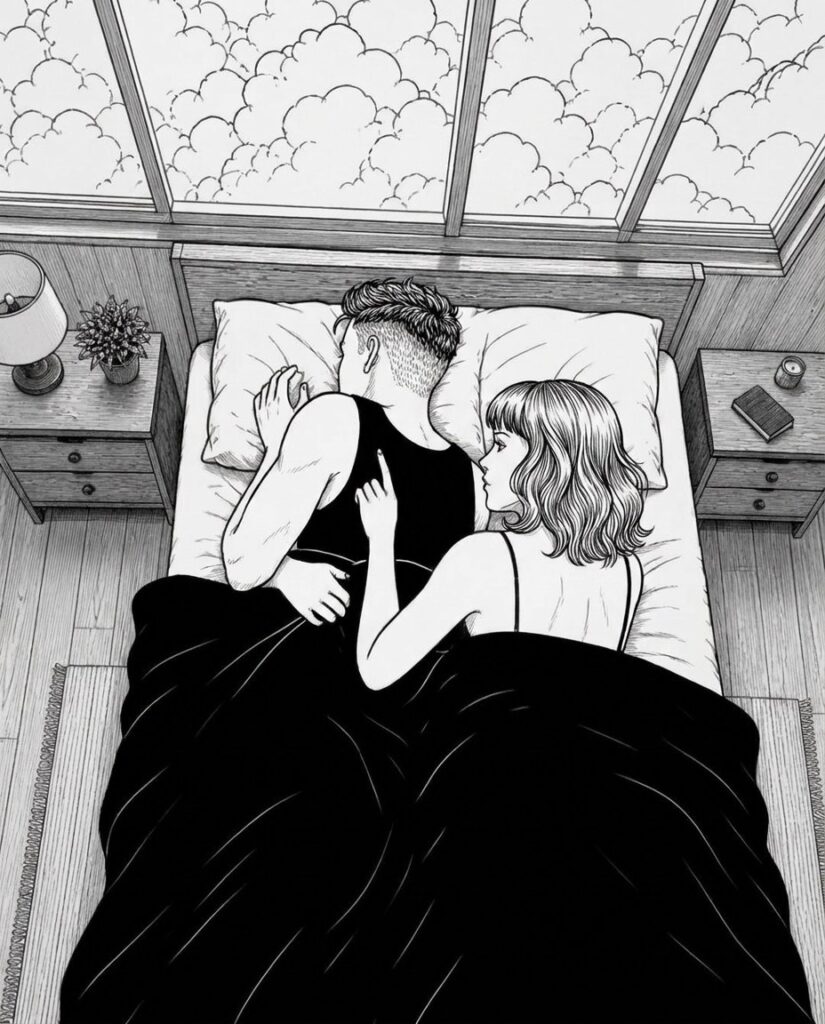
When people try to understand their relationships, they usually focus on what happens during the day—conversations, gestures, shared experiences. But there’s another, quieter layer that often goes unnoticed: what happens when both partners are asleep. In those moments, without intention or control, the body settles into positions that feel natural. And sometimes, those positions can reflect something deeper about comfort, trust, and emotional connection.
Sleep is one of the few states where behavior isn’t filtered. There are no words to shape, no reactions to manage. The body simply responds to what feels safe. For couples, that can translate into closeness, distance, or subtle patterns of movement. Still, it’s important to keep perspective—sleeping positions are influenced by many practical factors like temperature, mattress size, or personal habits. They can hint at dynamics, but they don’t define them.
One of the most recognizable positions is spooning, where one partner wraps around the other. It’s often associated with warmth and protection. For many, it creates a sense of emotional safety, where physical closeness mirrors a feeling of being supported. That said, not every couple maintains this position all night—it’s just where they begin.
Then there’s the back-to-back position without touching. At first glance, it might seem like a sign of distance, but that interpretation is often misleading. In long-term relationships, this position can reflect ease rather than detachment. It suggests that both people feel secure enough to relax into their own space while still sharing the same environment. There’s a quiet kind of trust in that independence.
Sleeping face-to-face, especially with some level of contact, is usually linked to emotional openness. It often appears in relationships where communication feels active and connection is strong. Sometimes it shows up during periods when couples are especially close or trying to reconnect after time apart. It’s less about the position itself and more about the intention behind it.
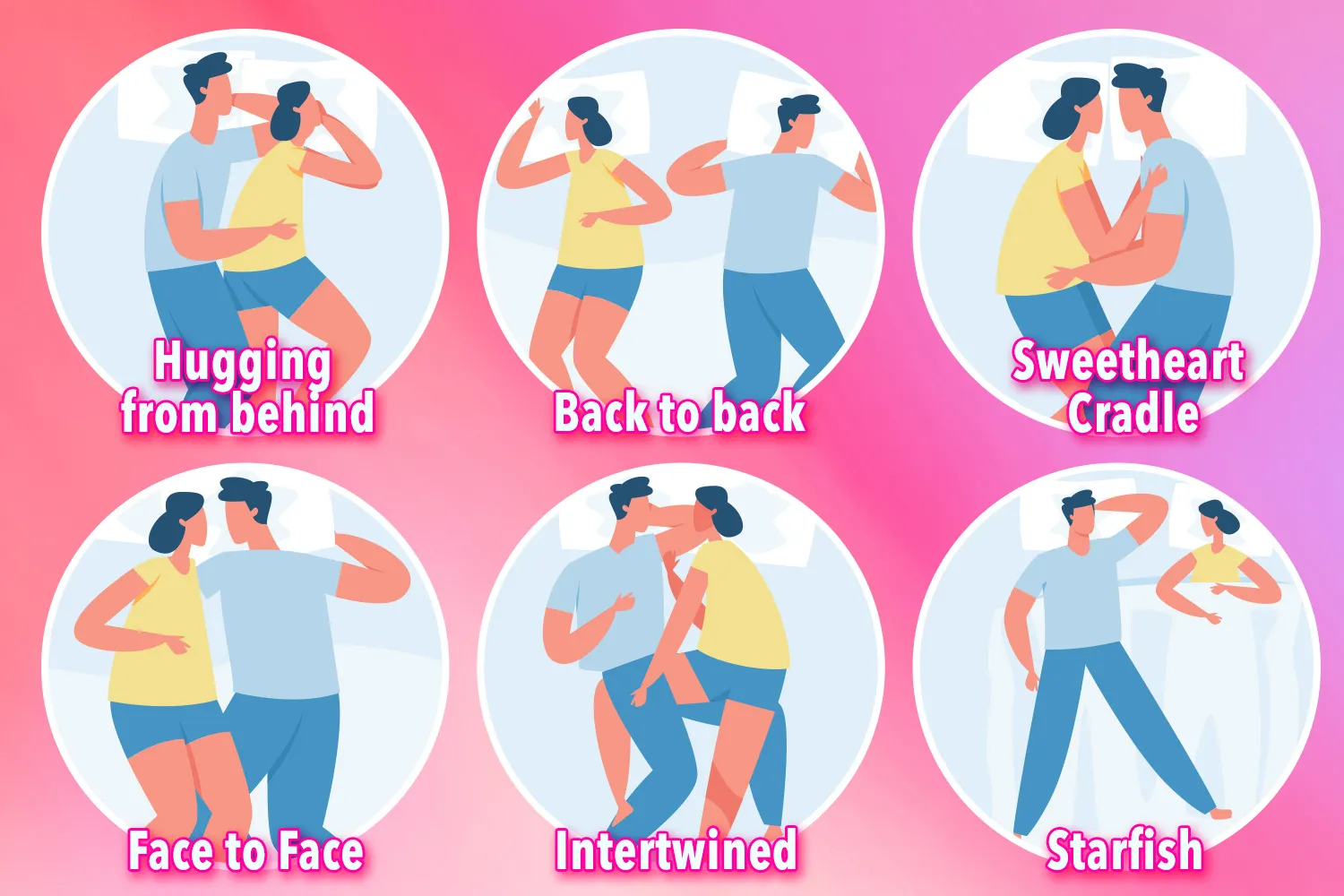
Another pattern people notice is when one partner seems to move toward the other while the second shifts away—often described as a “chase” dynamic. It can suggest a difference in needs, where one person is seeking closeness and the other is looking for space. But even here, context matters. It might reflect something emotional, or it could be as simple as someone adjusting for comfort during the night.
What often causes unnecessary concern is physical distance. Many couples worry when they stop sleeping close together, assuming it signals emotional disconnection. In reality, that’s rarely the full story. Over time, people adapt their sleeping habits to get better rest. Some need more room to move, others avoid heat or pressure. These adjustments are practical, not emotional. A couple can sleep on opposite sides of the bed and still share a strong, supportive relationship.
The more meaningful indicators usually appear outside of sleep. How partners communicate, how they handle conflict, whether they feel heard and valued—these factors carry far more weight than any position in bed. Sleep can reflect comfort, but it doesn’t measure commitment or love.
If something feels off, the most effective step isn’t changing how you sleep—it’s opening a conversation. Checking in with each other, sharing thoughts before bed, or simply creating small moments of connection can strengthen a relationship far more than physical positioning ever could.
In the end, sleeping positions offer small, quiet clues—not conclusions. Every couple develops their own rhythm, shaped by both emotional connection and everyday comfort. What matters most isn’t how close you are while you sleep, but how connected you feel when you’re awake.
{"post":101217,"page":1,"next":[{"id":101192,"title":"Major US airport on red alert as passenger is diagnosed with world\u2019s most infectious disease","url":"https:\/\/new24.info\/101192"},{"id":101188,"title":"My ten-year-old daughter always rushed to the bathroom as soon as she came home from school. As I asked, \u201cWhy do you always take a bath right away?\u201d she smiled and said, \u201cI just like to be clean.\u201d Yet, one day while cleaning the drain, I found something.","url":"https:\/\/new24.info\/101188"},{"id":101185,"title":"After three years locked away, I returned to learn my father had d!ed and my stepmother ruled his house. She didn\u2019t know he\u2019d hidden a letter and key, leading to a unit and video proving frame-up.","url":"https:\/\/new24.info\/101185"},{"id":101182,"title":"At my parents\u2019 funeral, my husband coldly placed divorce papers in my hand and said, \u201cSign them. You have no one left to protect you now.\u201d Then he took my daughter and disappeared with a wealthy woman.","url":"https:\/\/new24.info\/101182"},{"id":101177,"title":"Here\u2019s What You Need To Know About Chronic Constipation: A Silent Killer To Your Digestive Health","url":"https:\/\/new24.info\/101177"},{"id":101174,"title":"New Princess Charlotte footage sparks family fears","url":"https:\/\/new24.info\/101174"},{"id":101171,"title":"Donald Trump issues new bombshell claim about King Charles days after state visit","url":"https:\/\/new24.info\/101171"},{"id":101167,"title":"Woman Grabs Wine Bottles Mid Shootout While Trump Is Rushed Out And The Internet Is Losing Its Mind","url":"https:\/\/new24.info\/101167"},{"id":101163,"title":"After an Intensive Search, Missing Couple Found \u2014 What Officials Shared","url":"https:\/\/new24.info\/101163"},{"id":101159,"title":"The Night the Music Stopped for the Trumps and the Secret Service Hero Who Took a Bullet","url":"https:\/\/new24.info\/101159"},{"id":101156,"title":"Mother In Law Secret Revealed The Heartbreaking Truth Behind The Silver Tins","url":"https:\/\/new24.info\/101156"},{"id":101152,"title":"10 Early Signs of Dementia You Should Know About","url":"https:\/\/new24.info\/101152"},{"id":101149,"title":"7 smells snakes hate and how to use them to keep these slithery visitors away from your home","url":"https:\/\/new24.info\/101149"},{"id":101144,"title":"What risks do you run when you sleep on your right side?","url":"https:\/\/new24.info\/101144"}]}