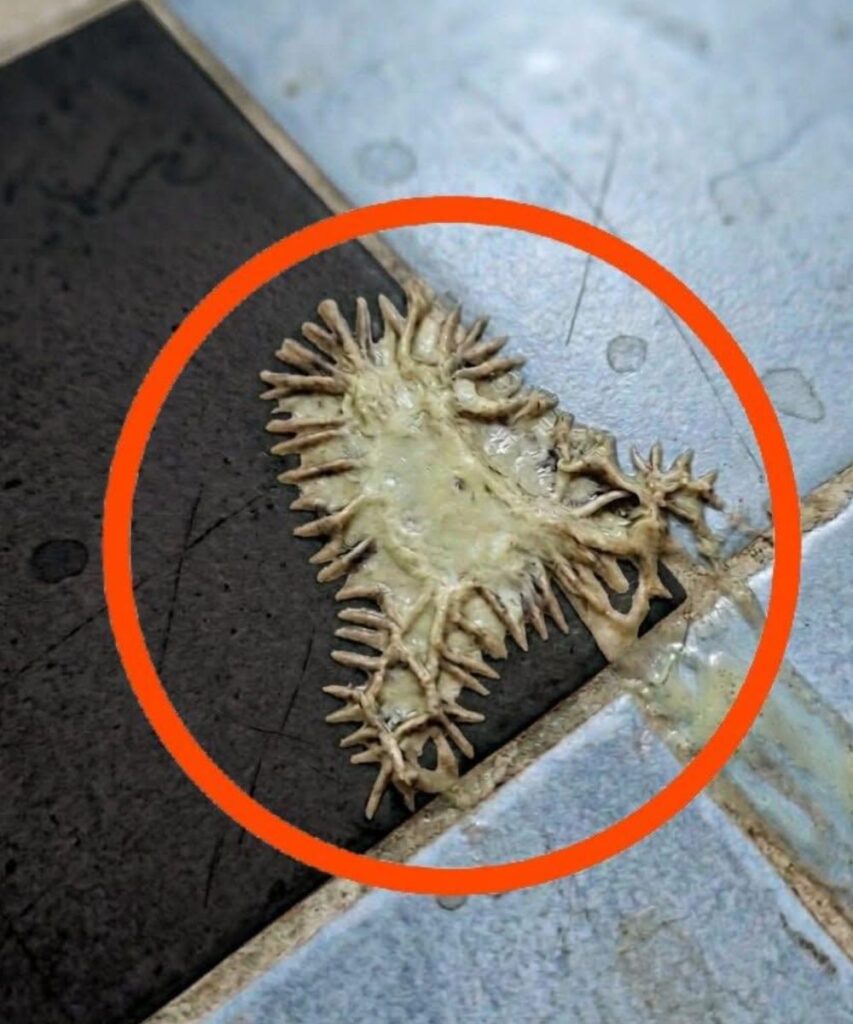
What you experienced makes a lot of sense, even if it felt disproportionate in the moment.
The reaction wasn’t really about the object itself—it was about a sudden break in expectation. Spaces like bathrooms are mentally categorized as controlled and predictable. Your brain knows what belongs there: tiles, water, soap, familiar textures. When something appears that doesn’t match that pattern—especially something organic, irregular, or hard to identify—it immediately flags it as “out of place.”
And when something is out of place, the brain doesn’t start with calm curiosity.
It starts with caution.
That response is deeply rooted. Humans are wired to notice anomalies quickly because, historically, the cost of ignoring a potential threat was much higher than the cost of overreacting to something harmless. So your brain leans toward the safer assumption first—even if that means briefly imagining worst-case scenarios.
The shape and texture likely played a role too. Anything that looks biological but undefined—soft, damp, shapeless—can trigger instincts tied to contamination or decay. It’s not a conscious thought process; it’s more like a fast internal alert system saying, “This doesn’t belong here. Pay attention.”
Then uncertainty amplifies everything.
When you don’t immediately recognize something, your mind starts filling in possibilities. It doesn’t stay neutral—it generates explanations, often starting with the more alarming ones because they demand attention. Not because they’re probable, but because they’re harder to ignore.
By the time you learned it was harmless, your body had already reacted.
That’s why the relief doesn’t feel instant. Logically, the situation is resolved—but your nervous system takes a bit longer to settle. It has to come down from a state it briefly escalated into.
What lingers afterward is also part of the same process.
You’re not scared of the space now—you’re just more aware of it. Your brain has updated its expectations slightly. It’s added a quiet note: “Unexpected things can happen here.” That’s not anxiety; it’s adaptation.
In a way, the whole experience shows that your response system is working exactly as it should. You noticed something unusual, you investigated it, and you adjusted your understanding based on new information.
That’s not overreaction.
That’s awareness doing its job, just a little faster—and louder—than comfort might prefer.