
There’s something especially unsettling about this story—not because of the crime itself, but because of how ordinary everything looks until it suddenly isn’t.
At its heart, this isn’t just a thriller about deception. It’s about proximity to danger you never recognize—the kind that shares your bed, your routines, your life. That’s what makes it linger.
The opening does something very effective: it builds trust before it breaks it. A quiet suburban home, a sleeping husband, a baby monitor glowing in the dark. Nothing feels threatening. Then the call comes—not dramatic, not emotional, just urgent and precise. The specificity of Mara’s instructions is what shifts the tone immediately. It signals that this isn’t panic—it’s knowledge.
And that detail matters.
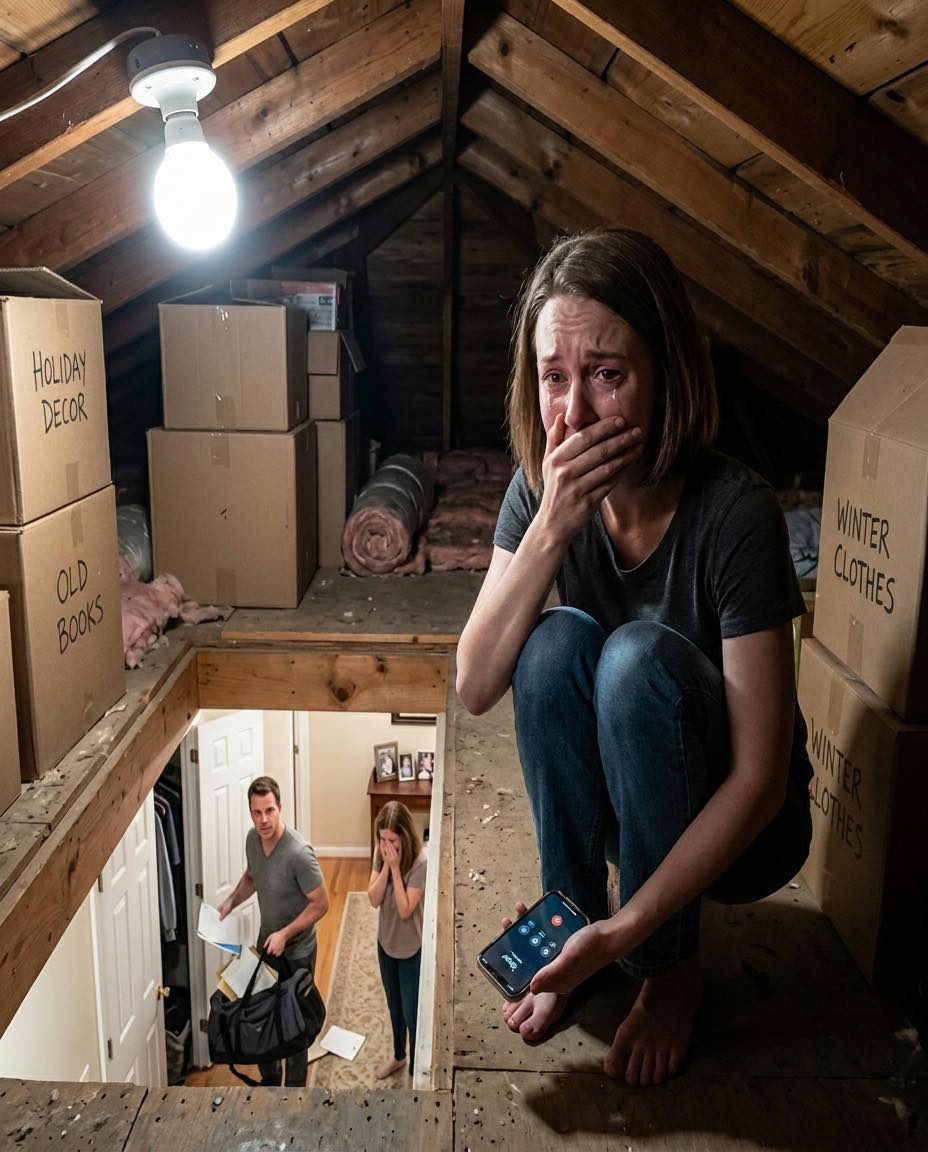
When Elise goes to the attic, the story moves from emotional tension to controlled suspense. The attic becomes more than a hiding place—it’s a vantage point. Through the floorboards, she literally re-sees her life. The man she thought she knew is suddenly framed differently, not as a husband, but as someone executing a plan.
The passports are the turning point. Not because they exist—but because they carry her face with the wrong name. That’s the moment the story stops being about suspicion and becomes about identity theft on a deeply personal level. It’s not just that Caleb is lying—he has already replaced her.
What’s particularly effective is Caleb’s calm. He isn’t frantic, he isn’t violent—he’s methodical. That composure makes him more believable, and in a way, more disturbing. He doesn’t feel like a villain performing evil; he feels like someone following a process he’s done before.
The introduction of the child raises the stakes without turning the story melodramatic. Noah isn’t just a victim—he’s leverage, logistics, part of the plan. When the line comes—“the kid complicates things”—it lands because it strips away any illusion of emotional attachment. It reveals the cold hierarchy of priorities.
Mara’s role is also worth noting. She’s not overly present, but she’s essential. She represents intervention at the last possible moment. Without her, Elise never questions anything. That’s an important idea running through the story: sometimes survival depends on someone outside your reality seeing what you can’t.
The reveal of Caleb’s real identity—Owen Price—works not because it’s shocking, but because it’s plausible. His entire life with Elise wasn’t spontaneous deception; it was constructed. The use of her laptop, her accounts, her identity—it’s a quiet exploitation rather than a dramatic one. That makes it feel grounded.
What the story does well in its final part is avoid overexplaining emotions. Elise doesn’t collapse into long reflections. Instead, the aftermath is shown through behavior: checking locks, reacting to phone calls, struggling to explain things to her son. That restraint makes the trauma feel more real.
The decision to move to a house without an attic is a small but powerful detail. It’s not just about safety—it’s about removing the physical reminder of the moment everything changed. It’s a quiet form of control in a life that had been manipulated.
And the final idea is what stays with you:
She didn’t miss the signs because she was careless.
She missed them because there were no obvious signs to see.
That’s what gives the story its edge.
Not that danger was present—but that it was convincing.