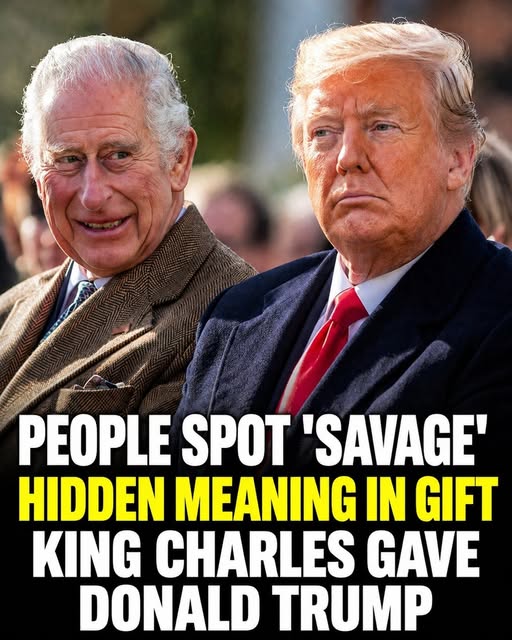
…cunning. The submarine, known as the HMS Trump, provided the perfect cover for a gesture that bridged history and contemporary headlines. On the surface, the gift was a nod to the enduring alliance between the United Kingdom and the United States, a tangible piece of shared naval heritage. Yet, the choice of a bell—an object designed specifically to signal or summon—did not escape the notice of a public hungry for subtext.
King Charles, known for his dry, understated humor, reportedly leaned in with a quip that cut through the formality of the event. He suggested that if the President ever needed to reach Britain, he could simply “give us a ring.” The room erupted in polite, diplomatic laughter, but the internet was far less restrained. Within hours, the moment had migrated from the gilded halls of the White House to the digital arena, where the interpretation of the King’s intent became a viral battleground.
For some, the gesture was a masterclass in British wit—a subtle, playful jab that managed to be both respectful and pointed. It was the kind of maneuver that defined the monarchy’s unique brand of soft power: saying everything while technically saying nothing at all. Others, however, viewed the bell through a more literal lens, seeing it as a straightforward, albeit clever, acknowledgment of a shared name. To these observers, the obsession with finding a “hidden message” was merely a reflection of a polarized world looking for conflict in every exchange.
Regardless of the King’s true intent, the brass bell became a Rorschach test for the political climate. It highlighted how, in an era of constant scrutiny, the smallest actions are magnified until they take on a life of their own. The gift was no longer just a piece of metal from a sunken vessel; it was a mirror reflecting the anxieties, hopes, and biases of those watching from the sidelines. Whether it was a genuine olive branch or a royal wink, the bell succeeded in one thing: it forced the world to pause and consider the power of a single, well-timed gesture in the delicate dance of global leadership.