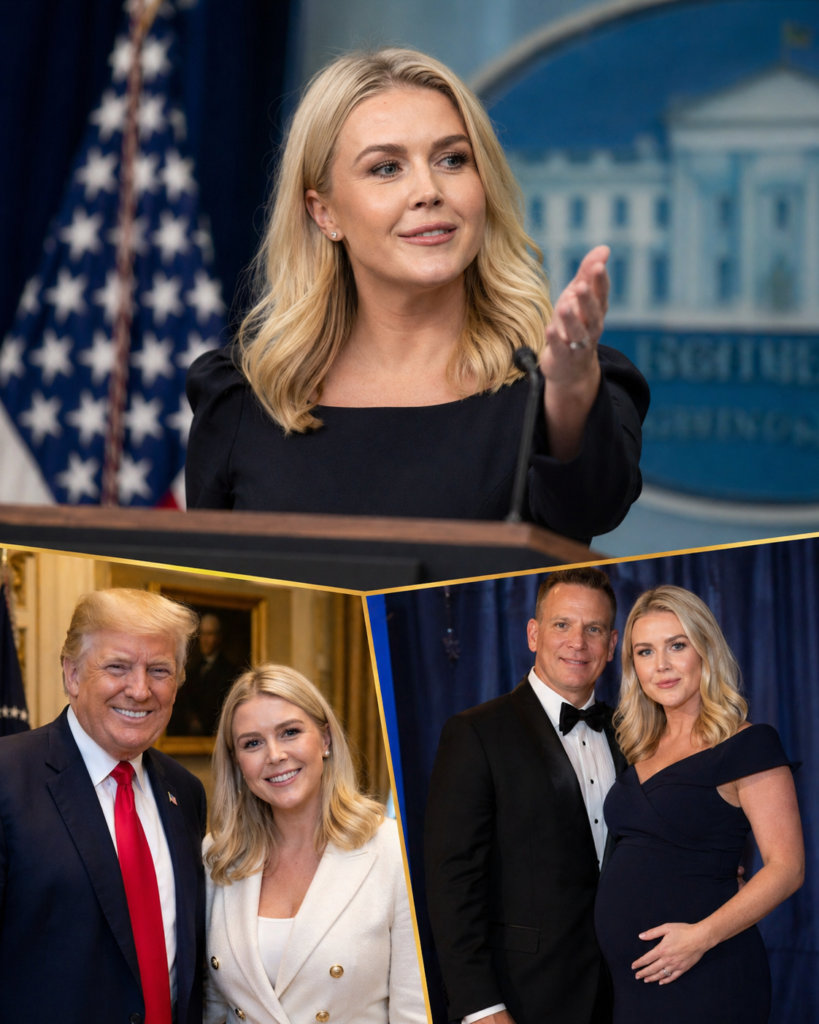
it would “likely” be her last gaggle for some time, joking that she was “about ready to have a baby any minute.”
The moment was personal, but the decision now carries official consequences. With Leavitt preparing to welcome her second child, the White House is adjusting how it will communicate with the press during her absence.
And the plan may not look like a traditional handoff.
A Different Kind of Replacement Plan
Rather than naming one direct temporary replacement, the White House is expected to rely on a rotating group of officials to handle press briefings and public messaging while Leavitt is away.
According to reports, that group could include senior administration figures, Vice President JD Vance, and even President Donald Trump himself.
If Trump appears more frequently at the briefing podium, it would mark a notable shift in the rhythm of White House communications. Traditionally, the press secretary acts as the daily public voice of the administration, fielding questions, defending decisions, and setting the tone for the day’s political narrative.
But Trump has long preferred direct communication, often choosing to speak to reporters himself rather than relying only on staff. A rotating setup could allow the administration to keep the briefing room active while also giving high-profile officials more visibility.
Steven Cheung to Oversee Communications
While the public-facing briefings may rotate, the broader communications operation is expected to remain under the leadership of White House Communications Director Steven Cheung.
Leavitt indicated that the press operation would continue during her leave, with Cheung and the existing team helping manage the flow of information.
That structure gives the White House flexibility. Instead of placing the full weight of the role on one interim spokesperson, the administration can divide responsibilities among several familiar figures.
For the press corps, however, the change could make briefings less predictable. Different officials bring different styles, priorities, and levels of authority. A briefing led by a communications aide may look very different from one led by the vice president — and very different again if Trump himself takes questions.
A Historic Role and a Personal Milestone
Leavitt’s maternity leave comes after a historically significant period in her career. At 28, she became the youngest person to serve as White House press secretary, and her pregnancy made her one of the most closely watched figures in the administration’s public operation.
She and her husband, Nicholas Riccio, announced in December that they were expecting a baby girl in May 2026. The couple already shares a son, Niko, who was born in July 2024.
For Leavitt, the transition is both personal and professional. She is stepping away at a moment when the administration’s messaging remains under constant scrutiny, yet her departure also highlights a more human side of public service: the reality that even people in the most demanding political roles still face family milestones, private responsibilities, and seasons of change.
Trump’s Possible Return to the Podium
The possibility of Trump personally stepping into the briefing rotation is the detail that has drawn the most attention.
A president appearing at the podium is not unheard of, but regular participation would be unusual. It would also fit Trump’s preference for controlling the message directly, especially during moments when the administration wants to emphasize strength, urgency, or personal authority.
For supporters, the idea may be seen as a sign of confidence — the president willing to answer questions himself instead of hiding behind staff.
For critics, it could raise concerns about whether briefings will become more unpredictable or politically charged.
Either way, the arrangement would make Leavitt’s temporary absence more than a routine staffing change. It could reshape the tone of the briefing room, at least for the weeks ahead.
More Than a Maternity Leave Story
The story is not only about who stands behind the podium. It is also about how the White House chooses to present itself during a transition.
Leavitt has been known for her sharp exchanges with reporters and her polished defense of the administration’s positions. Her absence creates a gap not only in staffing, but in style. Replacing that style with a rotating cast may give the White House more flexibility, but it may also make the message feel less centralized.
Still, the administration appears confident that its communications operation can continue without disruption.
Leavitt is expected to return after maternity leave, meaning the current arrangement is temporary. But temporary changes can still reveal a lot about how power works behind the scenes — who speaks, who decides, and who becomes the face of the message when the usual voice steps away.
For now, Karoline Leavitt is preparing for one of the most important moments of her personal life. At the same time, the White House is preparing for a communications experiment that could put some of its most recognizable figures, including Trump himself, back in front of the press.
And in Washington, even a maternity leave can become a political story.