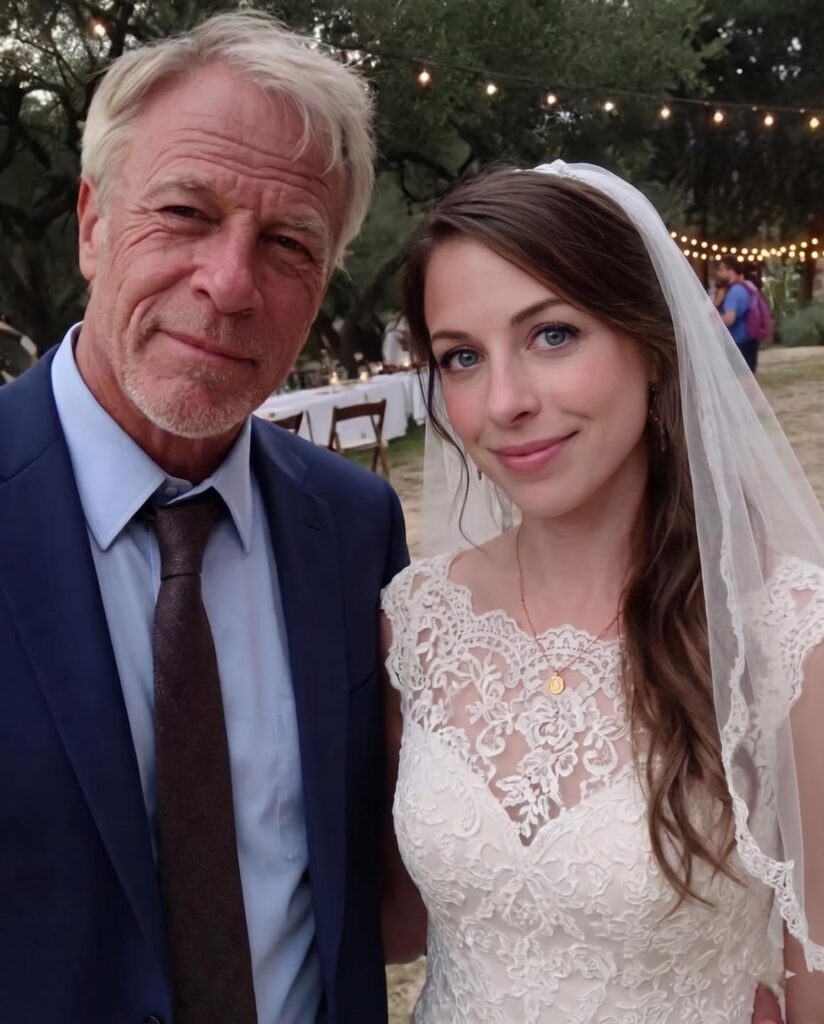
I truly believed marrying my father-in-law was the only way to keep my children from being taken from me.
At that point, I was thirty, worn down, and barely holding myself together. My son Jonathan was seven. My daughter Lila was five. After my marriage to Sean collapsed, they were the only part of my life that still felt solid.
When Sean and I first got together, he made everything sound safe. He told me I wouldn’t have to worry anymore, that he would provide, that staying home with the kids was what a real family looked like. I believed him. At the time, it even felt comforting.
But little by little, I disappeared inside that life.
Conversations became shorter. Decisions were made without me. My opinions stopped mattering. I was no longer his partner. I was just there—useful when needed, invisible the rest of the time.
By the end, Sean didn’t even bother pretending.
“You’ve got nothing without me,” he told me one night in the kitchen, as casually as if he were commenting on the weather. “No job, no savings. I’ll take the kids and erase you from their lives.”
“I’m not leaving my kids,” I said.
He shrugged. “We’ll see.”
That was the moment I understood this wasn’t something I could fix. He didn’t want a marriage anymore. He wanted control.
The only person who didn’t turn away from me was his father, Peter.
Peter was quiet in a way that made people underestimate him. He watched more than he spoke. He was a widower, steady and old-fashioned, but with a gentleness Sean never had. He showed up for the children more consistently than their own father did. He sat on the floor and played with them. He listened when they spoke, really listened, like what they said mattered.
A few years earlier, when I got sick and ended up in the hospital, Sean visited once. Peter came every day. He brought me water when I couldn’t keep food down, picked up the children, made sure they were fed, bathed, and comforted. Somehow, without either of us naming it, he became the only real support I had.
So when everything finally broke—when Sean brought another woman into the house and told me to leave—I had nowhere else to go.
I had no parents. No siblings. No relatives who could step in. I packed what I could, put the kids in the car, and drove straight to Peter’s house.
I didn’t call ahead.
When he opened the door and saw us standing there with overnight bags and frightened faces, he didn’t ask questions. He just stepped aside and let us in.
That night, after Jonathan and Lila were asleep, I sat at his kitchen table, too numb to cry.
“I don’t have anything,” I said. “Sean made sure of that.”
Peter sat across from me, hands folded, his expression unreadable.
“You have your children,” he said.
“That’s exactly what he’s trying to take.”
He was silent for a long moment. Then he said the one thing I never could have expected.
“If you want to protect yourself—and protect the kids—you need to marry me.”
I stared at him, thinking I had misheard.
“That’s not funny.”
“I’m not joking.”
“That doesn’t even make sense.”
“Legally, it does,” he said. “If we’re married, I can file to adopt them.”
I shook my head in disbelief. “Peter, you’re sixty-seven.”
“And you’re their mother,” he replied. “That’s what matters.”
The divorce from Sean moved quickly, mostly because I didn’t have the resources to fight. After nine years of marriage, I walked away with almost nothing. But the court allowed the children to stay under Peter’s roof, since that was where I was living, and for the first time in months, I felt one small piece of ground stop shifting beneath me.
So when we got home that day, with my future hanging by a thread, I said yes.
Not because it felt romantic. Not because I was confused about what it meant. But because I believed it was the only way to protect my children.
When Sean learned about the engagement, he lost all control.
He stormed over to Peter’s house while I was home alone, pounding on the door so hard it rattled the frame. When I opened it, he was already furious.
“You think this is going to work?” he demanded.
“I’m not doing this,” I said, trying to close the door, but he shoved his foot into the frame.
“You already did, Cat. Marrying my father?”
I said nothing.
He laughed softly, but there was no humor in it. “This isn’t over.”
Then he walked away.
He didn’t come to the wedding. I didn’t care.
The ceremony was small and fast. I didn’t feel like a bride. I felt like someone signing a permanent document she didn’t fully understand because there was no better option. Jonathan held my hand through most of it. Lila kept asking when we were going home.
When it was over, we returned to the house and the children ran ahead of us inside.
The front door closed behind us, leaving Peter and me alone for the first time as husband and wife.
He turned to me, and something in his face made my stomach tighten.
“Now that there’s no going back,” he said, “I can finally tell you why I married you.”
I drew in a slow breath.
“You asked me for something years ago,” he said. “And I never forgot.”
I frowned. “What are you talking about?”
“It was after Sean disappeared for a couple of days,” Peter said. “The kids were little.”
And suddenly I remembered.
Jonathan had been around three. Lila was still sleeping in a crib. Sean had vanished for two days without a call, without an explanation, without even pretending to care what that did to us. By the second night, I was terrified.
I had called Peter.
He came over, and later that night, after the children were asleep, I sat on the back steps wrapped in panic and exhaustion. He sat beside me with a blanket and draped it around my shoulders.
“I don’t have anywhere to go,” I told him. “If this falls apart, I have no one. I just don’t want my kids growing up thinking I disappeared. If something happens, promise me you won’t let that happen.”
“I won’t,” he said.
Back in the present, I crossed my arms tightly. “You remember that?”
“I remember everything about that night.”
“And that’s why you married me?”
“That’s where it began,” he said. “Not where it ended.”
There was something in his tone that made me uneasy.
“What does that mean?”
He looked at me steadily.
“Sean wasn’t just waiting for things to fall apart,” he said. “He was counting on it.”
My chest tightened.
“No. I would’ve fought.”
“You would have tried,” Peter said. “But he made sure you had very little to fight with. I knew what my son was capable of.”
At first I wanted to reject it outright. But something had already started shifting inside me. The next morning, after Peter took the children to school, I went into the garage and started opening the boxes I had never fully unpacked after the divorce.
At first, it was random. Clothes. Toys. Broken kitchen appliances.
Then I found the first school notice.
A parent meeting I had supposedly missed. I had never seen it.
Then another paper. A teacher’s note asking why I hadn’t responded. Bills in my name that made no sense. Copies of emails I had never received. Forms that should have reached me but hadn’t. One by one, the pattern emerged.
It wasn’t one shocking discovery.
It was dozens of small ones.
Every single one saying the same thing.
I had been excluded on purpose.
I found Peter in the kitchen and dropped the stack of papers onto the table.
“Why didn’t you tell me this before?” I asked.
He looked down at the documents, then back at me.
“I tried,” he said. “But you weren’t ready to hear it. Every time I hinted that Sean was doing more than you realized, you defended him or blamed yourself. If I had said it outright back then, you would have pushed me away too.”
That stung because it wasn’t entirely untrue.
Still, one thing kept bothering me.
“You said you knew,” I said. “How?”
He hesitated.
“Sean’s former assistant, Kelly. She told me.”
That answer stayed with me all night. By morning, I needed more than Peter’s version. I needed to hear it from someone else.
So I did something I’m still not proud of.
Peter was asleep when I quietly stepped into his room. We never shared a bedroom. There had never been any confusion about what our marriage actually was. His phone sat on the nightstand.
I picked it up.
His password was simple—his own name.
I found Kelly’s contact, copied the number into my phone, and put everything back exactly as I had found it.
The next day, we met at a small café across town.
Kelly looked younger than I remembered, but tired. She didn’t waste time.
“He talked about your life like it was already decided,” she said. “Like it was only a matter of time before you got overwhelmed, lost control, and the kids ended up with him full-time while you faded out.”
I stared at her.
“He actually said that?”
“More than once,” she replied. “That’s one of the reasons I quit.”
I sat in my car for a long time after that conversation, not crying, not even angry. Just clear.
For the first time in years, I understood that this hadn’t been one collapse. It had been a long, deliberate process.
I had not simply lost my footing.
It had been taken from me little by little.
That afternoon, I picked up the children myself. I spoke directly to Jonathan’s teacher, checked Lila’s schedule, asked questions Sean had always answered for me. It felt awkward at first, like I was stepping back into a role I had been slowly pushed out of. But with every call, every conversation, something inside me steadied.
I wasn’t reacting anymore.
I was reclaiming.
Over the next few weeks, I organized every document, made every call, followed up on every detail Sean once handled. Nothing dramatic. Just small, consistent acts of taking my place back.
Sean noticed almost immediately.
When he called, his voice had changed.
“That’s not necessary, Cat,” he said. “You’re overthinking. You’ve been spending too much time with my dad. He’s filling your head with nonsense.”
I didn’t argue. I didn’t need to.
Then came the moment that showed me just how much had already changed.
Sean arrived to pick up the children and casually announced he was planning to keep them a few extra weeks.
“Thought I’d keep them longer this time,” he said. “It’ll be fine.”
“That’s not what we agreed on.”
“They’re excited.”
“What about school?”
“They can miss a little.”
“Where will they be staying?”
“With me.”
“Who else will be there?”
That stopped him.
Then I asked, “Why did you tell them before you talked to me?”
For the first time, Sean didn’t have a smooth answer. He looked at me differently then—not angry, not smug, just thrown off.
As if he didn’t recognize me anymore.
Finally, he muttered, “Forget it. We’ll stick to the usual schedule.”
And just like that, he backed down.
That night, Peter sat across from me at the kitchen table.
“You’re doing it,” he said. “You’re standing your ground.”
I let out a long breath. “I should’ve done it sooner.”
“You’re doing it now,” he said. “That’s what matters.”
Then he gave me the final truth—the one that reframed everything.
“When you’re ready,” he said, “you don’t have to stay married to me. I won’t fight it. That was never the point.”
I looked at him. “Then what was?”
He met my eyes.
“Making sure you got here.”
Later that evening, I stood in the yard while Jonathan and Lila played, laughing in circles, sunlight fading across the grass. I watched them for a long time.
And for the first time in years, I didn’t feel like someone barely hanging on.
I felt steady.
Present.
Grounded.
That was when I understood the truth.
Peter hadn’t rescued me.
He had simply kept a promise.
And somewhere along the way, I had finally learned how to stand where I belonged.