What We Notice First — And What Actually Matters
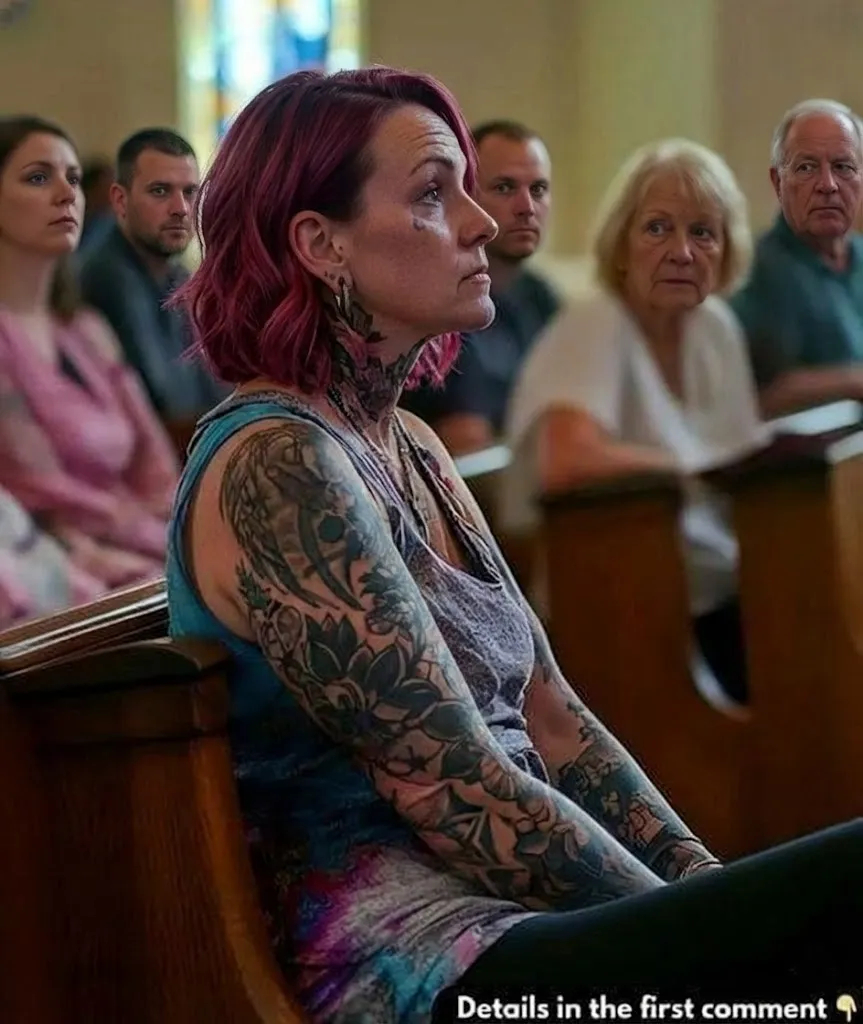
One Sunday morning, a regular churchgoer noticed someone new.
The woman stood out immediately—tattoos, piercings, an appearance that didn’t match what the place had always represented in her mind. For years, the church had meant order, modesty, a certain way of showing respect.
So the reaction came quickly.
After the service, she approached her and said what she felt needed to be said—that she didn’t belong.
The response was brief.
Calm, but firm.
“How I look has nothing to do with you.”
And in that moment, something shifted.
When Certainty Begins to Soften
It wasn’t the words alone.
It was what they exposed.
The churchgoer walked away unsettled—not because she had been disrespected, but because her certainty no longer felt as solid as it had before.
She began to ask herself a quieter question:
Was this about reverence—or about comfort with what felt familiar?
The Difference Between Form and Intention
Places of worship often carry traditions that shape how people present themselves.
And those traditions can have value. They create structure, a shared sense of meaning.
But they are not the whole of what those spaces are meant to hold.
Because beneath form is intention.
And intention is not always visible on the surface.
What People Bring With Them
Everyone who walks into a sanctuary brings something unseen.
History. Struggle. Questions that may not yet have answers.
For some, expression—through clothing, through appearance—is not about defiance.
It is simply where they are.
And sometimes, it is the only way they know how to arrive honestly.
Holding Both Without Forcing Either
There is a tension between tradition and openness.
One asks for respect.
The other asks for space.
And both can exist—if neither is used to diminish the other.
Respect does not require uniformity.
And openness does not require the absence of care.
What Remains When Judgment Steps Back
When the focus moves away from appearance, something else becomes clearer.
Why people are there at all.
Not to meet a standard set by others—but to seek something they may not yet fully understand.
And that search is not always tidy.
Final Thought
It is easy to notice what stands out.
Harder to pause before deciding what it means.
But in places meant for reflection, that pause matters.
Because sometimes the greater question is not whether someone belongs—
but whether we are willing to see them without reducing them to what we see first.
💬 Do you think places of worship should preserve tradition strictly, or adapt to reflect the people who come through their doors?