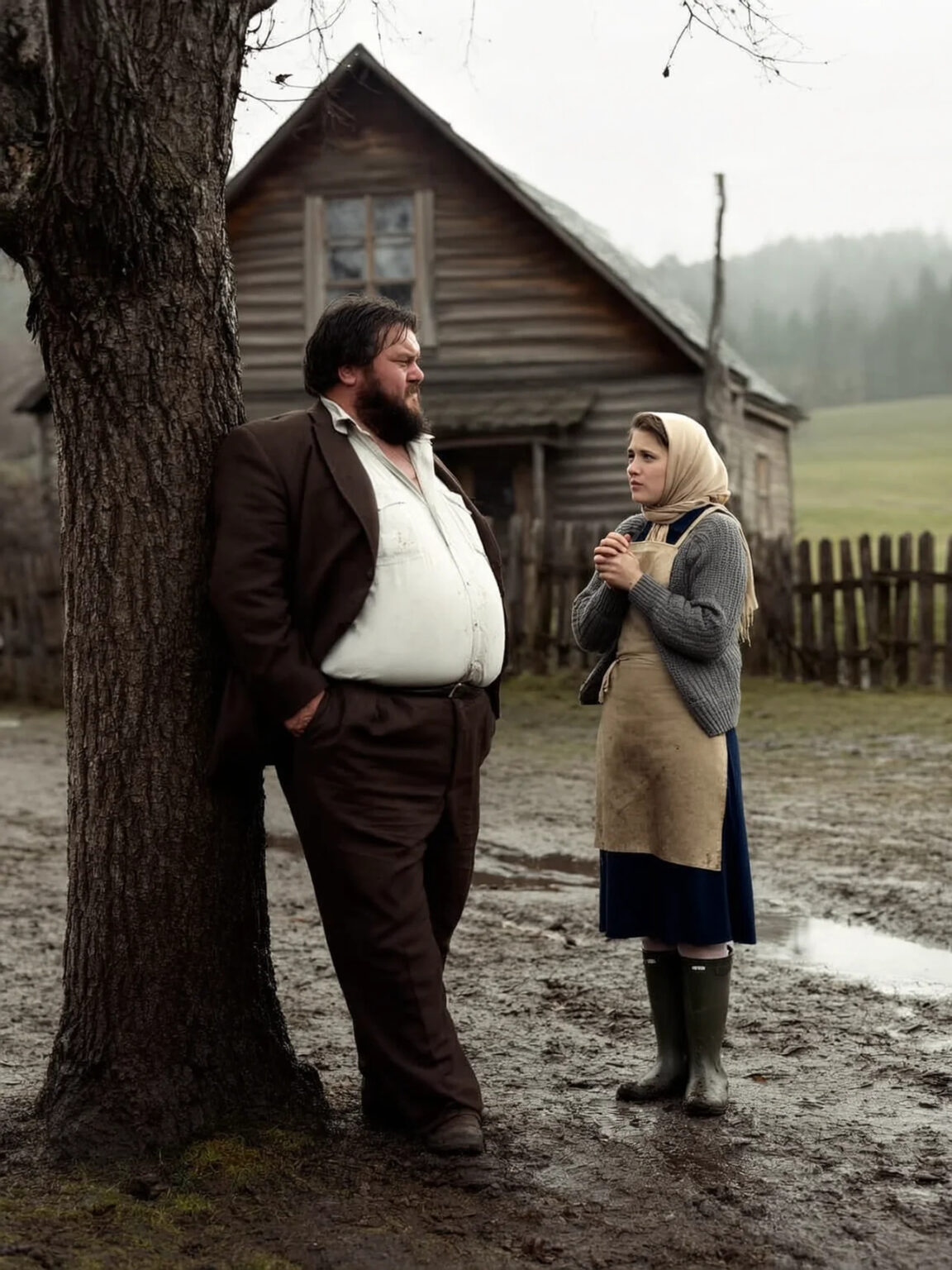
A young milkmaid lived under constant strain while caring for her ill mother. Their home was worn, their income uncertain, and each day required effort simply to maintain the basics. Her father was absent, kept away due to unresolved debts, and the responsibility of the household had fallen entirely on her. She worked from early morning, managing what little she could earn, often uncertain how she would afford the medicine her mother needed. The village was aware of their situation, though awareness does not always lead to relief.
One day, a landowner arrived at her home. His presence contrasted sharply with her surroundings—measured, composed, and clearly established. He offered a solution to her situation: he would settle her family’s debts and secure her father’s return. In return, he asked for marriage and the possibility of a child. He explained his condition as one of limited time, presenting the proposal as both practical and compassionate. Faced with few alternatives, and wanting to relieve her family’s burden, she agreed.
The arrangement moved quickly, without ceremony or extended consideration. That first night, while the house was quiet, she found herself unable to rest. Passing by his office, she noticed a light still on. Inside, documents were left open on the desk. Among them was a medical report, recent and clear. It stated no illness. His explanation did not match what was written.
Next to it, she found legal papers outlining the terms of an inheritance. The condition was specific: he was required to have a child within a year to retain what he had been given. The marriage, then, was not built on honesty or shared understanding, but on a requirement he needed to fulfill. Her situation had been used as a means to meet that condition.
In the morning, she left.
There was no confrontation, no attempt to negotiate what had already been misrepresented. Some arrangements, once understood clearly, do not require further discussion.
What remained was not only the hardship she had known before, but a clearer understanding of something else—
that desperation can be used against those who carry it,
and that recognizing this, even late, is what allows a person to step away before it takes more than it already has.