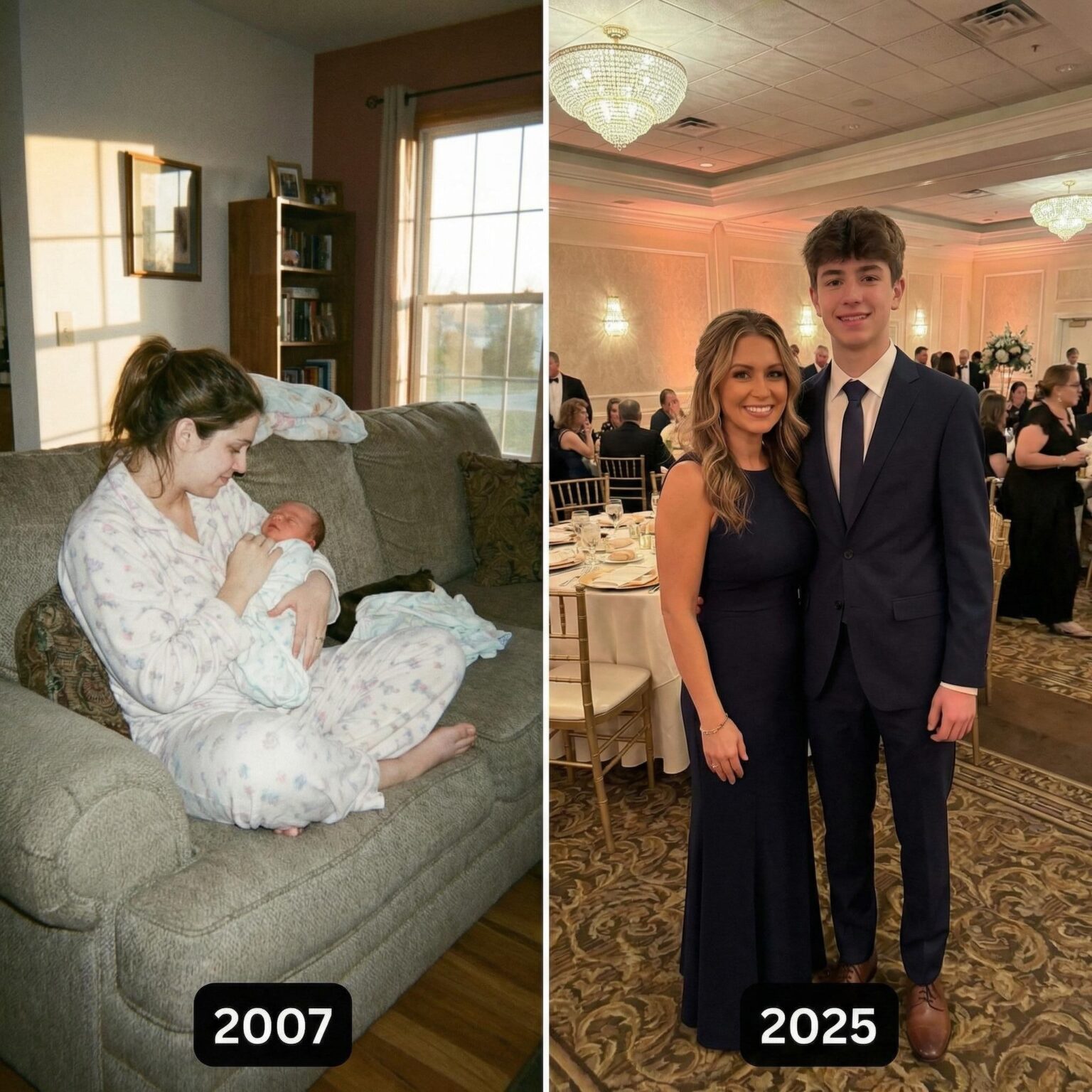
My mother was still a teenager when my life quietly redirected the course of her own. While others her age were thinking about dances, college plans, and the open road ahead, she stepped into the heavier rhythm of responsibility. My biological father disappeared early on, leaving her to face adulthood alone. She never spoke much about what she had set aside. Instead, she worked, studied late into the night for her GED, and built a steady life for me piece by piece. As I grew older, I began to understand that my childhood had been shaped by sacrifices she never announced.
By the time my senior year arrived, that understanding sat with me more clearly than ever. One evening at the kitchen table, the thought came almost suddenly. My prom was approaching, a moment many people treat as a small rite of passage. For my mother, it had been something life never allowed. So I asked her if she would go with me.
At first she laughed, thinking I was joking. Then the meaning settled in, and her eyes filled with quiet disbelief. She hesitated—not because she didn’t want to go, but because part of her had long accepted that some moments simply belonged to another life. My stepsister Brianna saw the idea very differently. To her it seemed strange, something she worried others would mock. Her reaction stung for a moment, but the purpose of the invitation mattered more than anyone’s opinion.
When prom night came, my mother stepped out of her room wearing a soft blue dress. For a moment she looked less like the woman who had carried years of responsibility and more like the young girl she had once been. The evening nearly turned bitter when Brianna, standing with a group of friends at the school courtyard, laughed loudly and tried to turn the moment into a joke.
Before the moment could grow harsher, my stepdad Mike stepped forward. Calm but firm, he reminded everyone that the woman they were laughing at had spent years doing what many people never have to do—raising a child alone, working, and refusing to let hardship harden her spirit. His words didn’t shame anyone; they simply placed the truth back where it belonged. The laughter faded, and the moment regained its balance.
After that, the night unfolded more gently. We danced, took photographs, and shared the kind of simple joy that had been postponed for many years. What began as something unusual slowly became something others understood—a small act of gratitude.
Later, driving home in the quiet after the music had ended, my mother held my hand and said softly that she had buried that dream long ago. Hearing that made me realize something important: some milestones arrive later than expected, but they are not always lost.
Sometimes all it takes is one person willing to open the door again for the younger version of someone who had to grow up too soon. And when that happens, the past doesn’t disappear—it simply finds a gentler place to rest.