
My name is Elise Marceau, and by the time I was twelve, life at home had become something I learned to endure quietly. My stepfather, Stefan, carried a temper that often turned ordinary moments into something tense. My mother, Nadine, rarely intervened. Over time, silence became the rule in our house.
One Sunday afternoon, a small mistake in the kitchen changed everything. I dropped a plate while washing dishes, and the sound of it breaking seemed to ignite his anger. In the chaos that followed, my arm was badly injured. The pain was immediate and sharp, but what stayed with me just as strongly was the feeling that no one in the room was truly concerned for me.
During the drive to the hospital, my mother held my hand and kept repeating the same instruction: I should say I had fallen from my bike. She spoke gently, but the urgency in her voice made it clear that protecting the truth was not what she had in mind.
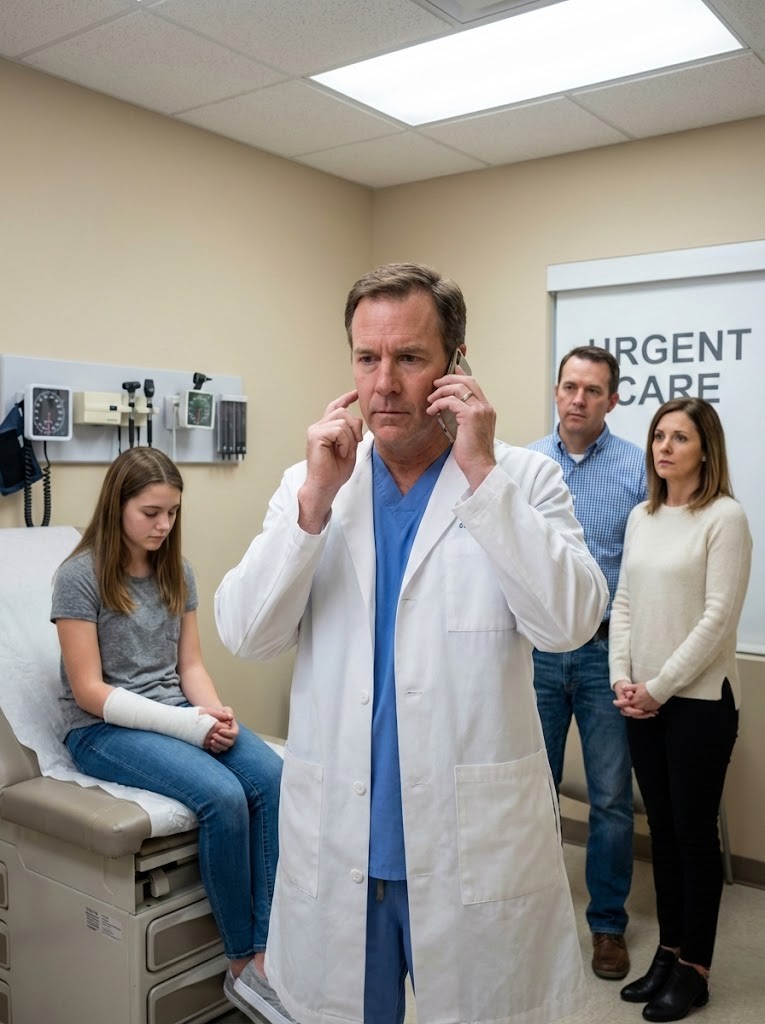
When we arrived at the hospital, we were met by a doctor named Arthur Klein. He was calm and attentive, examining my arm carefully. As he listened to my mother explain the bicycle accident, something in his expression suggested he wasn’t fully convinced. He asked a few quiet questions, then stepped aside and made a call.
At the time, I didn’t fully understand what he was doing. Later I realized he had contacted emergency services because he suspected the injury might not have happened the way it had been described.
Two police officers arrived not long after. One of them, Officer Moreau, spoke gently but directly as he asked what had happened. My mother repeated the story about the bike.
For a moment I felt the familiar pressure to stay quiet. Returning home meant returning to the same closed doors and the same fear. My voice trembled when I finally spoke, but the words came out anyway.
I told them the truth.
I explained that this wasn’t the first time something like this had happened. I told them I was afraid to go back.
The room grew very quiet, but it was a different kind of silence than the one I knew at home. This one felt like people were actually listening.
The officers responded calmly and firmly. Stefan was taken away for questioning, and my mother sat down, overwhelmed. A social worker named Sara Lind arrived soon afterward. She wrapped a blanket around my shoulders and assured me that I would not have to return home that night.
The weeks that followed were difficult in their own way—meetings with counselors, conversations with social workers, and legal proceedings. But something had changed. For the first time, the adults around me were focused on keeping me safe.
Eventually I stood in a courtroom and spoke about where I wanted to live. It was the first time anyone had asked me that question in a way that truly mattered.
I chose a place where I felt secure.
My mother later tried to apologize for not protecting me. Her words were quiet and uncertain. I listened, but I also knew that healing would take time.
What matters most now is that my life moved forward from that day. The fear that once shaped every moment no longer defines who I am.
Sometimes the turning point in a life begins with one person choosing to look closer, to ask a question, or to believe a quiet voice.
For me, it began in a hospital room—when someone finally listened.