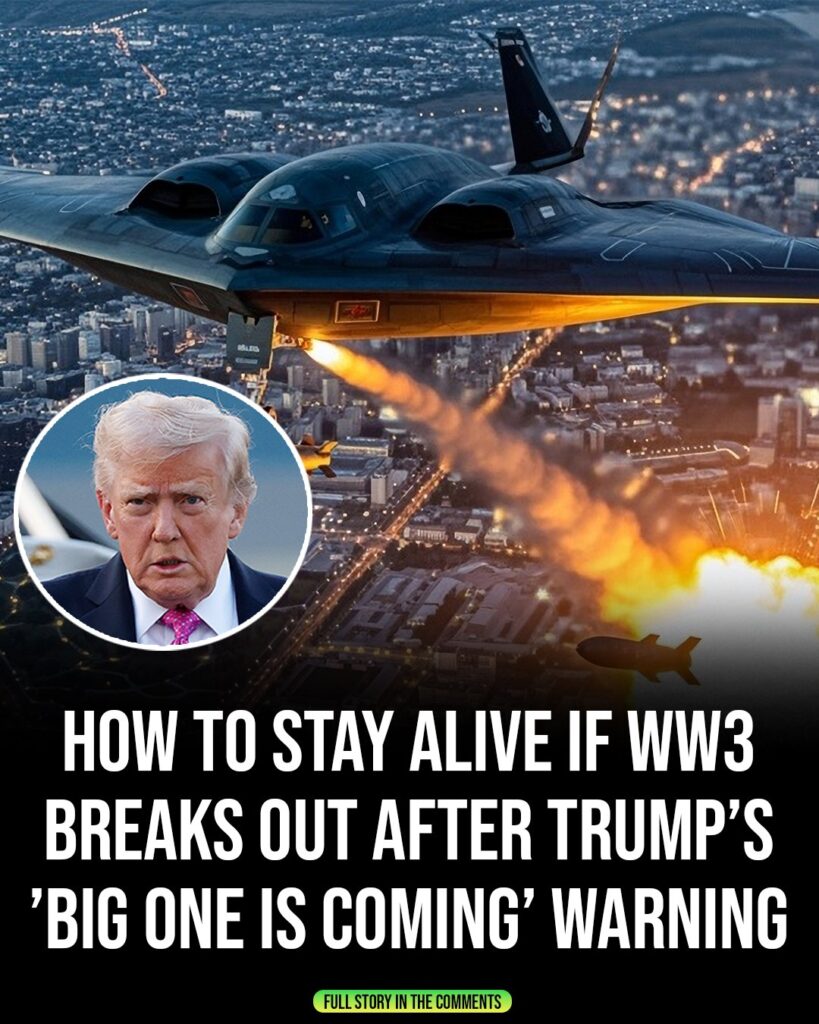
Rising geopolitical tensions have prompted renewed conversations about emergency preparedness in many parts of the world. Conflicts and diplomatic disputes involving major powers frequently raise public concern about stability, even when experts caution that large-scale escalation remains uncertain.
Recent developments in the Middle East, including reports of military strikes and retaliatory actions between regional actors, have intensified attention on the relationship between Iran, the United States, and Israel. Such events often lead to speculation about wider geopolitical consequences, particularly when combined with other ongoing tensions across the globe.
Multiple Global Flashpoints
Analysts frequently note that international stability today is shaped by several simultaneous areas of concern. These include the war between Russia and Ukraine, as well as the long-standing tensions between China and Taiwan.
Political commentators sometimes warn that overlapping crises could increase the risk of broader confrontation. However, many security experts stress that such claims often involve speculation and should be viewed cautiously rather than as predictions.
Governments Promote Household Preparedness
In response to growing uncertainty in the international environment, several European governments have begun encouraging citizens to maintain basic emergency supplies at home.
Hadja Lahbib has advised households across the European Union to prepare for at least 72 hours of self-sufficiency during emergencies.
The recommendation is not limited to military crises. It also applies to natural disasters, infrastructure failures, and other situations where normal services might be temporarily disrupted.
What a Basic Emergency Kit Includes
Preparedness guides across Europe and North America generally recommend similar items for household emergency kits:
• bottled drinking water
• non-perishable food
• flashlights and spare batteries
• a battery-powered radio
• essential medications
• copies of important documents stored in waterproof containers
These supplies can help families remain stable during temporary interruptions to electricity, transportation, or communication networks.
Lessons From Nordic Preparedness
Countries such as Sweden, Finland, and Norway have long encouraged citizens to maintain a culture of preparedness. Government guides in those countries explain how households can respond to a wide range of emergencies, from severe weather and power outages to security threats.
This approach emphasizes resilience rather than alarm.
Experts like Arnab Basu note that preparation should focus on practical readiness. In certain emergencies — including industrial accidents or nuclear incidents — remaining safely indoors with adequate supplies may be more effective than attempting to evacuate immediately.
Preparedness Without Panic
Emergency planning does not assume that worst-case scenarios will occur. Instead, it reflects a practical understanding that modern societies rely on complex systems that can occasionally be disrupted.
A modest supply of essential items can give households time to respond calmly while authorities restore services.
In that sense, preparedness is less about expecting catastrophe and more about maintaining stability during uncertain moments — ensuring that families are ready to manage short-term disruptions whenever they arise.