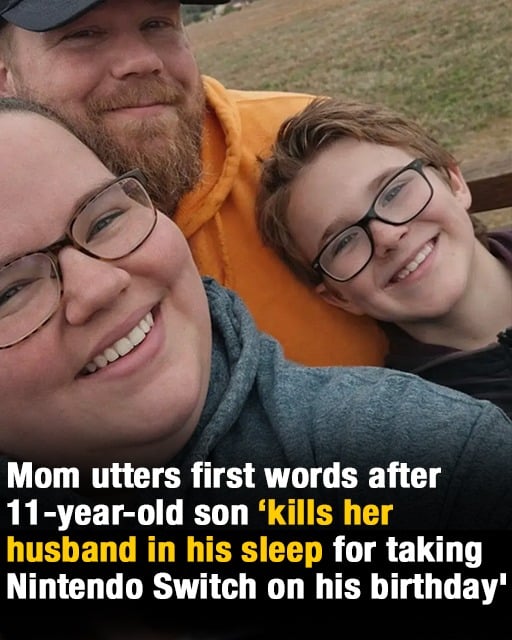
A quiet home in Perry County, Pennsylvania, has become the site of a tragedy that is difficult to absorb. An 11-year-old boy has been accused of fatally shooting his adoptive father in the early hours of his own birthday, following what authorities describe as a late-night argument over a video game console.
According to investigators, Clayton Dietz is being held in adult custody in connection with the death of his father, 54-year-old Douglas Dietz. Court documents referenced in local reporting state that after his gaming device was taken away and he was told to go to bed, the child allegedly searched for a key, accessed a secured firearm, and entered his father’s bedroom while he was asleep. The shooting occurred shortly after midnight on January 13, 2026.
Police responding to the scene found Douglas critically injured and the child reportedly in distress. An affidavit indicates that when questioned, the boy said he acted out of anger and had not fully considered the consequences.
Under Pennsylvania law, homicide charges begin in adult court, though a transfer to juvenile court may be requested through a formal hearing. The boy’s attorney has signaled an intent to seek placement in the juvenile justice system rather than adult court. The legal path ahead remains uncertain and will involve complex questions about responsibility, age, intent, and rehabilitation.
Beyond the legal proceedings stands a family torn apart. Jillian Dietz, the boy’s mother and the victim’s wife, has spoken publicly about the unimaginable pain of losing her husband and, in many ways, her son in the same moment. Her words reflect a grief that does not divide neatly into sides.
Cases like this stir deep reactions — sorrow, anger, disbelief. They also force difficult conversations.
One reality stands firm: firearms in a home carry immense responsibility. Secure storage is not a formality; it is a safeguard against moments of impulse that children, by nature, are still learning to manage. Anger in a child can be sudden and intense. Access to a lethal weapon turns that impulse into permanence.
Another reality is that children, even when accused of grave acts, are still children. Their brains are developing. Their understanding of consequence is incomplete. This does not erase harm, but it shapes how society must respond — balancing accountability with the possibility of rehabilitation.
The greater lesson may be quieter: conflicts in families, especially those involving discipline and technology, can escalate when emotional regulation and communication are strained. Community support, mental health resources, and careful attention to warning signs matter more than we often realize.
There are no easy answers here. A father’s life has ended. A boy’s future is clouded by a charge most adults could scarcely comprehend. A mother stands between two forms of loss.
In moments like this, the steadier response is not outrage alone, but reflection. How do we secure what must be secured? How do we teach children to pause before anger acts? How do we build systems that protect without giving up on the young?
Tragedy cannot be undone.
But lessons, if taken seriously, can prevent another family from standing in the same silence.