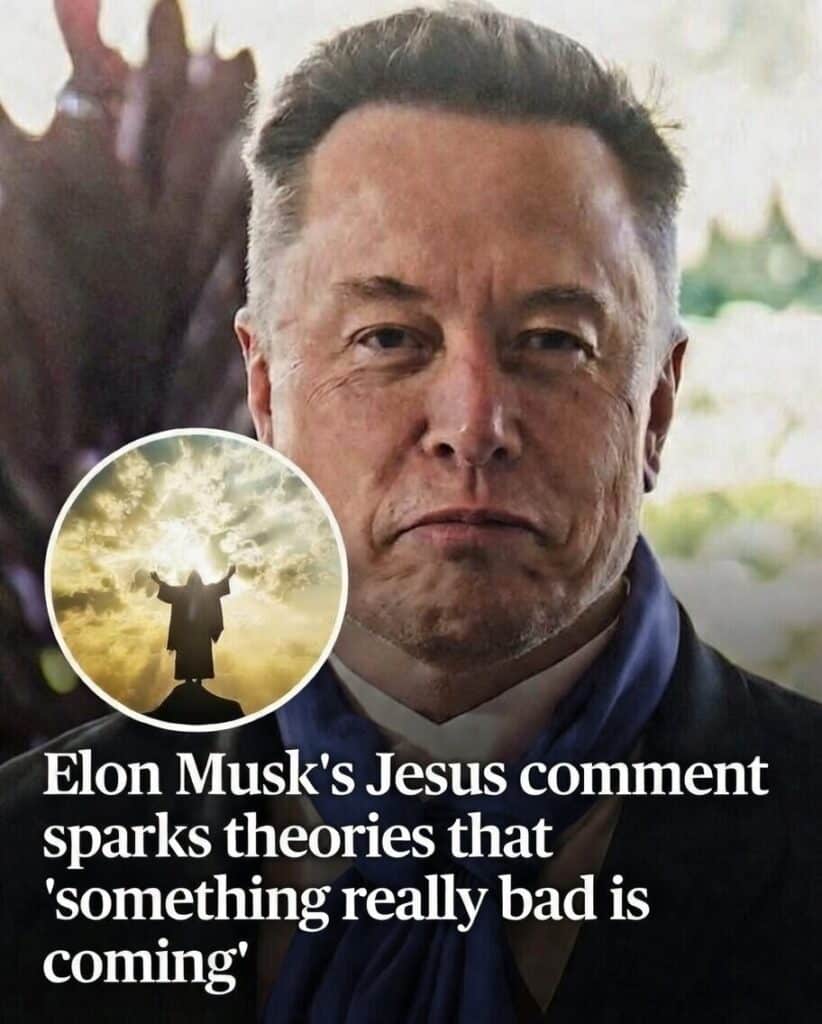
Elon Musk has once again stirred conversation — this time not about rockets or artificial intelligence, but about faith.
When asked who would “evangelize Elon Musk,” he responded simply: “I agree with the teachings of Jesus.” The remark spread quickly online, drawing curiosity, praise, skepticism, and speculation in equal measure.
Some saw the comment as a sign of deeper spiritual reflection. Others assumed there must be some hidden motive behind it. In the age of instant reaction, even a brief sentence can become a mirror for people’s hopes or suspicions.
A Complicated Spiritual Path
Musk has spoken openly in the past about questioning religion as a teenager. Around age 14, he began wrestling with big questions — life, suffering, the nature of the universe. At times he has identified as atheist or agnostic. At other times, he has described himself as open to belief, depending on the evidence available.
In recent years, he has expressed renewed respect for the moral teachings of Jesus, particularly principles like forgiveness, compassion, and “turning the other cheek.” He has clarified that while he does not consider himself deeply religious in a traditional sense, he finds wisdom in those ethical foundations.
His reflections tend to focus less on devotion and more on conduct — how people treat one another, how strength can coexist with restraint.
Ethics Without Labels
Musk has often emphasized that appreciating Jesus’ teachings does not automatically equate to embracing institutional religion. Instead, he frames it as alignment with moral principles that encourage kindness, mercy, and responsibility.
That distinction is where much of the debate lives.
For some, faith is inseparable from doctrine and worship. For others, the ethical core stands on its own. Musk appears to sit in the latter space — engaging with spiritual ideas through a philosophical and scientific lens rather than a confessional one.
Public Reaction
The strong reactions online reveal less about Musk himself and more about how sensitive conversations about belief have become. Admiration quickly meets suspicion. Reflection is sometimes mistaken for strategy.
Yet spiritual questioning is not unusual — even among those who lead highly public lives. Success does not silence existential questions. If anything, it may amplify them.
Whether Musk’s comment signals a deeper transformation or simply a philosophical acknowledgment, it has reopened a broader conversation: can one value sacred teachings without adopting religious identity? And what does it mean to live ethically in a world shaped by power and influence?
A Quiet Observation
Agreeing with the teachings of Jesus is not a headline in itself. Many people, religious or not, find wisdom in love of neighbor, forgiveness, and humility.
What matters more than the statement is whether those values appear in action.
In the end, faith conversations are rarely settled by a single post. They unfold over time, often privately, sometimes publicly. And perhaps the more important question is not what someone claims to believe — but how that belief shapes their conduct toward others.
Curiosity about faith is not weakness.
Living its principles with integrity is the real test.