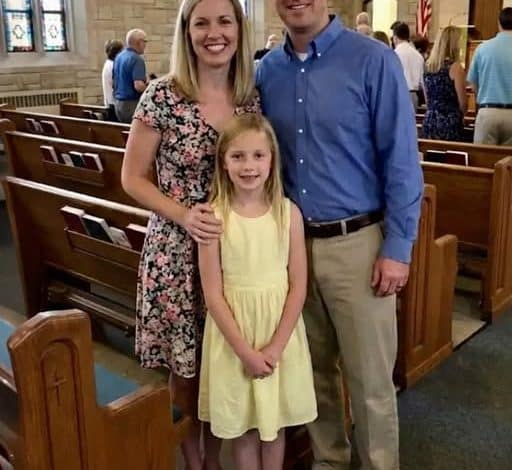
For more than a decade, Sundays belonged to us.
Not in a formal way. Not tied to ritual or obligation. Just slow mornings — pancakes, cartoons, Kiara curled beside me like the world was gentle and predictable. They were ordinary days, and because they were ordinary, they were sacred.
Brian and I had built a life that felt steady. Twelve years together. Ten married. Church had never been part of our language. He used to joke about chapel weddings being “hostage situations with cake.”
So when he said he wanted to start attending services, I laughed.
But he didn’t.
He spoke about needing a reset. Community. A place to breathe.
I wanted him to have that.
The first Sunday felt foreign but harmless. Polished smiles. Warm greetings. Brian looked… calm. Centered. I told myself this was growth. Change isn’t always suspicious.
It became routine.
Then one Sunday, after service, he asked me to wait in the car.
Ten minutes passed.
Instinct doesn’t shout at first. It tightens.
I left Kiara with a woman from church and went back inside. Through a half-open window, I saw him with a woman I’d never met. His voice was low, deliberate.
“I brought my family here so I could show you what you lost.”
Time doesn’t stop. But it changes temperature.
The woman responded with something sharper than anger. She called it obsession. Not love.
She walked away.
Brian returned to the car as if nothing had shifted.
That night I didn’t accuse. I listened to my instincts instead.
The following Sunday, when he disappeared again, I followed. I found her — Rebecca. Calm. Composed. She handed me her phone.
Years of messages. Photos. Letters. Patterns.
I wasn’t the partner in a shared journey.
I was part of a performance.
When truth arrives like that, it hurts — but it clarifies.
That evening I told him I knew.
He laughed at first. Then irritation surfaced. Then anger. The mask slipped, not dramatically, but enough.
“I’m filing for divorce,” I said.
Not out of vengeance. Not out of spectacle.
Out of responsibility.
Kiara was asleep when I paused at her door. Watching her breathe, I understood something clearly: heartbreak is survivable. Teaching a child that manipulation is love — that is not.
I could not control his obsession.
But I could control the example she would grow up with.
Leaving was not loud. It was deliberate.
Sometimes the hardest part isn’t discovering the truth. It’s accepting that the version of your life you thought you were living was never fully yours.
But clarity, even painful clarity, is a form of mercy.
Sundays will look different now.
They will still be slow.
They will still be ours.
Only this time, there will be no performance in the background.