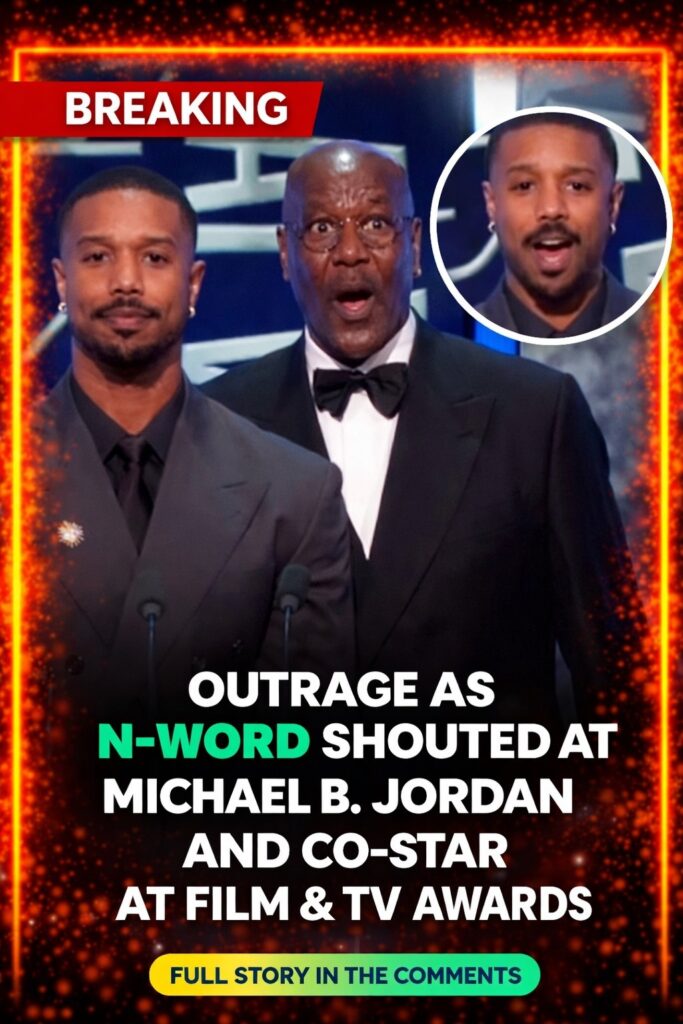
What lingered after the applause resumed was not just discomfort, but a quiet unease about how quickly judgment forms in public spaces. In an age where every moment is clipped, shared, and debated within minutes, nuance often arrives too late. The first impression becomes the verdict, long before context has time to breathe.
For BAFTA, the evening was meant to honor artistic excellence. Held at the iconic Royal Festival Hall, it was designed as a space of dignity and celebration. Instead, it became an unintended lesson in how fragile such moments can be when human vulnerability enters the frame.
The presence of presenters like Michael B. Jordan and Delroy Lindo added emotional weight to the incident. For many viewers, hearing a slur in front of respected Black artists felt especially painful. It reopened wounds that history has not yet allowed to fully heal. Words carry memory, and some words carry generations of sorrow.
Yet alongside that pain stood another reality: a man living with a neurological condition he did not choose. Tourette syndrome does not negotiate with social etiquette. It does not pause for cameras. It does not ask permission. In that moment, intention and impact were painfully separated.
When Alan Cumming stepped in to clarify the situation, his response reflected an effort to restore balance — not by dismissing harm, but by naming its source. His words reminded the audience that understanding is not the same as approval, and explanation is not the same as excuse.
Later, the response from BBC acknowledged this tension. The apology was necessary, but it also revealed how limited institutional language can be when faced with human complexity. Policies can be written. Statements can be issued. But they rarely resolve emotional contradictions.
Online, the debate unfolded in predictable patterns. Some demanded stricter safeguards. Others urged mercy. Many spoke past each other, each defending a truth that felt urgent to them. Few paused long enough to hold both truths at once.
And perhaps that is where the deeper lesson rests.
There are moments when life refuses to fit into neat moral categories. When harm happens without hatred. When offense occurs without intention. When accountability and compassion seem to pull in opposite directions. These moments test not our opinions, but our character.
From a quieter spiritual perspective, such incidents invite self-examination. They ask: How quick am I to condemn? How willing am I to listen? Do I protect my own sense of righteousness more than I protect human dignity? True maturity is not found in perfect reactions, but in the ability to soften without becoming careless, and to stand firm without becoming cruel.
The BAFTAs interruption was not just a broadcast mishap. It was a mirror. It reflected a society still learning how to live with difference, discomfort, and contradiction. It showed how easily pain multiplies when empathy is scarce — and how healing becomes possible when hearts remain open.
In the end, no ceremony is remembered only for its trophies. Some are remembered for the questions they leave behind. This moment asked whether we can become a people who respond to brokenness with wisdom rather than reflex, and to awkward truth with humility rather than outrage.
If compassion has a voice, it is rarely loud. But it is always needed most when the room falls silent.