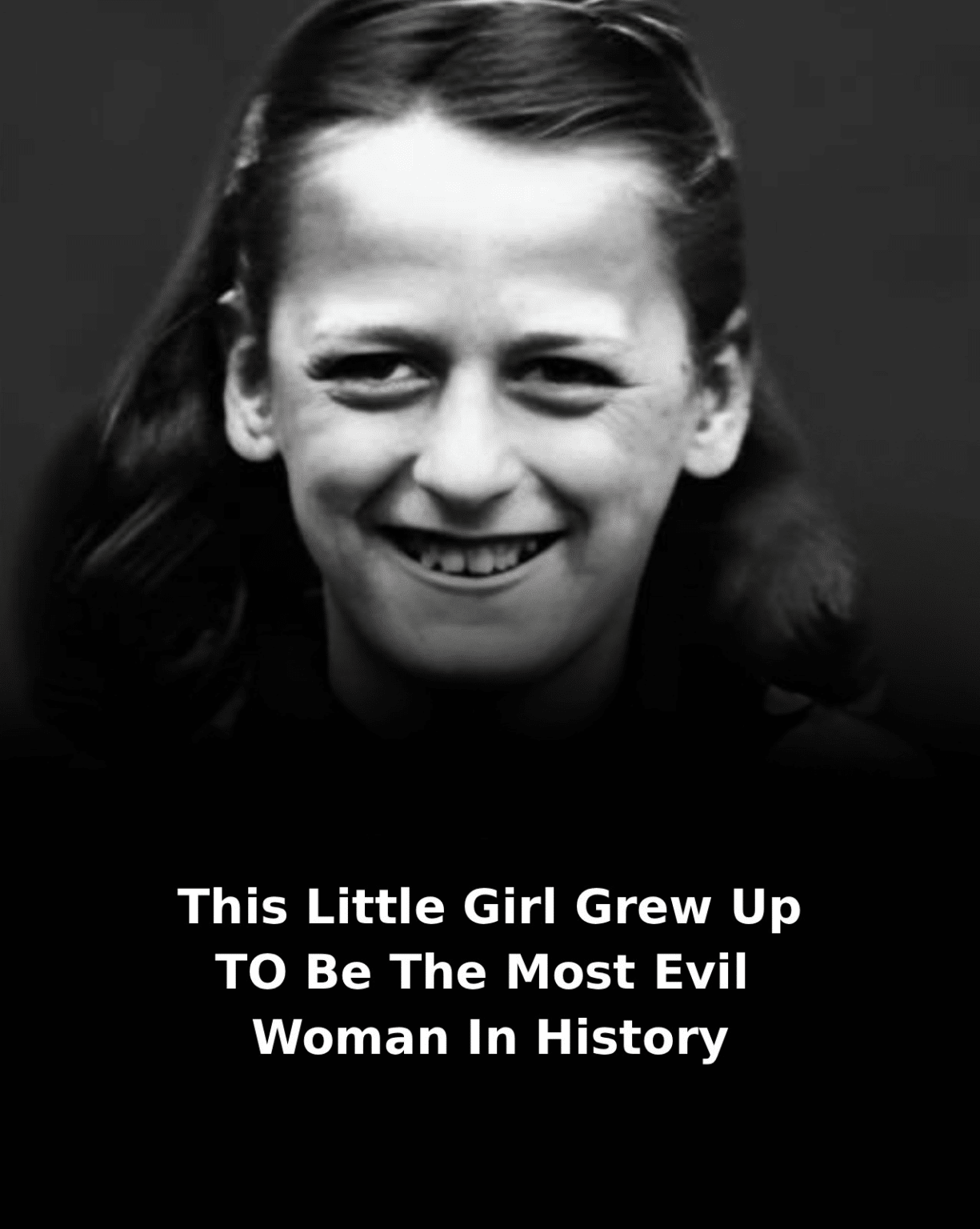
At first glance, she looked like countless other children of her era — small, shy, and unremarkable. In faded photographs from postwar Manchester, her face reflects innocence rather than menace. Yet history would later attach her image to one of Britain’s most disturbing criminal chapters.
She would grow up to be known as Myra Hindley — a name that remains deeply painful in British memory.
Understanding her story does not mean excusing her crimes. It means confronting how ordinary beginnings can, through a combination of choices, influences, and moral collapse, lead to unimaginable harm.
A Difficult Childhood in Postwar England
Hindley was born in 1942 in Gorton, Manchester, during the hardships of World War II. Her father’s military service kept him absent for long periods, and when he returned, the family struggled with poverty, alcoholism, and domestic conflict.
Like many children of that era, she grew up in cramped housing and unstable emotional conditions. Violence between her parents was common. At times, she was sent to live with relatives for safety.
Such circumstances were not unique in working-class Britain. Many children endured similar difficulties without becoming violent. But they formed the emotional landscape in which her character developed.
Loss, Guilt, and Withdrawal
As a teenager, Hindley experienced a traumatic loss when a close friend drowned in a local reservoir. She later described intense guilt and self-blame. Seeking comfort, she turned to religion and tried to maintain a “normal” life through work and social activities.
Outwardly, she appeared responsible and reliable. She held clerical jobs, attended church, and was regarded as polite. Few suspected anything deeply wrong.
Yet beneath that surface, emotional detachment and rigidity were growing.
Meeting Ian Brady
In the early 1960s, Hindley met Ian Brady at work. Their relationship became intense and consuming. Brady introduced her to extremist philosophies that rejected moral limits and glorified power and domination.
Over time, their bond became built on isolation from others, intellectual arrogance, and shared fantasies of control. Hindley later described being emotionally dominated by Brady, though this does not diminish her responsibility for her actions.
Together, they created a closed moral world in which empathy was replaced by cruelty.
The Murders
Between 1963 and 1965, Hindley and Brady were responsible for the deaths of five young people:
-
Pauline Reade
-
John Kilbride
-
Keith Bennett
-
Lesley Ann Downey
-
Edward Evans
The crimes involved deception, manipulation, and extreme violence. Several victims were lured through false promises of help. Their bodies were hidden on Saddleworth Moor, giving rise to the term “Moors Murders.”
One victim, Keith Bennett, has never been found — a wound that remains open for his family and the nation.
Hindley was not a passive observer. She assisted in luring victims and facilitating crimes. Courts later confirmed her active role.
Arrest and Trial
The crimes were exposed in 1965 after a witness came forward. Police investigations led to the couple’s arrest.
Their 1966 trial shocked Britain. Hindley’s photograph — with light hair and expressionless eyes — became one of the most infamous images in British media history.
Both were sentenced to life imprisonment.
Brady showed open defiance. Hindley initially defended him, claiming loyalty even in court. Only years later did she begin acknowledging her involvement.
Life in Prison and Public Memory
Hindley spent the rest of her life in prison, repeatedly appealing for release and claiming personal transformation. These appeals were denied, largely due to the severity of her crimes and public opposition.
She died in custody in 2002. Brady died in 2017.
For decades, British society debated her legacy — whether she had truly changed, whether redemption was possible, and how justice should be balanced with mercy. But for most, the priority remained with the victims and their families.
Beyond Sensationalism
Hindley’s story has often been told through headlines and shocking imagery. Yet sensationalism risks missing the deeper lesson.
She was not born a “monster.”
She became one — through choices, attachments, and the gradual erosion of conscience.
Her life illustrates how:
-
Moral boundaries can be dismantled step by step
-
Harmful relationships can reshape identity
-
Intelligence and education do not guarantee virtue
-
And unchecked ego can destroy empathy
None of this excuses her actions. It clarifies how evil often enters quietly.
A Reminder About Responsibility
The Moors Murders remain one of the darkest chapters in British criminal history. They left permanent scars on families, communities, and public trust.
Hindley’s story reminds us that:
Suffering does not justify cruelty.
Influence does not erase accountability.
Regret does not undo harm.
True justice centers the victims, not the notoriety of perpetrators.
Reflection
Her childhood photographs now provoke discomfort, not nostalgia. They remind us that every life begins with potential — and that potential can be corrupted when conscience is abandoned.
In the end, her story is not about fascination with evil.
It is about the cost of moral collapse.
And about the responsibility every person carries — to resist cruelty, to protect the vulnerable, and to choose integrity, even when no one is watching.