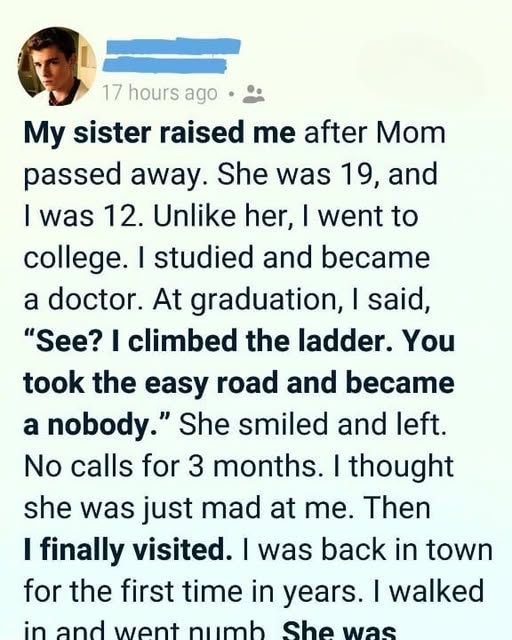
When our mother died, I was twelve years old.
Hospitals have a particular silence after tragedy — the kind that smells faintly of antiseptic and finality. I remember standing in that quiet, unsure where to look or who would guide me next.
My sister was nineteen.
In the weeks that followed, she made a choice that did not come with applause or ceremony. She left her university courses. She folded her ambitions neatly and placed them aside. Without speeches or declarations, she stepped into adulthood faster than anyone should have to.
She became steady.
While others her age prepared for exams and parties, she learned the cost of rent, utility bills, and groceries. She worked long shifts in the service industry, often beginning before sunrise. I didn’t fully understand then how tired she must have been. I only knew that dinner appeared on the table and the lights stayed on.
She never spoke about what she gave up.
She made sure I finished my homework. She attended parent meetings. She laughed at my jokes even when her eyes carried exhaustion. If she cried, she did it quietly — somewhere I would not see.
There is a kind of leadership that doesn’t come with a title. It looks like showing up every day when leaving would be easier.
Years passed.
My classmates celebrated college acceptances and first jobs. My sister collected something different — worn shoes, sore hands, and the discipline of someone who refused to let poverty decide our story.
She taught me that intelligence is not only found in classrooms. It is found in resilience. In budgeting with precision. In knowing when to be gentle and when to be firm. In building safety out of almost nothing.
The degrees on my office wall today carry my name, but they are not mine alone. They were paid for in early mornings and late nights at a diner. In bus rides she walked instead of taking. In meals she skipped so I would not have to.
She does not frame her sacrifices as heroism. She simply says, “We did what we had to do.”
But I know better.
Greatness is not always loud or celebrated. It is often a quiet decision made in the hardest moment: to protect someone else before yourself.
My sister became my anchor when the world tilted.
And if I have become anything of worth, it is because she chose love over ease, responsibility over recognition.
The world measures success with titles and salaries.
I measure it with the memory of her coming home in the rain — tired, but smiling — so I would never feel alone.
That is the kind of greatness no institution can award.
And it lasts longer than any certificate ever will.