Woman Thinks She Found a Snake in Her Garden — Experts Reveal a Remarkable Natural Illusion
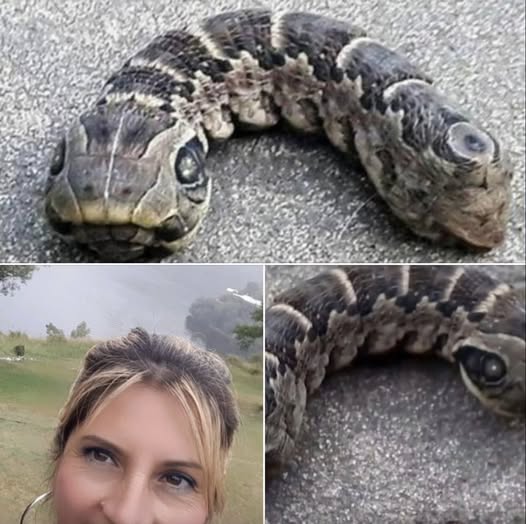
A quiet morning in Santa Fe, Argentina, turned into a moment of shock and fascination when Lujan Eroles spotted what she believed was a small snake moving through her garden.
At first glance, the strange creature appeared threatening — with a defined head, unusual “eyes,” and snake-like movements.
But what she had actually discovered was something far more extraordinary.
A Startling Discovery at Home
While tending to her garden, Eroles noticed a small, wriggling creature measuring about 10 centimeters in length.
Its body undulated subtly.
Its posture suggested danger.
And most strikingly, its large, human-like “eyes” made it appear alert and predatory.
“I thought it could be poisonous,” she later told National Geographic. “I had never seen anything like it.”
Like many people would, she recorded the encounter and shared it online, hoping others could help explain what she was seeing.
A Video That Sparked Global Curiosity
Within hours, Eroles’ video spread across social media.
Neighbors gathered.
Online users speculated.
Was it a rare snake?
A mutant insect?
An unknown species?
The mystery drew attention from amateur naturalists, educators, and scientists alike.
Eventually, experts stepped in with an answer.
The Real Identity: A Master of Disguise
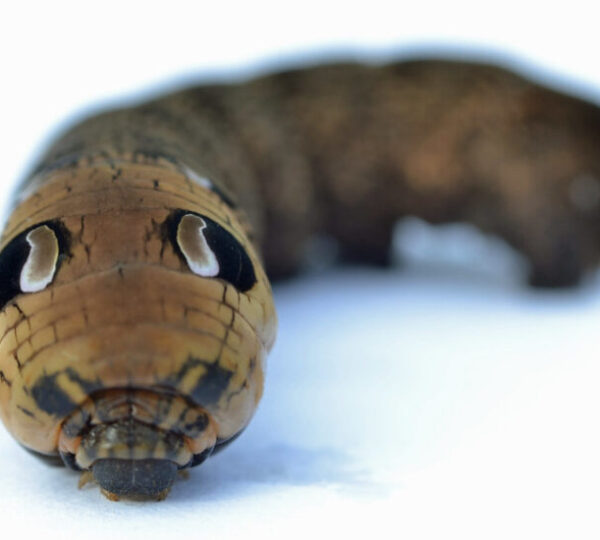
Specialists identified the creature as the caterpillar of the Elephant Hawk-Moth — scientifically known as Deilephila elpenor.
This species is famous for one of nature’s most convincing illusions.
When threatened, the caterpillar displays large eye-like markings and changes its posture to resemble a snake’s head.
It is not dangerous.
It is not venomous.
It is simply very good at pretending.
How Protective Mimicry Works
Scientists call this strategy “protective mimicry.”
Because the caterpillar lacks claws, venom, or speed, it relies on deception to survive.
Its survival tools include:
-
Enlarged false eye spots
-
Inflated body posture
-
Serpentine movement
-
Light-reflecting markings
Together, these features create the illusion of a much larger predator.
For birds and small mammals, that illusion is often enough to trigger retreat.
Why the Illusion Looks So Real
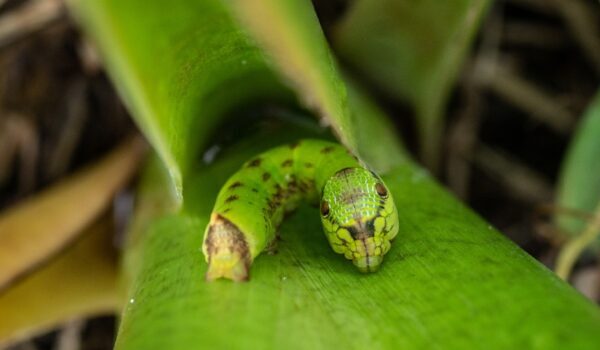
What makes this caterpillar remarkable is the precision of its design.
The eye spots are positioned to create depth.
The contours reflect light.
The head lifts to mimic a snake’s hood.
Even its slow swaying movement mirrors reptilian behavior.
Evolutionary biologists say this level of detail develops over millions of years through natural selection.
Predators that were fooled spared the caterpillar.
Those that weren’t eliminated it.
Over time, the illusion became refined.
Nature’s Ingenuity in Ordinary Places
Eroles’ discovery highlights how extraordinary wildlife often exists in everyday spaces.
Suburban gardens, parks, and yards regularly host complex ecosystems that go unnoticed.
Experts say urban and semi-urban environments frequently support surprising biodiversity.
This encounter challenges the idea that remarkable species only exist in remote jungles or rainforests.
Sometimes, wonder appears just outside your door.
How Technology Amplifies Discovery
By sharing her video, Eroles unknowingly became part of a global learning moment.
Her post connected:
-
Scientists
-
Teachers
-
Students
-
Nature lovers
-
Curious viewers
Today, similar videos often become informal tools for education, helping people understand evolution, adaptation, and ecology.
This is a growing example of “citizen science” — where ordinary people contribute valuable observations.
Fear, Curiosity, and Learning
Psychologists note that humans often respond to unfamiliar animals with a mix of fear and fascination.
Eroles’ reaction followed that pattern.
Initial alarm.
Then curiosity.
Then understanding.
This emotional progression often leads to deeper appreciation of nature.
Instead of avoidance, people gain respect.
A Lesson in Perspective
At first glance, the caterpillar looked dangerous.
In reality, it was fragile and defenseless.
This contrast reflects a broader truth about nature: appearances are often deceptive.
What seems threatening may be vulnerable.
What seems simple may be sophisticated.
Observation reveals complexity.
Why Protecting Small Species Matters
Environmental experts stress that insects like the Elephant Hawk-Moth Caterpillar are vital to ecosystems.
They support:
-
Pollination
-
Food chains
-
Plant reproduction
-
Biodiversity balance
Habitat loss, pesticides, and climate change threaten many such species.
Raising awareness helps promote conservation.
Reflection: Wonder in the Everyday
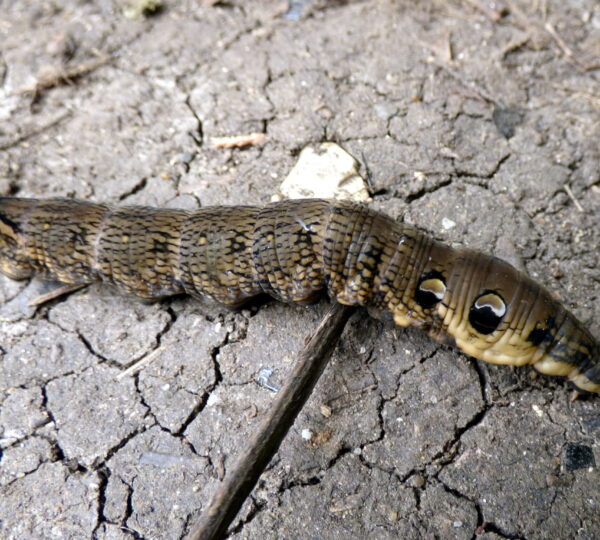
Encounters like this reconnect people with the living world.
In a digital age, moments of direct interaction with nature foster humility and curiosity.
They remind us that life evolves ingenious solutions for survival — even at the smallest scale.
Eroles’ fear transformed into admiration.
That shift is powerful.
Conclusion: A Small Creature With a Big Story
What began as a frightening garden moment became a lesson in evolution, perception, and resilience.
The “snake” was never a snake.
It was a harmless caterpillar using one of nature’s cleverest survival strategies.
Through her curiosity and willingness to share, Lujan Eroles turned a private encounter into a global story of wonder.
Her experience reminds us that extraordinary beauty and intelligence exist all around us — waiting to be noticed.
Sometimes, all it takes is a closer look.