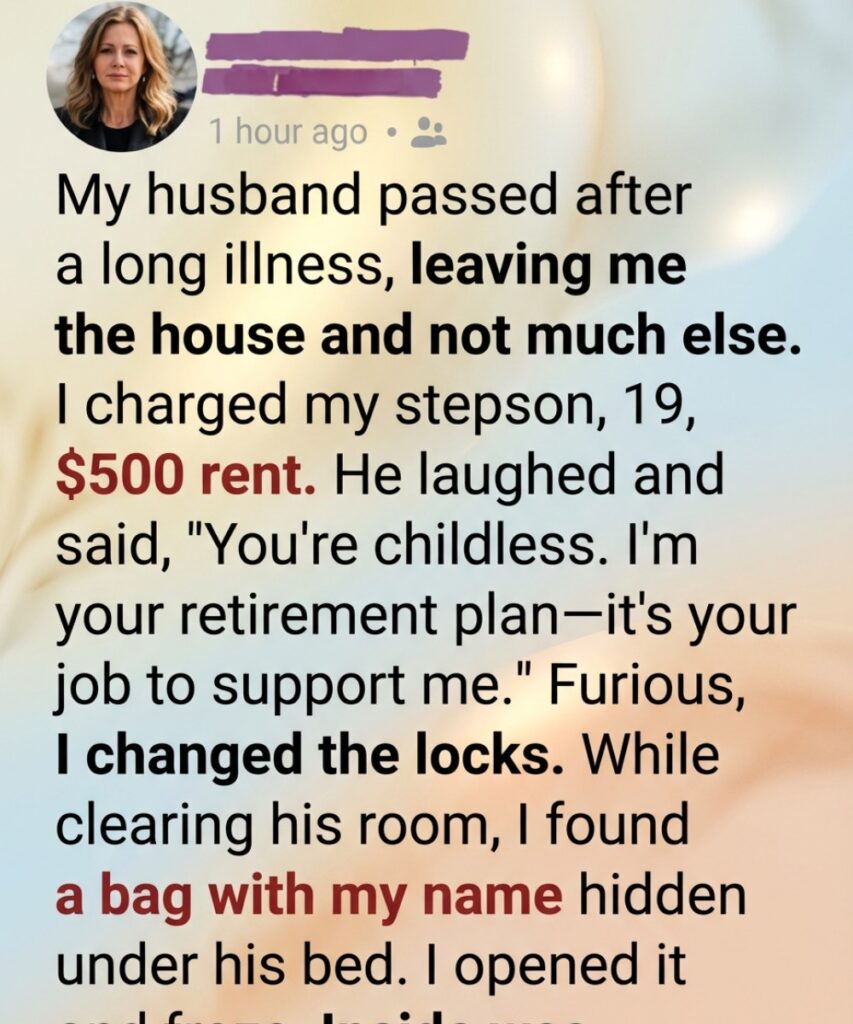
After her husband died, the quiet of the house felt heavier than the hospital machines ever had. The rooms that once held routine and warmth now echoed with absence. Alongside grief came the steady pressure of medical bills, mortgage payments, and the question of how life would keep moving forward.
When she asked her nineteen-year-old stepson, Leo, if he could help financially, his lighthearted jokes and calm tone felt like dismissal. In the fragile space of loss, his attempt to ease the tension sounded like indifference. By the end of the night, fear had hardened into a painful decision: she couldn’t carry everything alone anymore.
The next morning, she began packing Leo’s belongings.
It wasn’t anger that guided her hands — it was exhaustion mixed with the belief that he didn’t understand how close they were to falling behind. As she cleared the space beneath his bed, she found a duffel bag with her name written on it.
Inside was a savings passbook filled with small, steady deposits. Next to it sat a birthday card, already written.
The message explained what the numbers couldn’t: Leo had been saving quietly for years, preparing for emergencies, hoping to ease the burden once his father was gone. His jokes weren’t avoidance — they were his way of keeping fear from spilling out before he could offer real help.
What she had taken as carelessness was actually quiet responsibility.
Grief had bent her perspective, turning silence into misunderstanding. Leo had been carrying the weight in his own way — not with speeches, but with sacrifice.
When he came home that evening, there was no argument waiting.
Only honesty.
She apologized for misjudging him. He admitted he didn’t know how to talk about heavy things without humor. They sat together and finally shared the fears they had both been holding alone.
The house still held loss — that didn’t vanish.
But it gained something new: trust.
They weren’t just surviving in the same space anymore. They were facing the future together.
Family, she realized, isn’t only shaped by history.
It’s shaped by the choice to stay when things are hardest.
Love doesn’t always announce itself loudly.
Sometimes it shows up in small deposits, hidden savings, and the quiet determination of someone doing their best before anyone knows they need to.
And in that understanding, the home began to feel steady again — not because grief ended, but because they no longer carried it alone.