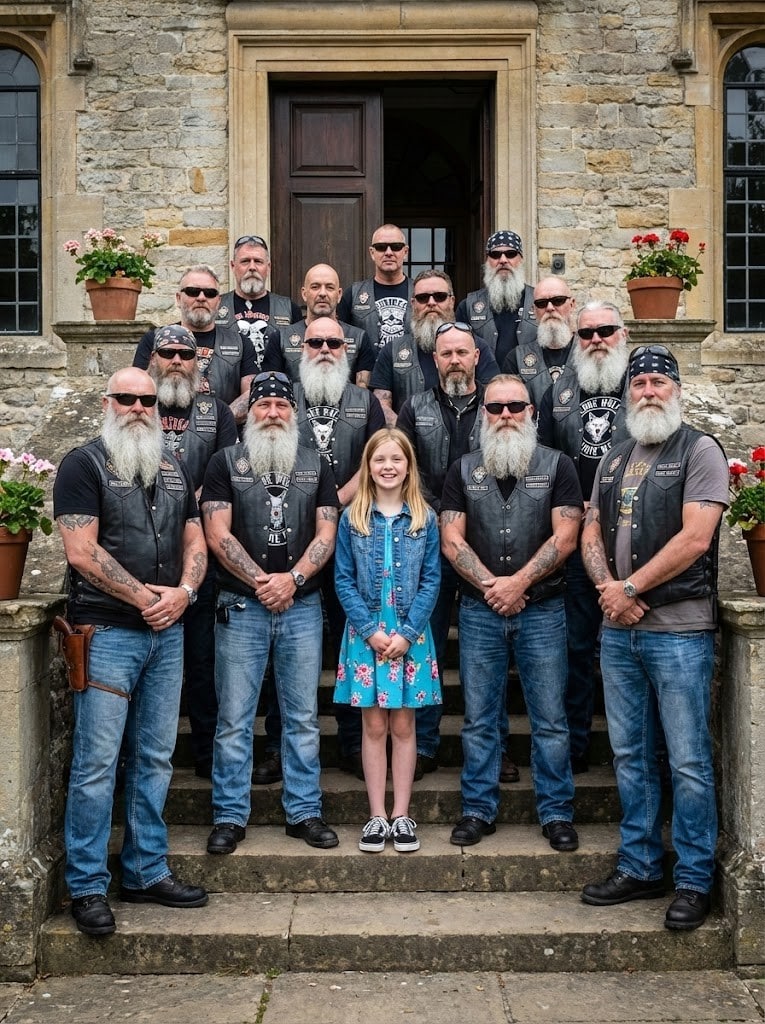
I was at the courthouse for something ordinary—a parking ticket—when I noticed Maya on the front steps. She couldn’t have been more than fifteen. Her hands shook as she spoke into a phone that wasn’t answering, panic breaking through her whispers.
People in pressed suits passed without slowing.
Those of us who had learned to listen for distress heard everything.
Her father was a police sergeant. He had been using his position to silence reports, intimidate foster families, and explain away the bruises on her neck as “discipline.” Every attempt she made to speak had been closed off by the same authority meant to protect her.
One message went out. Not for revenge. For presence.
By the time her hearing was called, dozens of us had arrived—veterans, riders, men and women who understood both fear and duty. We sat quietly in the courtroom, filling the space not with threats, but with attention. Maya wasn’t alone anymore.
Her pro-bono lawyer came prepared. Hospital records. Statements. Recovered footage that hadn’t disappeared as completely as her father believed. What had been framed as a routine custody issue slowly became something else entirely.
Truth has weight when it’s finally allowed to stand.
When Maya spoke, she didn’t exaggerate. She simply told what life had been—injuries explained away, threats made behind closed doors, cruelty justified as authority. The room grew still in the way it does when denial can no longer breathe.
Her father tried to interrupt. Tried to regain control with the same anger that had ruled their home.
This time, it didn’t work.
Court officers stepped in. Internal Affairs followed. The badge that had shielded him for years could no longer outrun evidence or witnesses.
Maya cried—not from fear, but from release.
The nightmare didn’t end with noise. It ended with accountability.
Two years later, Maya is studying social work and volunteering with a nonprofit that helps children navigate systems that once failed her. She rides with us sometimes—not because she needs protection now, but because she found community where she once found silence.
Her father is serving a long sentence.
Not because of intimidation.
Because truth was finally heard.
Strength, she often says, isn’t about power over others.
It’s about who stands beside you when power is being abused.
Sometimes the people who look roughest are simply the ones who know what it means to guard the vulnerable. Not with fists — but with presence, persistence, and the refusal to look away.
And sometimes, that is enough to change a life.