
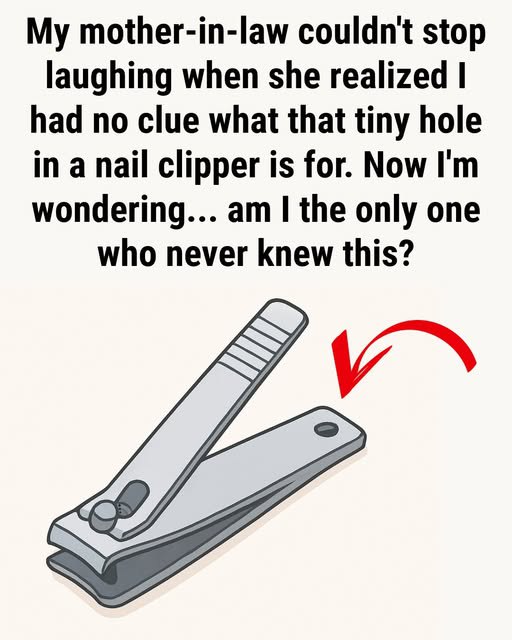
Nail clippers are among those everyday objects we use without much thought. They sit in drawers, bags, and bathroom cabinets, reaching our hands almost automatically when a nail needs trimming or a thread needs cutting. Many models include a small round hole at one end—easy to overlook, easy to dismiss as decorative. It isn’t. That detail exists for practical reasons, and once noticed, it subtly expands what the tool can offer.
The most straightforward use of the hole is as a secure attachment point. Threaded directly onto a key ring, a nail clipper becomes something you always have with you rather than something you occasionally search for. Unlike thin chains or clips that can loosen or snap, the solid metal opening holds firmly. It’s a quiet convenience—useful while traveling, at work, or in moments when a loose nail or fabric thread demands attention sooner than expected.
The opening also serves as a point of leverage. Thin wire can be fed through it and bent with greater control than fingers alone allow. The pressure is distributed through the tool rather than your skin, reducing strain and the small cuts that often come with improvised fixes. For light household adjustments or craft work, it’s not elegant—but it’s effective.
Even beyond the hole itself, nail clippers tend to carry overlooked utility. The attached metal file, usually meant for smoothing edges or cleaning beneath nails, can stand in for a tiny screwdriver in a pinch. With patience, it can turn small screws just enough to loosen or tighten them. The pointed end can also slice through packing tape cleanly, opening boxes without tearing what’s inside.
None of this turns a nail clipper into a true multitool. It remains what it is: simple, compact, limited. But thoughtful design often works this way. Small choices add quiet flexibility, not flash. The round hole isn’t there to impress—it’s there to help, when you need it, without asking for attention.