
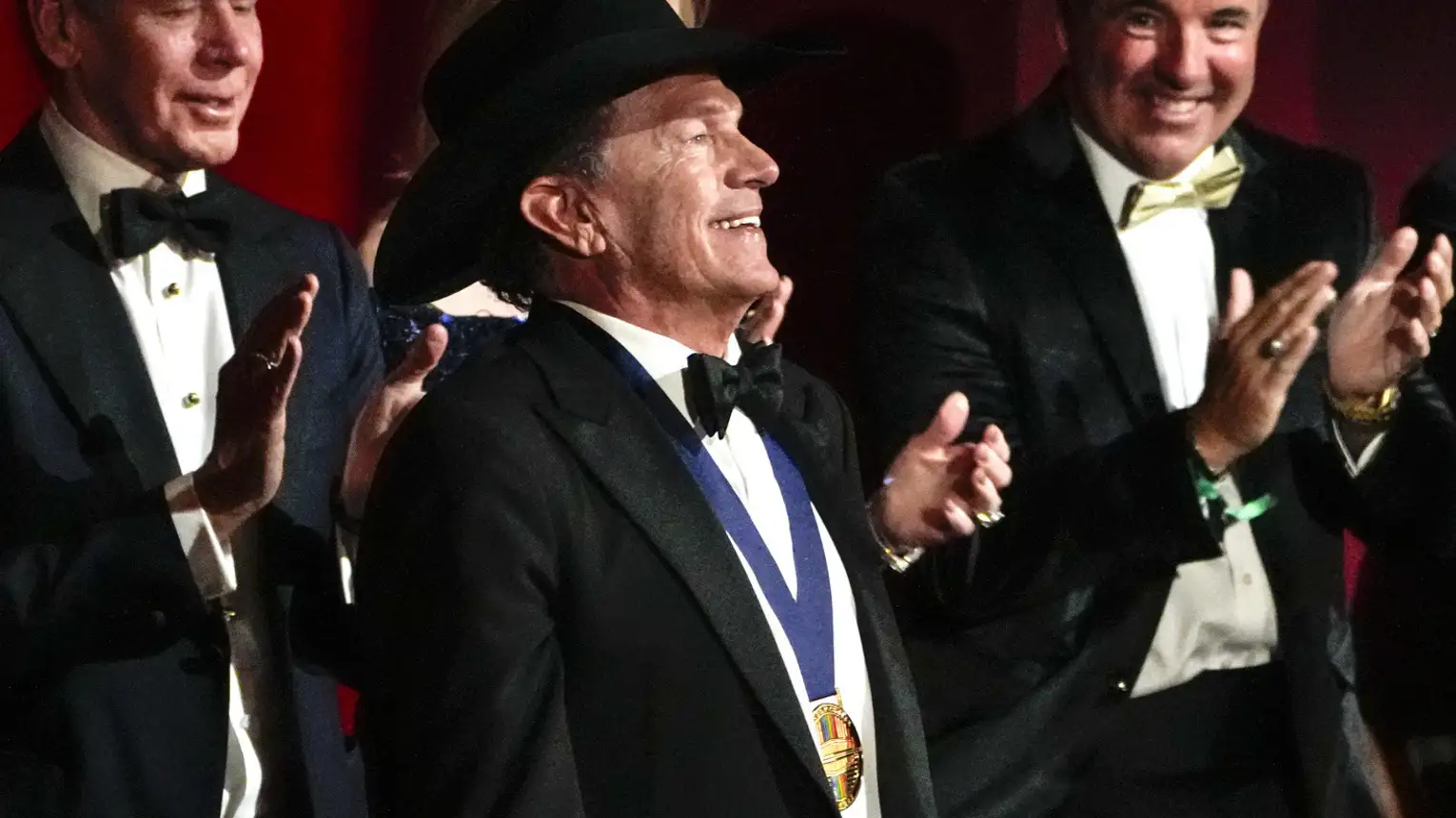
George Strait, long seen as one of country music’s most steady and enduring pillars, quietly took a seat beside former President Donald Trump. There was no introduction, no nod from the stage, and no exchange meant for cameras. The moment passed without fanfare—which is exactly what made it noticeable.
Strait’s presence at the Kennedy Center Honors felt entirely in character. His career has always been built on durability rather than spectacle, tradition rather than provocation. For decades, his music has leaned on clarity and emotional honesty, and he’s rarely chased headlines beyond his work. From the balcony, he looked exactly as audiences expect George Strait to look: attentive, composed, and content to keep the focus on the artists being honored.
Trump’s presence carried a different kind of gravity, shaped by politics rather than music. No matter one’s perspective, his visibility tends to alter the atmosphere of any cultural setting. Yet on this night, that tension barely surfaced. The Kennedy Center Honors doesn’t ask its audience to agree; it asks them to observe, listen, and acknowledge the impact of artists who’ve shaped the nation’s cultural life.
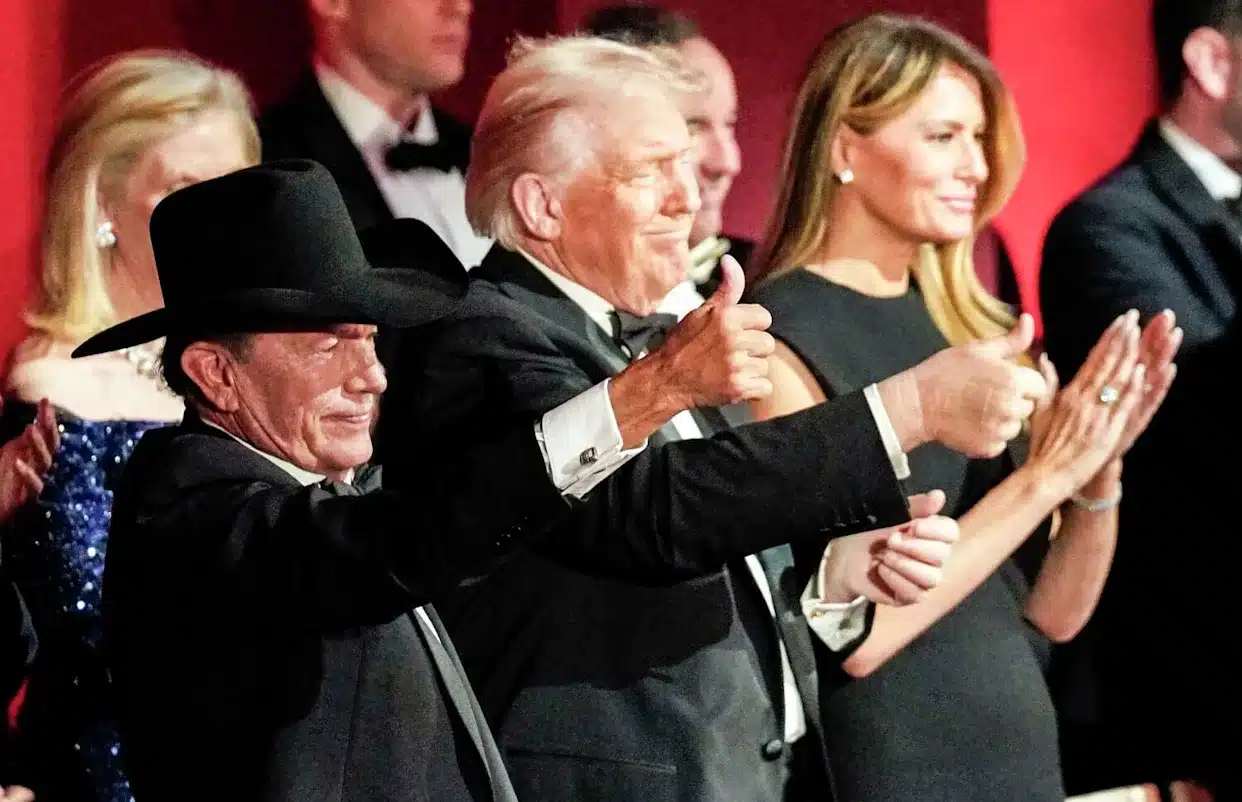
From their shared vantage point, the two men watched the stage as tributes unfolded—performances carefully designed to reflect decades of influence and craft. Music filled the hall, speeches honored long careers, and the audience responded with the sustained attention the ceremony invites. The spotlight stayed where it belonged: on creativity, discipline, and legacy.
What made the moment resonate wasn’t symbolism layered on afterward, but restraint in the moment itself. No one on stage mentioned the seating. The cameras didn’t linger. It was treated as incidental, not instructive. When the ceremony later aired, viewers noticed the image precisely because it didn’t demand interpretation.
In that way, the balcony scene mirrored the broader aim of the Kennedy Center Honors. Differences aren’t erased—they’re set aside, briefly. Artists, politicians, donors, and guests share the same space with a single expectation: attention. Attention to the work, the history, and the idea that culture can stand apart from debate, even if only for an evening.
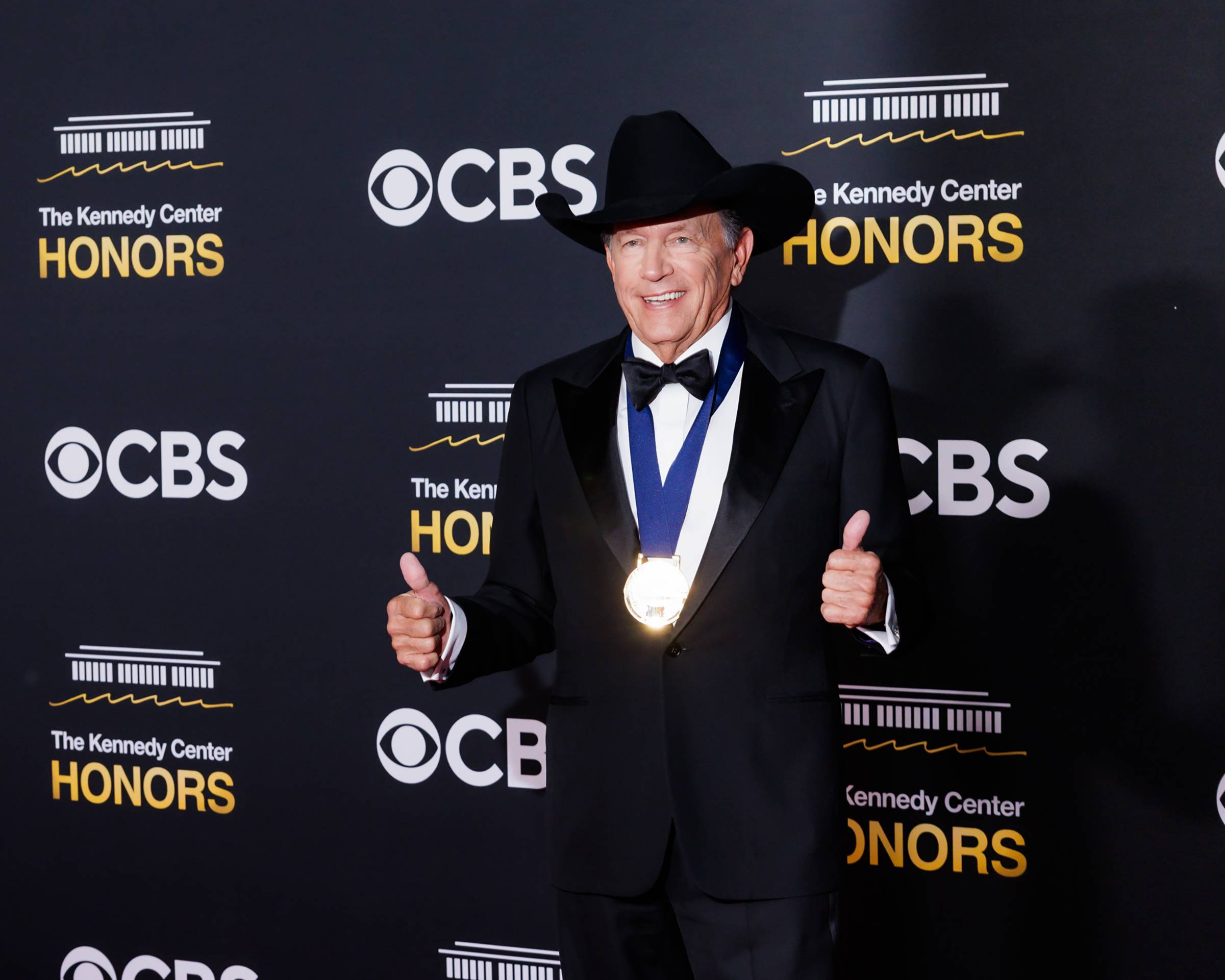
Strait’s role aligned seamlessly with his legacy. He didn’t comment, react, or perform for the lens. He showed up, listened, and let others remain center stage. That quiet professionalism is a large part of why his influence has lasted.
When the night concluded and the applause faded, the image lingered—not because it resolved anything, but because it didn’t try to. It captured a rare pause: a moment where music history and political history occupied the same room without colliding. And sometimes, that kind of restraint speaks louder than any statement ever could.