When the ambulance lights painted our bedroom ceiling red and blue, I thought I was just about to feed a starving cat.
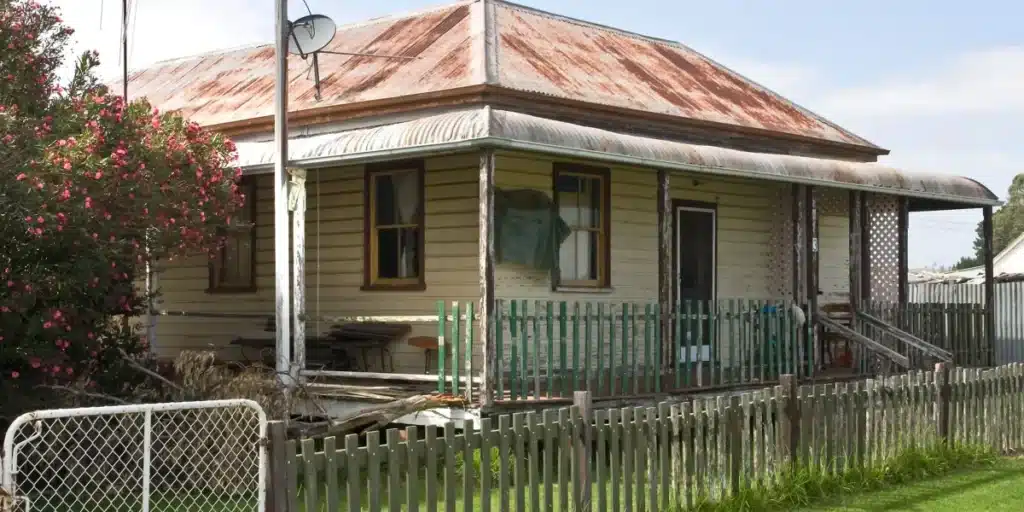
We’d lived on Maple Street for a year—PTA on Tuesdays, soccer on Saturdays, barbecues whenever the weather forgave us. Everyone waved. Everyone talked. Everyone, except the woman in the weather-beaten Victorian at the end: Mrs. Halloway. Gray bun, pink slippers, eyes fixed on the ground. Packages sat for days on her porch. No visitors. Only the silhouette of a cat in the front window and, sometimes after midnight, a thin ribbon of piano drifting into the dark.
That night the front door stood open. EMTs moved fast, radios crackling. As they wheeled her past, she caught my wrist with a grip that belied the oxygen mask and paper-white skin.
“Please,” she rasped, tugging the mask down. “My cat. Don’t let her starve.”
I promised. Then I stepped into a house that smelled like dust and kept secrets.
Her orange tabby—white mittens, bones too sharp—cried until I found food and water. I should have left. Instead, curiosity tugged. The living room was swathed in sheeted furniture. I lifted one: a baby grand crouched beneath, its keys yellowed, its lid powdered with time. On the mantle, a black-and-white portrait of a young woman in a sequined evening gown, eyes closed at a microphone, as if listening to the room hold its breath.
I knew that face. My dad’s Sunday vinyls had taught me her voice—one luminous jazz record in the ’60s, a six-month tour, and then smoke. He called her the greatest mystery in music. One day on every station. The next, gone.
She had been living across the street.
I took daisies to room 314 the next morning, my heart galloping. “I know who you are,” I whispered.
Her eyes narrowed. “No, you don’t.”
“I recognized the photo.”
A long beat. Then, quietly: “Close the door.”
Truth came in pieces—between coughs and the soft metronome of her monitor. The famous voice, the controlling husband who doubled as her manager, the money he pocketed, the stories he told to kill her career: “unreliable,” “drinking,” “unstable.” When she tried to leave, he pointed to their daughter. If she ran, he’d make sure she never saw the girl again.
So she vanished. Not to Paris, not to a cabin to write—just to Maple Street, another name, windows closed, the music bottled. Years later, her daughter was gone too, she said—a car crash. Her husband followed. Only the piano, the cat, and a life turned down to a whisper remained.
I started showing up with soup and spare courage. She hated the help; then she needed it; then she let my kids call her Grandma. She played for them once, hands trembling, and the house seemed to sit up straighter.
Late one night, I posted a question on a vintage-music forum—anonymous, curious. Replies flooded in like a tide that had been waiting for a moon. People still knew. People still cared. I didn’t show her. Not yet.
On a rainy Thursday, she beckoned me close. “I lied,” she said, and the room chilled. “My daughter didn’t die. She left me. Said I was weak. Changed her name. I never saw her again.” She pressed a folded paper into my hand. “Last address I found, years ago. I was too much a coward to go.”
I argued with myself for three weeks. Was it my place? What if the wound needed its bandage? Finally, I drove to a neat suburban home 20 minutes away. A woman in her late fifties opened the door. Same cheekbones. Same eyes.
“I think I know your mother,” I blurted.
Her face drained. She slammed the door.
From inside: a teenager’s voice. “Mom? Who was that?”
I told Mrs. Halloway everything. She wept. “I’m a grandmother,” she breathed. “And I never knew.”
The doctors had given her weeks. We rented a wheelchair and went together. Her daughter—Susan—opened the door again, anger sparking.
“How dare you bring her here?”
Then the teenager appeared, curious and unburdened. Three generations locked eyes across twenty-six years.
Something in Susan’s face cracked. She stepped aside.
I sat small in a corner and watched the past turn itself over. The apologies were clumsy and raw. Susan’s words were knives and bandages at the same time. “I waited for you to save us,” she said. “I waited years.”
“I was terrified,” Mrs. Halloway whispered. “I thought staying was protecting you.”
“It wasn’t,” Susan said softly. “But I understand why you thought it was.”
When we left, Mrs. Halloway squeezed my fingers. “I can die in peace. They know I loved them. They know I tried.”
Two weeks later she slipped away in her sleep, Melody curled against her side. At the funeral, Susan and her daughter sat in the front row. My husband played that one song on the church piano; Emma sang along, a ghost of her grandmother in her voice. My kids cried like they’d lost the real thing—because, in a way, they had.
Afterward, Maple Street looked the same: sprinklers, porch waves, a stack of packages at the Victorian that would never be collected. But I couldn’t unlearn what the unlocked door had taught me.
Sometimes being a good neighbor is more than loaning sugar or waving from the porch. Sometimes it’s stepping into someone else’s quiet and helping them turn the volume back up, just long enough to finish the song.
{"post":89844,"page":1,"next":[{"id":89815,"title":"Man\u2019s Shocking Behavior During Campus Shooting","url":"https:\/\/new24.info\/89815"},{"id":89812,"title":"Moments Before the Tragedy: Charlie Kirk\u2019s Wife Shared Psalm 46:1 \u2014 Hours Later, He Was Shot","url":"https:\/\/new24.info\/89812"},{"id":89809,"title":"SUPREME COURT DROPS EARTH-SHAKING 7-2 DECISION","url":"https:\/\/new24.info\/89809"},{"id":89806,"title":"\u201cMistaken Identity\u201d: Grandmother Speaks Out After FBI Arrest in Charlie Kirk Case","url":"https:\/\/new24.info\/89806"},{"id":89803,"title":"VIDEO: The newly leaked 911 audio from the Charlie Kirk incident will leave you speechless. This is far more shocking than we were told. You HAVE to hear it to believe it.","url":"https:\/\/new24.info\/89803"},{"id":89800,"title":"\u201cMy dear\u2026 why did you leave me\u2026\u201d \u2013 a heartbreaking scream rang out at the moment Charlie Kirk\u2019s coffin was brought back to his homeland on a special flight, causing the whole space to fall silent. ULTIMATE PAIN: His family collapsed in tragedy, and Charlie\u2019s only sister could not bear the shock when she saw her brother\u2019s coffin and collapsed unconscious on the spot. That tragic image made everyone present burst into tears, a heavy atmosphere enveloped the entire airport. The online community exploded with sharing, sending prayers and endless condolences to Kirk\u2019s family. This moment has become a symbol of the heartbreaking pain of a country losing a son at such a young age.","url":"https:\/\/new24.info\/89800"},{"id":89797,"title":"North Carolina News: Boyfriend of Ukrainian Woman Speaks Out After Train Tragedy Sparks Outrage","url":"https:\/\/new24.info\/89797"},{"id":89791,"title":"Oh God, who remembers this handsome guy, the son of one of the most famous actors ever","url":"https:\/\/new24.info\/89791"},{"id":89787,"title":"SHOCKING DETAIL: The Person of Interest\u2019s Shirt Could Say More Than Words","url":"https:\/\/new24.info\/89787"},{"id":89784,"title":"My Husband Gave Me A \u201cJust Because\u201d Gift\u2014But I Recognized It Immediately","url":"https:\/\/new24.info\/89784"},{"id":89781,"title":"We Planned Our Honeymoon In Japan, But I Returned With Something Else","url":"https:\/\/new24.info\/89781"},{"id":89778,"title":"At Her 60th Birthday, My MIL Seated My Daughter in the Laundry Room, Away from the Other Kids \u2013 Then Shocked Everyone with Her \u0027Announcement\u0027","url":"https:\/\/new24.info\/89778"},{"id":89775,"title":"I Fell for My Daughter-in-Law\u0027s Grumpy Neighbor, but Thanksgiving Exposed the Awful Truth About Our Relationship","url":"https:\/\/new24.info\/89775"},{"id":89768,"title":"She\u0027s 82 and still turning heads - better sit before you see her stunning transformation","url":"https:\/\/new24.info\/89768"}]}