
The Real Lesson in Resilience: When Accountability Replaces Excuses
When 12-year-old Jenny arrived in a new town after her parents’ divorce, she wasn’t expecting perfection—just a fair chance to start over. Her mother, Katie, hoped the same. A new school, new faces, and maybe a break from the loneliness that had followed them for months.
That hope lasted only a few weeks.
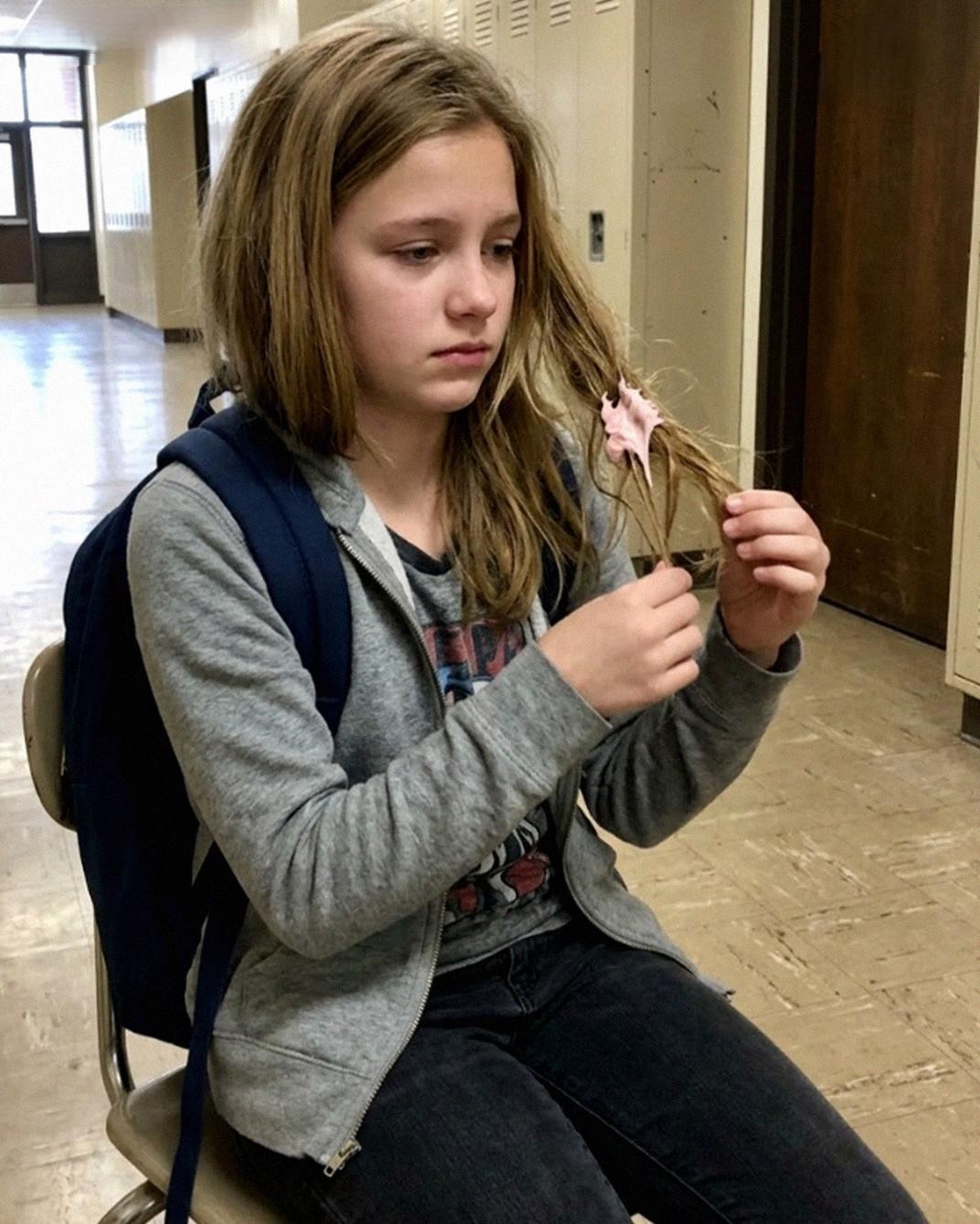
One day during science class, while the teacher briefly stepped out, three girls—Madison, Chloe, and Brielle—decided to single Jenny out. It wasn’t subtle teasing. They pressed a wad of bright pink bubblegum into her hair, turning a quiet classroom moment into public humiliation.
For Jenny, it was a sharp reminder of how quickly things can turn.
For Katie, it was something else entirely.
A Different Kind of Response
When the school called Katie in, she expected tears, anger, and a confrontation. Instead, she found Jenny sitting calmly, carefully trying to separate the gum from her hair.
“I already handled it,” Jenny said quietly. “They’ll be begging for forgiveness.”
It didn’t make sense at first.
But it soon would.
Inside the Principal’s Office
The meeting felt tense from the start. The three girls sat with their mothers, already preparing their defenses.
And the excuses came quickly.
One parent dismissed it as a harmless prank. Another suggested it was typical middle-school behavior. The situation was being framed as something minor—something Jenny should simply brush off.
But Jenny didn’t react emotionally. She didn’t argue or raise her voice.
She simply spoke.
Calmly, clearly, she repeated exactly what had happened—every word, every insult, every detail the others hoped would stay buried. With each sentence, the narrative shifted. What had been framed as a joke became something much harder to dismiss.
The Moment That Changed the Room
Then the teacher added context.
She described how Jenny had spent her first weeks quietly helping others—organizing lab materials, assisting classmates, contributing without drawing attention to herself.
That contrast changed everything.
The image of a “sensitive new student” no longer held up. Instead, it became clear: three students had targeted someone who had done nothing to deserve it.
The room grew quieter. Even the parents who had arrived ready to defend their children began to reconsider.
Not Revenge—Just Truth
Jenny didn’t ask for punishment behind closed doors.
She asked for something simpler—and far more powerful: a direct apology. First in the office, then in front of their class.
That request shifted the balance completely.
Suddenly, the focus wasn’t on avoiding trouble. It was on facing it.
The girls who had acted confidently days before were now uncomfortable, aware that their actions would be seen and acknowledged openly. The situation was no longer something they could minimize.
And Jenny didn’t push harder. She just stood her ground.
A Week Later
When the science fair arrived, Jenny showed up like nothing had happened—except it had shaped her.
Her project stood out immediately: a solar-powered water filtration system, thoughtful and well-executed. It wasn’t just good—it showed effort, focus, and confidence.
When her name was announced as the winner, the reaction in the room was different.
It wasn’t sympathy.
It was respect.
What Actually Changed
The real shift didn’t come from punishment or confrontation. It came from clarity.
Jenny didn’t try to overpower the situation. She didn’t respond with anger. She made sure the truth was seen, and she refused to shrink to keep others comfortable.
For Katie, that was the moment everything clicked. Her daughter didn’t need someone to fight for her. She needed space to show who she already was.
By the end of that week, Jenny wasn’t “the new girl” anymore.
She was someone people noticed—for the right reasons.
Final Thought
Sometimes resilience isn’t loud.
It’s quiet, steady, and impossible to ignore once it shows itself.
And when accountability replaces excuses, even small moments can change how an entire room sees things.