
My sister called me late one night, her voice barely holding together. “Can you open the door… please?”
I was already halfway down the stairs. I had heard a car pull up, the engine cutting off too quickly, like whoever was inside didn’t want to sit there even a second longer.
When I opened the door, she was standing there with her two kids, a few overstuffed bags, and a look that made my chest tighten before she said a word.
“Come in,” I said.
She didn’t move right away. Just looked past me, into the house, like she needed to make sure it was real.
Then she stepped inside.
That first night was quiet in the way chaos sometimes is. Blankets on the floor. Crackers and juice boxes. The kids whispering and asking if this was a sleepover.
“Yes,” she told them, smiling just enough to make it believable.
But later, when the house finally settled, we sat at the kitchen table and the truth came out.
Her husband had lost his job months ago. He hadn’t told her. Bills stacked up, notices came in, and he kept pretending everything was fine until she found out.
They argued.
And then, instead of fixing it, he opened the door and told her to leave.
I didn’t ask her to explain more than she could.
“You can stay here as long as you need,” I said.
And I meant it.
Life adjusted the way it always does—slowly, without asking.
Mornings filled with cartoons and cereal crumbs. Toys showing up in places I didn’t remember leaving them. School papers piling on the counter. It was loud, messy, inconvenient.
And somehow, it felt right.
After a few weeks, she asked if she could use the basement.
“I just need a place to sort things,” she said. “Get organized. Make space.”
I said yes without thinking twice.
I trusted her.
So when I noticed a few bags by the basement door or heard something shift out there during the day, I didn’t question it. I had my own routine. Work, home, exhaustion. I wasn’t looking for problems.
Three months passed like that.
Then one morning, just as I was about to leave, my neighbor knocked.
“You might want to check your basement,” she said, carefully.
There was something in her voice that didn’t sit right.
I stepped outside, my mind already racing ahead of me.
Behind me, the front door opened fast.
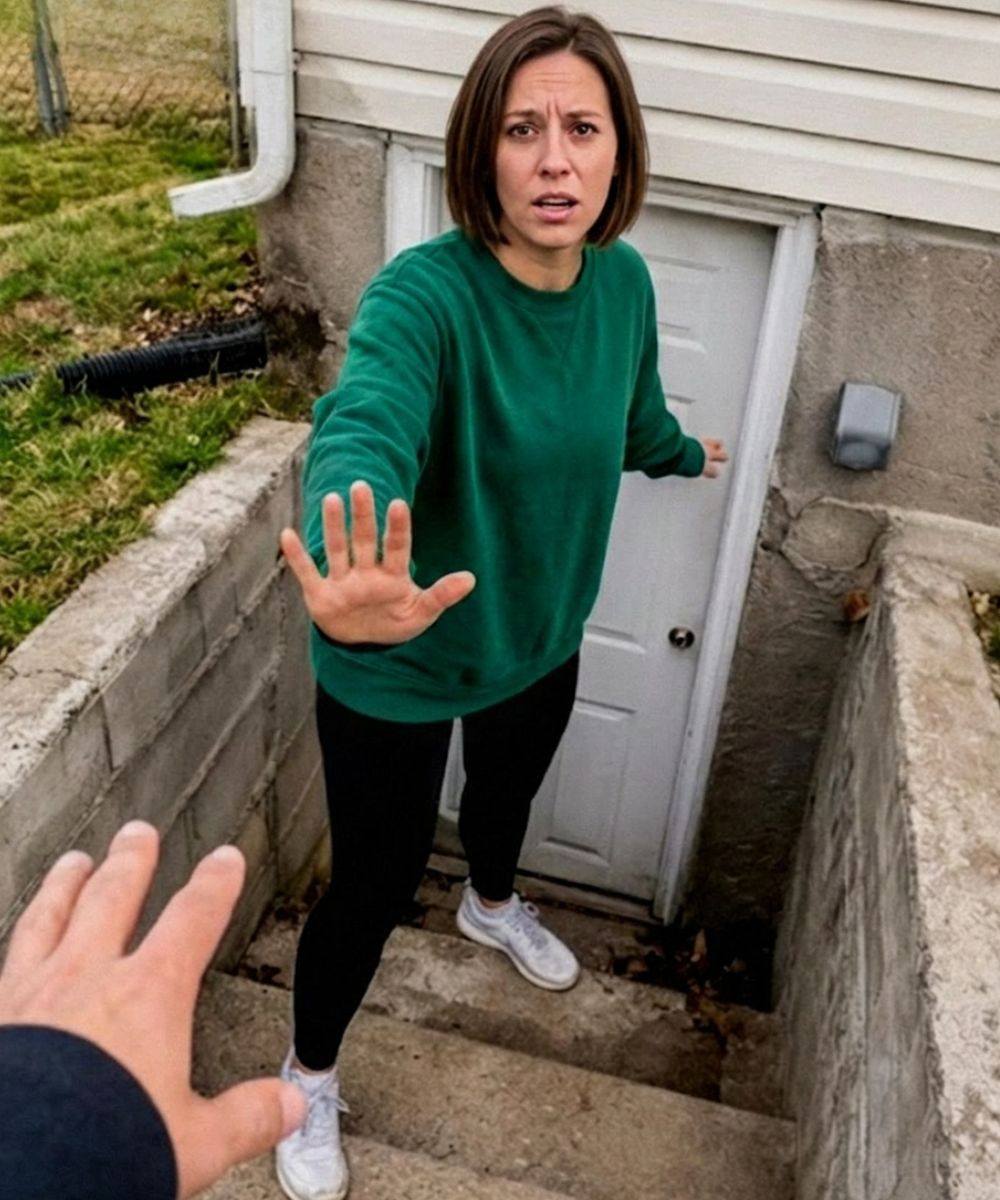
“Wait,” my sister said, rushing down the steps. “Please… let me explain first.”
That was the moment everything shifted.
People don’t run like that unless there’s something they don’t want you to see.
I didn’t stop.
I walked to the side entrance and unlocked the door.
And when I opened it, I almost didn’t recognize the space.
The basement wasn’t cluttered anymore. It was clean. Organized. There were lamps, a rug, boxes stacked neatly, furniture wrapped and ready to move.
It looked less like storage and more like… preparation.
And standing in the middle of it was him.
Her husband.
I just stared for a second, trying to fit that image into something that made sense.
Then I said, “What is going on?”
Upstairs, no one sat until I told them to.
He started first. Admitted everything. Losing his job. Lying. Letting things collapse instead of facing them.
“I messed up,” he said.
“That’s one way to put it,” I replied.
My sister didn’t defend him.
She didn’t rush to explain him away.
Instead, she reached into her bag and slid a folder across the table.
I opened it.
A lease agreement.
Her name only.
“I’m moving out,” she said.
“Without him?” I asked.
She nodded. “Yes.”
I looked back at him.
He didn’t argue.
“I’m helping,” he said quietly. “That’s it.”
I let that sit for a moment.
“Then why the basement?” I asked.
She exhaled slowly. “Because I didn’t want to do this the wrong way. I didn’t want to fight with you about him. I didn’t want to feel like I had to choose sides while I was still figuring things out.”
She looked up at me then, eyes tired but steady.
“I needed something that was mine. A decision that wasn’t about surviving, or fixing him, or proving anything to anyone.”
That landed harder than I expected.
Then my neighbor stepped forward, like she’d been waiting for the right moment.
“The apartment is mine,” she said.
I blinked. “What?”
“The one above my garage,” she added. “It’s been empty. I offered it to her.”
I looked between them, trying to catch up.
And suddenly, everything made sense.
The boxes. The furniture. The quiet planning.
This wasn’t about going back.
It was about moving forward.
The next day, I stayed home.
We packed together. Carried boxes. Wiped down surfaces that had held pieces of her life for months. The kids ran between the houses, treating it like an adventure instead of a transition.
He helped too.
But carefully.
Respectfully.
On her terms.
Months later, I visited her.
The apartment was small, but it felt complete. The kids had their own space. There were plants in the window, sunlight on the floor, laughter that didn’t sound forced.
She looked different.
Still tired, yes.
But not lost.
Not waiting.
Stronger.
And that’s when it really settled in.
She hadn’t run away.
She hadn’t gone back.
She had simply moved far enough—
to stand on her own.