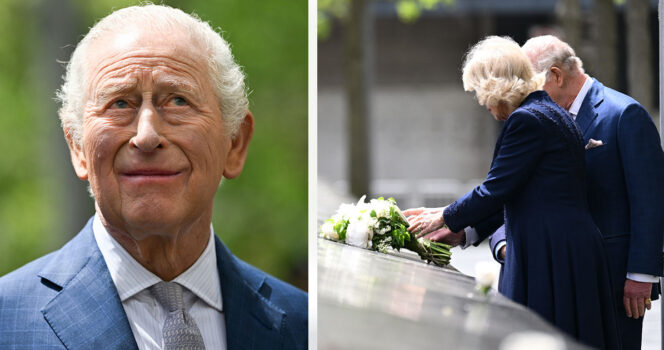
As their four-day state visit to the United States continued, King Charles III and Queen Camilla left Washington, D.C., and traveled to New York City for one of the most solemn moments of their trip.
After two days filled with formal engagements — including meetings with Donald Trump and Melania Trump, a state dinner at the White House, and an address to Congress — the tone shifted as the royal couple arrived at the National September 11 Memorial & Museum.
The visit carried a different kind of weight.
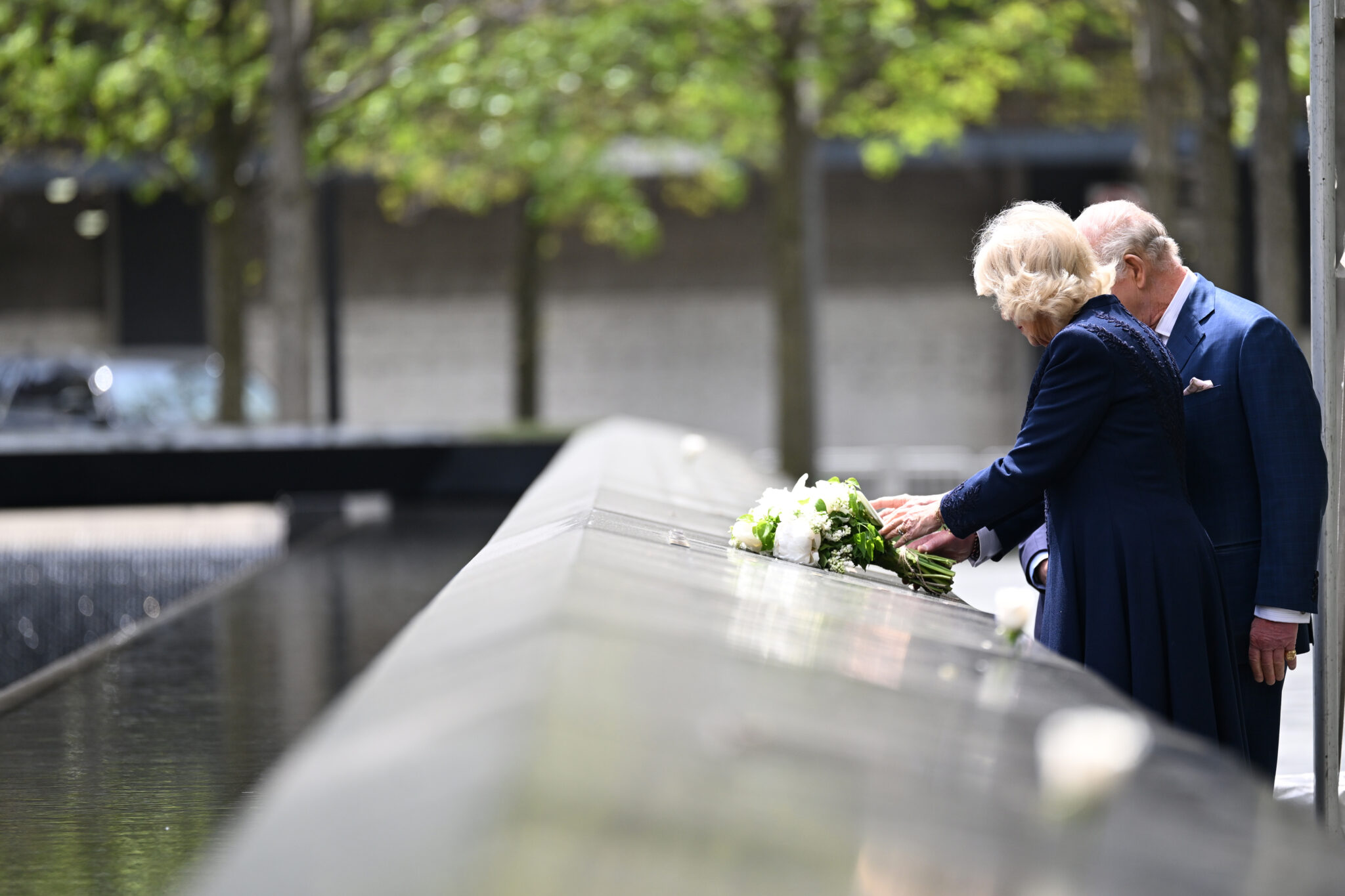
Standing before the memorial’s twin reflecting pools — each marking the footprint of the original towers — Charles and Camilla paused in silence. The names of nearly 3,000 victims, lost in both the 2001 attacks and the 1993 World Trade Center bombing, surround the site, etched into bronze panels that continue to draw visitors from around the world.
The couple was welcomed by Michael Bloomberg, who now serves as chairman of the memorial and museum, along with its president and CEO, Beth Hillman. Together, they guided the royals through the space, offering context and reflection as the visit unfolded.
But it was a small, personal gesture that left the deepest impression.
As flowers were placed at the memorial, King Charles set down a handwritten note beside them. The message was simple, yet profoundly resonant:
“We honour the memory of all those who so tragically lost their lives on 11th September 2001, and stand in every lasting solidarity with the American people in the face of such awful loss. Charles and Camilla.”
The words reflected not only remembrance, but a sense of enduring connection — a reminder of how the impact of that day continues to ripple across generations and borders.
The visit also included quiet, emotional encounters with families of those who died. Among them was Anthoulia Katsimatides, who lost her brother, John, in the attacks. He was just 31 years old, working on the 104th floor of the World Trade Center.
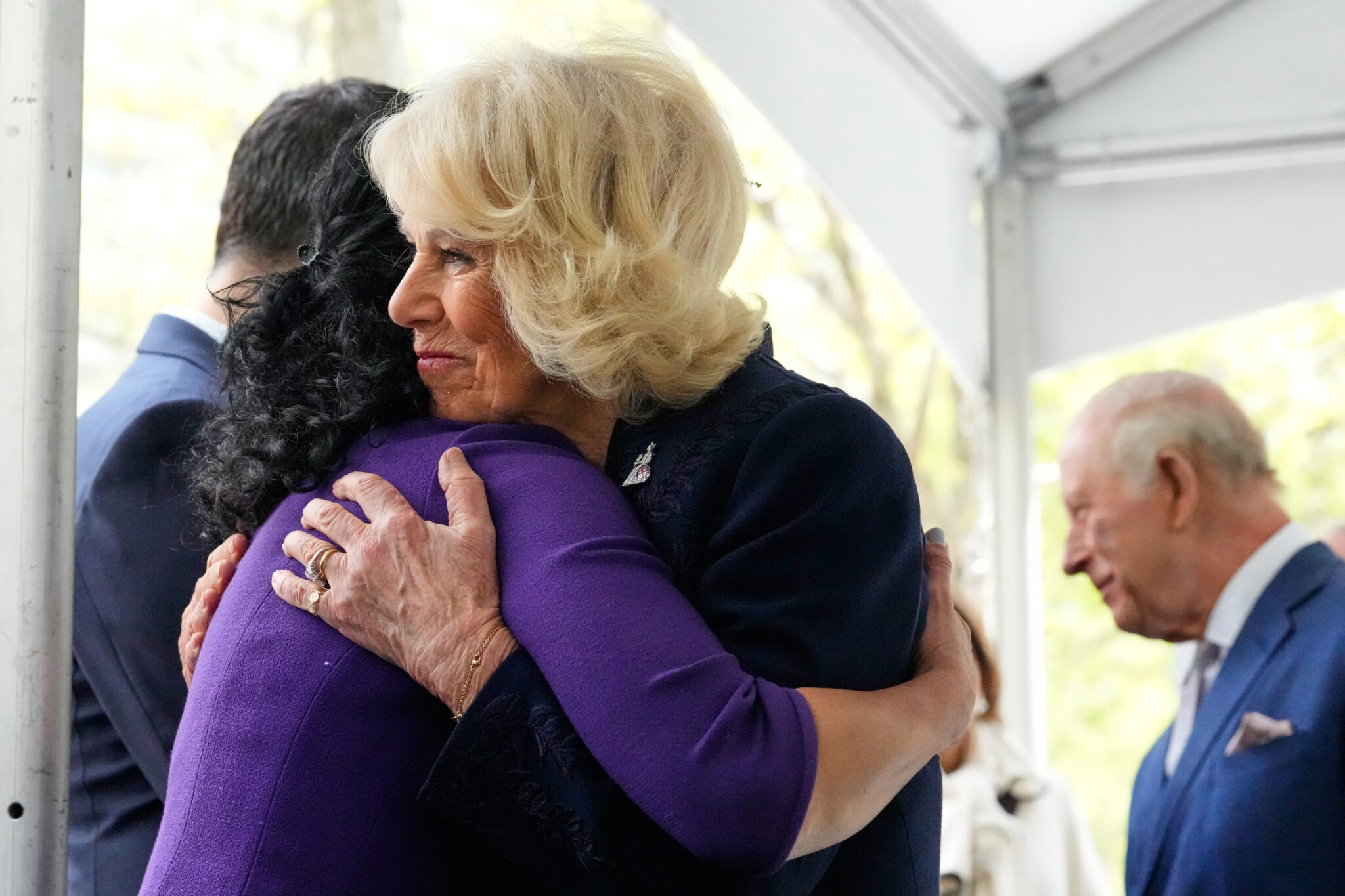
Overcome with emotion, she asked Queen Camilla for a hug — a request the Queen warmly accepted.
“She didn’t hear it at first, so I repeated myself,” Katsimatides later shared. “She smiled and said, ‘of course.’ I’m from Queens and am Greek — and we hug.”
Her voice, still heavy with grief, carried the memory of her brother. “John was such a good family man… he absolutely loved his family and was quite religious. I often say that he was praying when he died.”
Moments like these — unplanned, deeply human — often define such visits more than the formal ceremonies themselves.
While the state visit has included diplomacy, symbolism, and carefully staged events, this stop in New York stood apart. It stripped away the spectacle and returned the focus to something far more enduring: memory, loss, and shared resilience.
Nearly 25 years later, the legacy of September 11 remains etched not only in stone, but in the lives of those who continue to remember. And in that quiet space, with flowers laid and words written by hand, the visit became less about politics — and more about honoring what cannot be forgotten.