
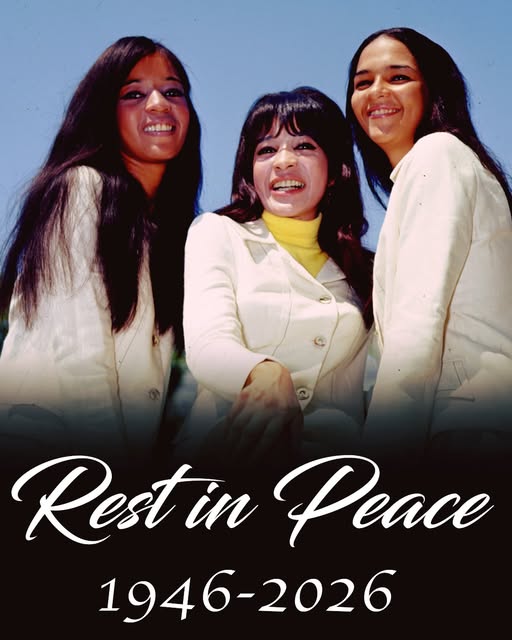
Nedra Talley Ross Remembered With Quiet Gratitude
Nedra Talley Ross has passed away at the age of 80, leaving behind a life that moved between public recognition and private steadiness.
Her daughter shared that she died peacefully at home, surrounded by family—a simple ending that reflects how she chose to live much of her later life.
A Voice Within Something Larger
As part of The Ronettes, alongside Ronnie Spector and Estelle Bennett, Nedra helped shape a sound that still carries.
Songs like Be My Baby, Walking in the Rain, and Baby, I Love You didn’t just define a moment—they remained.
Their collaboration with Phil Spector introduced the layered “Wall of Sound,” giving those recordings a depth that continues to resonate decades later.
Presence Beyond Performance
The group’s influence extended beyond music. Their image—the hair, the style, the composure—became part of how an era is remembered.
But what often stays less visible is the weight behind it.
Fame brought recognition, but also pressure. And when The Ronettes eventually disbanded, Nedra stepped away rather than hold onto something that no longer aligned with her life.
Choosing a Different Rhythm
She built something quieter.
Family, faith, and work outside the spotlight became her focus. In time, she released a Christian album and later worked in real estate—paths that didn’t seek attention, but provided steadiness.
It wasn’t a retreat. It was a decision.
Recognition That Arrived Later
When The Ronettes were inducted into the Rock and Roll Hall of Fame in 2007, it marked a kind of completion.
Not because it changed what had already been done, but because it acknowledged it.
For Nedra, it seems the meaning was less in the title and more in the remembrance of what had been built together.
What Remains
With her passing, all original members of The Ronettes are now gone.
But their work hasn’t followed them.
It continues—in recordings, in influence, in the way certain songs still find their way into people’s lives without effort.
Final Reflection
Some lives move between visibility and quiet in ways that aren’t always noticed in the moment.
Nedra Talley Ross carried both.
She was part of something that defined a generation—and then chose to live the rest of her life without needing to define anything at all.
That balance, in itself, says enough.