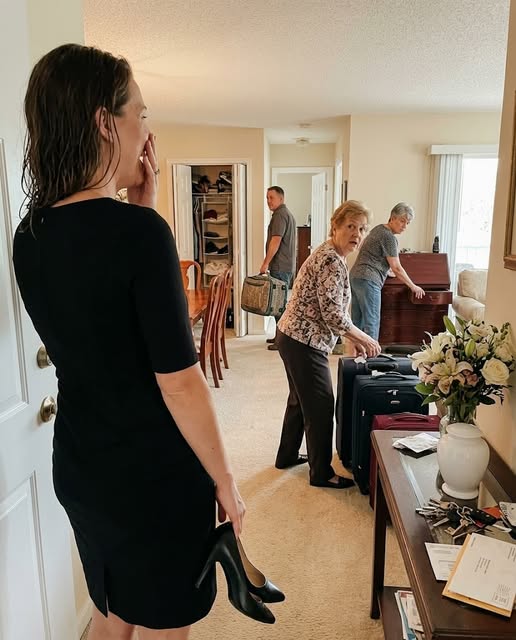
…dying hope. “This house is ours now,” Marjorie declared, her eyes darting toward the expensive watch on the dresser. “Everything of Bradley’s, too. You, get out.”
I stood frozen, the weight of the last few days pressing down on my chest. Declan, Bradley’s cousin, zipped a suitcase with a sickening, metallic rasp. He offered me a smile that didn’t reach his eyes—a smile of cold, calculated cruelty. “Don’t make this uglier than it has to be, Avery,” he muttered. “We’ve already checked. There is no will. The law is very clear about where a bachelor’s estate goes when he passes without a direct heir.”
I looked past them to the entry table. There, sitting amidst the funeral flowers, was the urn containing Bradley’s ashes. They had stepped around it, reached over it, and moved through the wreckage of my grief as if it were nothing more than discarded furniture. It was the ultimate indignity, a final insult to the man I had loved and cared for while they were nowhere to be found.
“Who let you in?” I asked, my voice trembling, not with fear, but with a rising, icy clarity.
Marjorie held up a brass key, her expression smug. “I’m his mother. I’ve always had one. And frankly, you’re just a widow now. A temporary fixture. You have no claim here.”
That was the moment I laughed. It started as a low, sharp sound in my throat and erupted into a genuine, hysterical peal that echoed off the high ceilings of the St. Augustine apartment. The room went dead silent. They stared at me, confused, perhaps wondering if the grief had finally snapped my mind.
“Have you lost your sanity?” Marjorie hissed, stepping toward me.
“No,” I said, wiping a tear from my eye. “I’ve just realized how little you ever knew him. You assumed that because Bradley lived quietly, he owned nothing. Because he never bragged, you thought he had no power. You think because you didn’t find a will, you’ve won. But you’ve made the same mistake you made his entire life: you underestimated him.”
Six nights earlier, in a hospital room filled with the sterile scent of antiseptic and the rhythmic hum of monitors, Bradley had squeezed my hand one last time. He had known exactly who these people were. He had known they would come for the spoils before the flowers had even begun to wilt. He had whispered, “If they come, laugh first. Elena will handle the rest.”
My phone vibrated in my palm. A simple text from Elena: We’re downstairs.
I looked at the desk where Fiona was rifling through papers, then back at the vultures in my living room. “You never knew who Bradley really was,” I said, my voice steadying. “And you definitely don’t know what he signed six days before he died.”
A sharp, authoritative knock echoed through the foyer. When I opened the door, Elena Cruz stood there, flanked by a deputy and the building manager. She held a black folder, and the first tab was clearly labeled with Marjorie’s name. As the legal weight of the documents began to dawn on them, the smugness drained from my mother-in-law’s face, replaced by a sudden, frantic realization that the house—and everything in it—was never theirs to take.