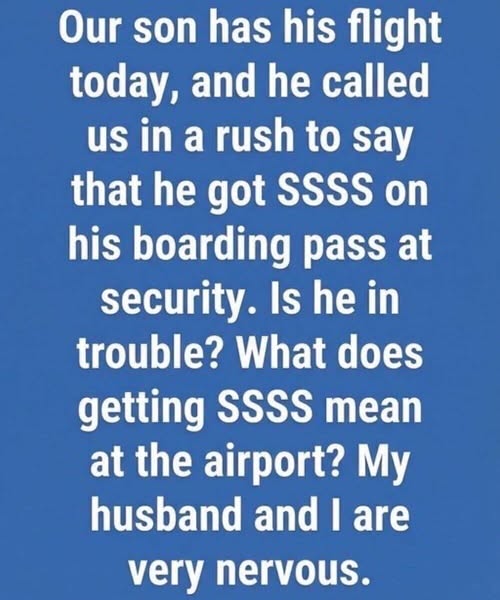
…wall of bureaucratic scrutiny. Those four letters—SSSS—staring back at you from the corner of your boarding pass are the universal symbol for a traveler’s worst nightmare: Secondary Security Screening Selection. In an instant, the ease of your travel plans evaporates, replaced by the invasive reality of a process that feels less like a routine check and more like a targeted interrogation. Your bags are pulled aside, your electronics are swabbed for chemical residue, and you are ushered into a private area for a thorough pat-down.
What Does SSSS Actually Mean?
The SSSS designation is not a mark of criminal suspicion, though it certainly feels that way. It is a tool of the Transportation Security Administration’s Secure Flight program, an automated system designed to compare passenger data against government watchlists and intelligence databases. When the algorithm flags you, it is essentially saying that your profile—or perhaps just the specific circumstances of your travel—requires a deeper layer of verification before you are permitted to board the aircraft.
It is important to understand that this is rarely personal. The system is designed to be cold, calculated, and indifferent to your status, your history, or your intentions. It is a precautionary measure, a digital dragnet that catches innocent travelers in its wide, unblinking eyes. For the person standing in the terminal, however, the “why” matters little when they are missing their flight or enduring the public gaze of fellow passengers.
Why Were You Chosen?
The triggers for an SSSS designation are often as mundane as they are frustrating. While the TSA keeps the exact mechanics of their algorithms under lock and key, common triggers include booking a flight at the very last minute, purchasing a one-way ticket, or traveling to certain high-risk international destinations. Even a simple data mismatch—such as a typo in your name or a discrepancy between your ID and your passport—can be enough to flag your record in the system.
Sometimes, it is truly random. The system is designed to introduce unpredictability into the security landscape, ensuring that no one can game the process by knowing exactly who will be screened. If you find yourself repeatedly targeted, it may be due to a name similarity with someone on a government watchlist, a situation that often requires filing a redress inquiry with the Department of Homeland Security to clear your name from the digital shadow of another person.
How to Handle the Secondary Screening
If you see those four letters, the worst thing you can do is react with hostility. The agents performing the screening are following a strict protocol; they are not the ones who made the decision, and they are not the ones who can undo it. The most effective strategy is to remain calm, cooperative, and organized. Arrive at the airport earlier than usual, keep your electronics accessible, and be prepared for a longer, more invasive process.
While the experience can be deeply unsettling, it is ultimately a reflection of the high-stakes environment of modern aviation. The SSSS code is a reminder that in the pursuit of safety, the system prioritizes caution over convenience. By understanding that this is a procedural hurdle rather than a personal accusation, you can navigate the process with dignity, ensuring that a temporary delay doesn’t destroy your entire travel experience.