
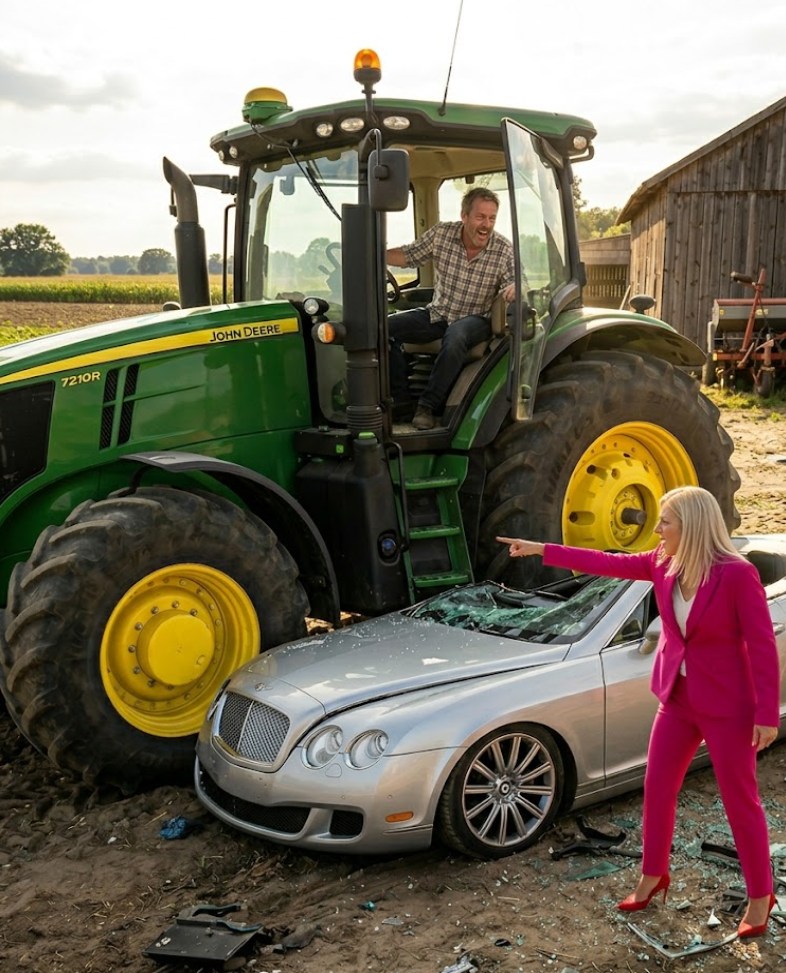
I still remember the quiet morning I stepped off my porch expecting a normal day of farm chores. Instead, I found a luxury car parked sideways across my barn doors, blocking the only path to the cattle waiting inside.
A woman named Karen stood nearby, leaning against the car as if the land answered to her. She led the local homeowners association and had made it clear over time that my farm didn’t fit her idea of how the neighborhood should look. That morning, she wasn’t just parked there—she was making a point.
I asked her, calmly, to move the car so I could get to the animals.
She didn’t.
She spoke as if what I was doing wasn’t real work, as if feeding livestock could wait while she made her stand. I tried to handle it the right way. I contacted the sheriff. I spoke at the next association meeting. But there, the story shifted. My concern became an inconvenience. Her actions were reframed as reasonable.
The next morning, the car was still there.
I gave her one more chance to move it. Not out of fear, but because once a line is crossed, it’s better to be certain it wasn’t crossed in haste.
She smiled and suggested I should sell the land.
Something in me settled at that point—not anger, but clarity. There are moments when patience has done its part, and continuing to wait only allows harm to continue.
My cattle still needed to be fed.
I walked to the tractor and started the engine. The sound carried across the fields, drawing attention. Neighbors gathered at a distance, watching. Not because they wanted trouble, but because they knew something had been building for a while.
Karen spoke loudly, threatening legal action.
I didn’t answer her.
I moved forward.
The tractor pushed against the car, slowly at first, then with enough force to clear the path. Metal bent, glass broke. It wasn’t a moment to take pride in. It was a consequence of a situation that had been pushed too far.
The path to the barn opened again.
The sheriff arrived not long after. He didn’t raise his voice or rush to conclusions. He looked at the situation as it was. Blocking access to livestock is not a minor issue. It carries real risk, real responsibility.
Karen faced the outcome of her decision.
In the days that followed, the story spread. Not just about the damaged car, but about the pattern that led to it. At the next association meeting, others spoke—people who had stayed quiet before. Their experiences were different, but the feeling was the same.
The board removed her from her position.
Things returned to a kind of normal after that. The cattle were fed. The work continued. The land remained what it had always been—something to care for, not something to prove.
I don’t think about that morning as a victory.
If anything, it was a reminder. Boundaries matter. But so does how we hold them. When someone keeps pressing past them, there comes a point where you have to act—not out of anger, but out of responsibility for what’s been placed in your care.
And once it’s done, you return to your work.
Quietly.