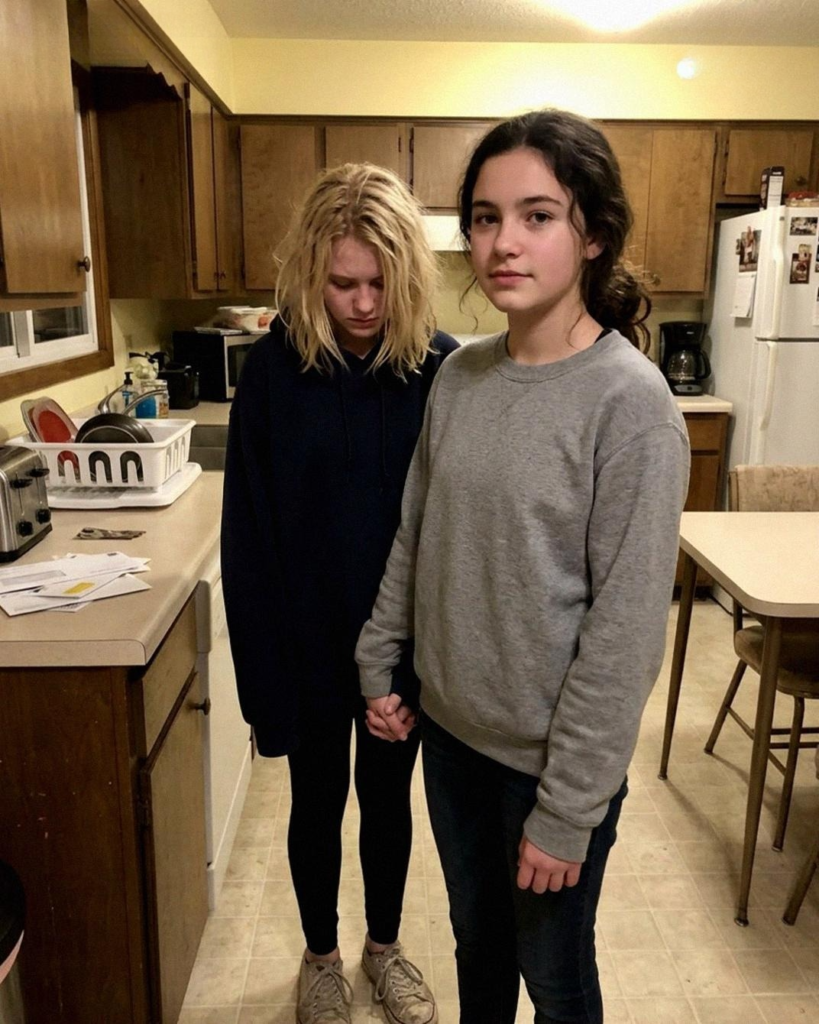
That evening, after Lizie left, Sam sat at the table while I packed leftovers into containers.
“I know we don’t have extra,” she said carefully. “But she really needed us.”
I nodded. “I know.”
What I had mistaken for inconvenience was actually invitation. Not to rescue the world. Just to respond to the part of it that had reached our doorstep.
The next morning, I called the school counselor. Not to expose Lizie, but to ask better questions. By noon, we learned what pride had been trying to hold together: her mother had been hospitalized for months, her father was drowning in bills, and they had fallen through every crack that people assume someone else will cover.
That week, our family did what ordinary people can do when they stop waiting for perfect timing.
My husband picked up a few extra grocery staples and dropped them off “by accident.”
I started sending Lizie home with containers that looked like leftovers but were packed on purpose.
Sam quietly organized a snack drive at school without using Lizie’s name.
And our church, after hearing only the practical details, covered the electric bill anonymously.
No speeches. No pity parade. Just help that preserved dignity.
Lizie noticed, of course. Children always do.
“You don’t have to keep doing this,” she told me one night.
“Yes, we do,” I said. “And one day, when you can, you’ll do it for somebody else.”
She looked down at her plate, and for the first time, she smiled before taking a bite.
That was when I understood something I wish more people remembered: kindness is not proven by how much you have left over. It is proven by what you make room for even when life feels tight.