Chapter 1: What Fell Out
Lizie’s face lost all color.
In my hand was a small plastic pill organizer, the kind older people use for heart medicine. But this one wasn’t filled with vitamins. It held three crackers wrapped in napkins, half a bruised banana, and two sugar packets from the school cafeteria. Tucked beneath it was a folded note written in shaky handwriting:
For Dad. Eat this before your shift. I’m okay.
For a second, I could not speak.
I had braced myself for something dangerous, something frightening, something no child should carry. What I was not prepared for was something somehow heavier: proof that this little girl was rationing scraps so her father could keep going.
Lizie snatched a breath and reached for the note, but I gently held it.
“You don’t have to explain all of this right now,” I said, softer than before.
Her eyes filled anyway. “He skips meals,” she whispered. “He says he already ate, but he didn’t. He works nights now too. My mom’s in the hospital and…” Her voice cracked. “I just try to save things.”
The kitchen went still.
My husband looked away and rubbed his chin, the way he does when he is trying not to show emotion. Sam stood there with her arms crossed, not in defiance this time, but like she had been carrying this truth alone and was relieved it was finally in the room.
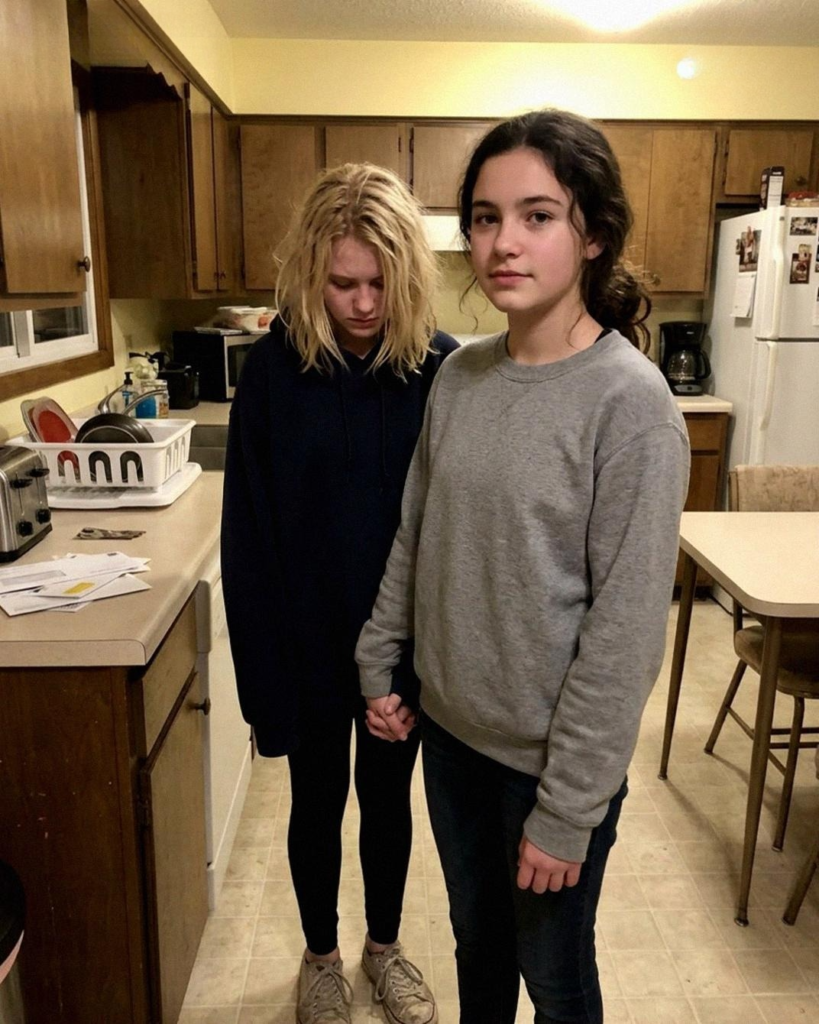
I looked at Lizie again. Oversized hoodie. Careful bites. Flinching at sudden movement. Not trouble. Not attitude. Just a child trying to survive quietly enough that no one would call it a crisis.
And there it was—that uncomfortable lesson life brings when you think your own load is already too heavy: sometimes hardship can make your heart smaller, if you let it. But sometimes it can break it open.
I set the note back in her hand.
“You should have told us,” I said.
She lowered her eyes. “I didn’t want to be a burden.”
Those words landed harder than anything else that night.
No child should know how to say that sentence like they mean it.