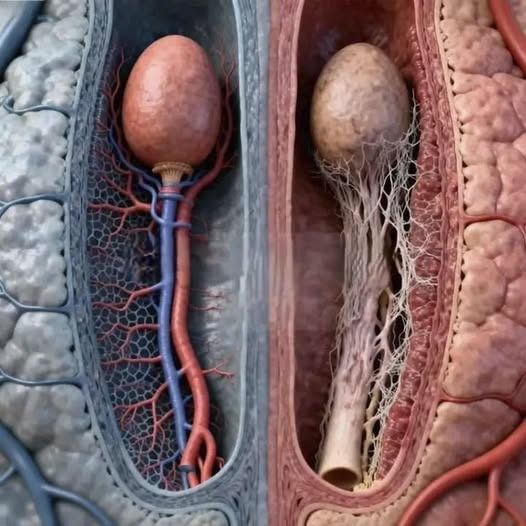
The kidneys, in particular, tend to suffer in silence. They keep working, adjusting, and compensating long after strain has begun, which is precisely what makes neglect so dangerous. By the time many people notice that something feels off, the damage may already be serious.
That quietness can be deceptive. Because the kidneys do not usually “scream,” many people assume they must be fine. Yet these two small organs carry an enormous responsibility. They filter waste from the blood, regulate fluid balance, help control essential minerals, and support hormone functions tied to blood pressure and red blood cell production. They are not dramatic organs, but they are faithful ones. Day after day, they do their work without praise, and that is often how the most important things in life are treated—until their absence is felt.
Kidney disease often develops gradually. It may begin with no obvious symptoms at all. Then, over time, signs such as swelling, fatigue, changes in urination, or rising blood pressure may begin to appear. But even those signals are easy to dismiss or explain away. A person blames stress, age, poor sleep, or a hectic schedule, not realizing the body may be revealing a deeper burden. What is hidden is not harmless. Quiet damage is still damage.
Modern life can place a steady strain on the kidneys in ways many people underestimate. Diets overloaded with salt, sugar, and processed foods make the body work harder than it should. Sedentary habits weaken the systems meant to support healthy circulation and metabolic balance. Chronic stress keeps the body under pressure in ways that ripple through multiple organs. Even the careless overuse of common medications can take a toll when repeated over time. Add too little water, persistent inflammation, or uncontrolled blood pressure and blood sugar, and the kidneys may begin to pay a price long before a person realizes it.
This is why prevention matters so deeply. Caring for the kidneys is not about fear. It is about respect. It is about recognizing that health is often preserved not by dramatic rescue, but by steady discipline. Drinking enough water helps support the body’s natural filtration. Choosing balanced meals over heavily processed ones lowers unnecessary strain. Staying physically active helps regulate the very conditions that often damage the kidneys first. Regular checkups, including blood pressure monitoring and kidney function tests, can uncover problems early, when they are still easier to manage. And medications should never be treated casually simply because they are familiar. Even common remedies deserve wisdom.
There is a deeper lesson here as well. Much of what sustains life works quietly. The kidneys are one example, but the principle reaches further. What is faithful is often overlooked. What is quiet is often undervalued. And yet the hidden work is often the work that keeps everything else standing. In that sense, caring for your kidneys is not just a health decision. It is an act of attentiveness—a refusal to ignore what matters simply because it is not loud.
Protecting your kidneys means protecting your future strength, energy, and resilience. It means taking seriously the parts of health that do not always demand attention, but deserve it all the same. Because by the time silent damage becomes obvious, the cost may already be far greater than expected. Wise care begins before crisis. And in the case of your kidneys, that wisdom can make all the difference.
{"post":98457,"page":2,"next":[{"id":98454,"title":"Sad News as Death Is Officially Confirmed","url":"https:\/\/new24.info\/98454"},{"id":98451,"title":"Refrigerate or Leave Out? The Truth About Mayonnaise Storage","url":"https:\/\/new24.info\/98451"},{"id":98448,"title":"Heartbreaking Update in Nancy Guthrie Case: Savannah Guthrie Breaks Down Live as Authorities Deliver Grim News","url":"https:\/\/new24.info\/98448"},{"id":98444,"title":"Rubio\u2019s Rise Caught Everyone Off Guard \u2013 Here\u2019s What It Means","url":"https:\/\/new24.info\/98444"},{"id":98441,"title":"Following My Secretive Husband To Our Country House Revealed A Terrifying Truth","url":"https:\/\/new24.info\/98441"},{"id":98438,"title":"The $600,000 Prank: How a Nephew Turned an Inherited Coat Into a Clever Surprise","url":"https:\/\/new24.info\/98438"},{"id":98430,"title":"Why Experts Are Sounding the Alarm Over the New Cicada COVID Variant Emerging After Two Years Underground","url":"https:\/\/new24.info\/98430"},{"id":98427,"title":"The Long Road Home: How Recovery After 60 Is Changing What We Know About Healing-","url":"https:\/\/new24.info\/98427"},{"id":98424,"title":"The True Cost of Cigarettes: Taxes, Retail Margins And Price Hikes","url":"https:\/\/new24.info\/98424"},{"id":98421,"title":"Mike Johnson\u2019s Confirmation Sparks Heated Debate Across Political Lines","url":"https:\/\/new24.info\/98421"},{"id":98418,"title":"NEW UPDATE on Nancy Guthrie. At least three people\u2026\ud835\udde6\ud835\uddf2\ud835\uddf2 \ud835\uddfa\ud835\uddfc\ud835\uddff\ud835\uddf2","url":"https:\/\/new24.info\/98418"},{"id":98413,"title":"\u201cHPV in Men: Understanding the Silent Infection and How to Stay Protected\u201d","url":"https:\/\/new24.info\/98413"},{"id":98406,"title":"The $600,000 Prank, Why This Nephew is Having the Last Laugh Over a Stinky Inherited Coat","url":"https:\/\/new24.info\/98406"},{"id":98403,"title":"The Mystery of the Mark, Why a Simple Bruise on Trump Hand Sparked a National Firestorm","url":"https:\/\/new24.info\/98403"},{"id":98400,"title":"The Greenpower Tragedy \u2013 How a Dream Field Trip Turned into a Highway Nightmare for Kenwood Middle School","url":"https:\/\/new24.info\/98400"},{"id":98397,"title":"Inside the race to replace Karoline Leavitt as White House press secretary during maternity leave","url":"https:\/\/new24.info\/98397"},{"id":98393,"title":"Vanessa Trump shared a clear update about relationship with Tiger just days before his accident","url":"https:\/\/new24.info\/98393"},{"id":98390,"title":"Father takes his s0n\u2019s life after finding out he is ga\u2026 See more","url":"https:\/\/new24.info\/98390"},{"id":98386,"title":"From Merchant of Chaos to $13 Billion Legend, The Heartbreaking Secret Behind Rise to Power","url":"https:\/\/new24.info\/98386"},{"id":98383,"title":"The Silver Rebellion, Why Your Gray Hair is Making Everyone Around You Panic","url":"https:\/\/new24.info\/98383"}]}