
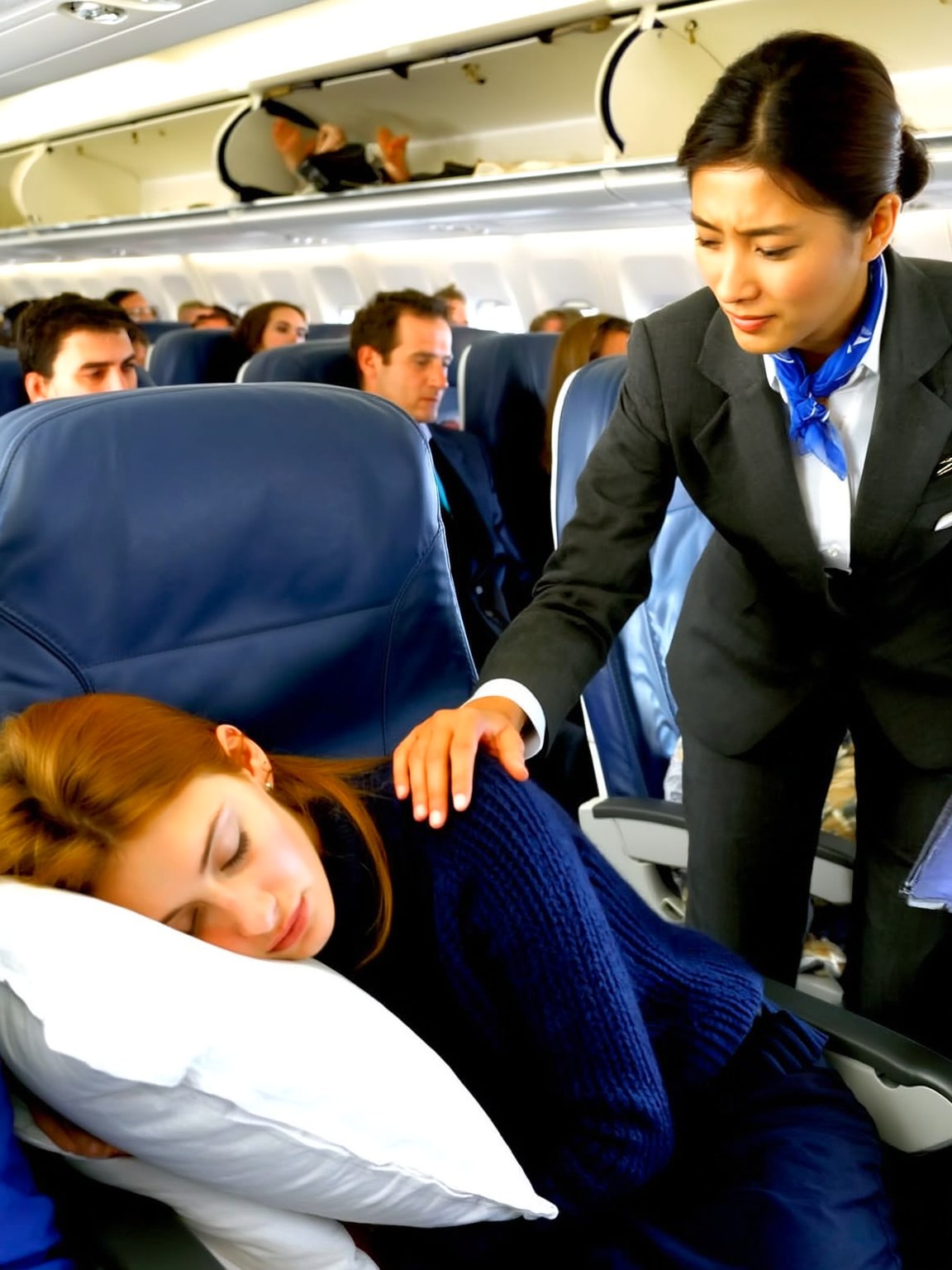
Mara Dalton was waiting at JFK Airport for a routine flight to London, blending in easily among other travelers. She took seat 8A in a simple green sweater, trying to live quietly, far from the life she once led as a combat pilot flying F-16s. Just another passenger now. Or so it seemed. As she drifted toward sleep, the captain’s voice cut through the cabin—urgent, controlled, but strained—asking if any combat-trained pilots were on board. A ripple of confusion passed through the passengers, but in Mara, something else returned. Not fear, not exactly—something steadier, more familiar. When the flight attendant reached her row and repeated the request, Mara hesitated only briefly before admitting who she used to be.
Walking toward the cockpit, she saw immediately what the crew was carrying. The captain and first officer were composed, but worn, holding together a situation that was beginning to slip. The autopilot had failed; they had been flying manually for twenty minutes, and another aircraft was shadowing them in a way that didn’t belong to routine aviation. Mara recognized the pattern—not random, not accidental. Intentional. She asked for external visuals, and the image confirmed it: an unmarked aircraft, flying too close, too controlled to be a mistake. A voice came through the radio, firm and demanding compliance. The kind of voice that assumes fear will do the work for it. Mara took the co-pilot seat—not out of impulse, but because leaving it empty was no longer an option.
Before she could fully settle into a plan, the situation extended beyond the cockpit. A flight attendant, Julia, reported movement in business class—two passengers preparing something they shouldn’t have been. Within moments, the tension broke into action. One of them stood, weapon in hand, trying to take control of the narrative. But not everyone chose to remain still. A businessman nearby reacted first, bringing him down before the threat could spread. A retired police officer stepped in to restrain the second. It wasn’t clean or coordinated, but it was enough. People, when pressed, sometimes remember what matters.
Back in the cockpit, Mara focused the crew. Panic would only narrow their options. She instructed the captain to stay steady while she adjusted their path—dropping altitude and reducing speed in a calculated move. The maneuver wasn’t aggressive, but it was precise. The pursuing aircraft overshot, just enough to break its advantage. In that small window, she triggered every emergency signal available. Not as a cry for help, but as a statement: this flight was not alone.
Then the radio came alive again.
This time, the voice was familiar.
Victor Klov.
A name from a past she had tried to set aside, now standing directly in front of her again—just on a different frequency. There was no anger in her response, only clarity. He made his move, pressing forward for a final approach. Mara adjusted again, not to chase him, not to match force with force, but to deny him what he wanted. His second attempt failed just like the first.
Moments later, two military interceptors appeared on the horizon.
Victor didn’t argue with that. He turned away.
The flight continued.
When they landed in London, the relief in the cabin was quiet but deep. People spoke, thanked her, reached out—but Mara understood something they didn’t need to say. What happened wasn’t about heroism in the way people like to frame it. It was about stepping forward when stepping back would have been easier.
She had tried to leave that part of her life behind. And in some ways, she had.
But certain responsibilities don’t disappear. They wait.
Six months later, Mara returned to service—not because of the past, and not because of recognition, but because she understood, more clearly now, where she was still needed.