
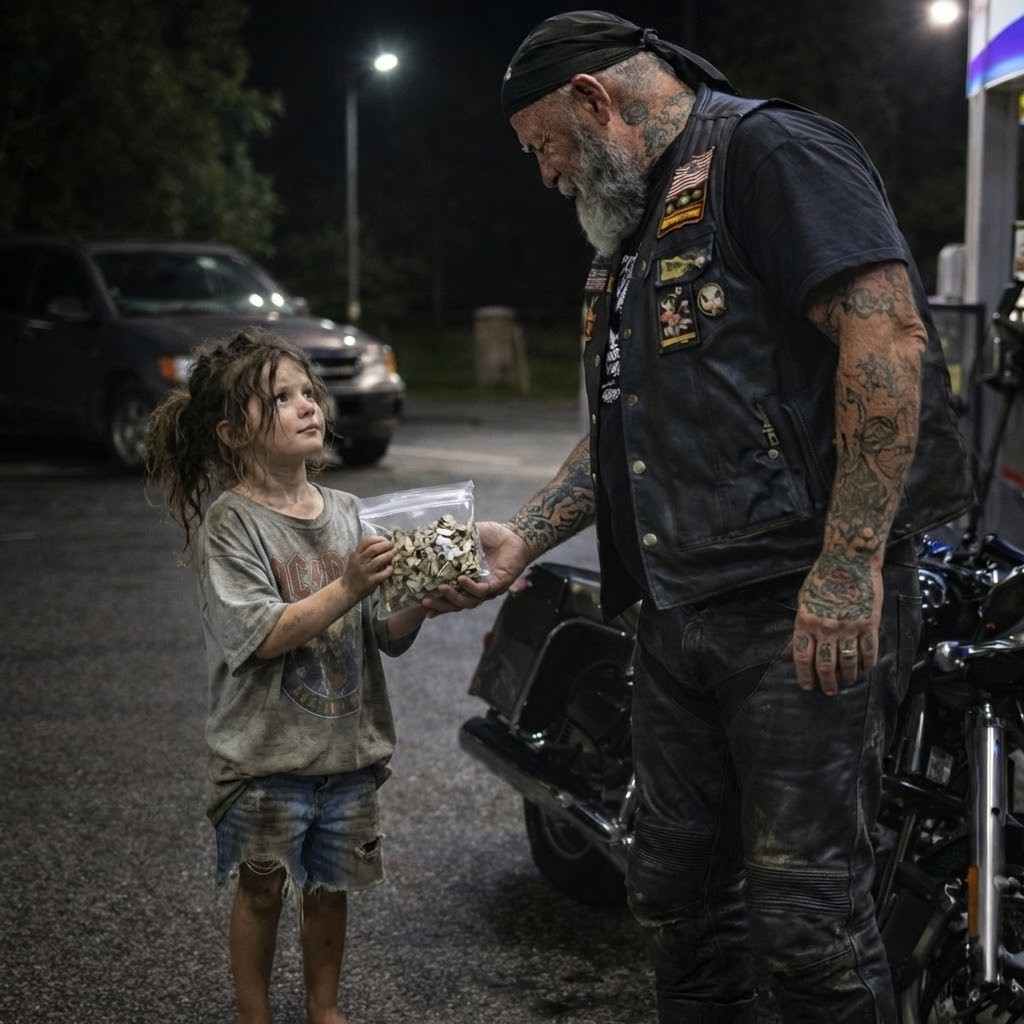
The quiet of a long night ride was broken at a nearly empty Chevron station when I noticed a small figure near the pumps. A barefoot six-year-old stood there in a worn Frozen nightgown, holding a ziplock bag filled with quarters. To most people I probably looked like someone to avoid—a big biker in the middle of the night—but she walked straight toward me. Her name was Emily, and she asked if I could help her buy baby formula because her little brother Jamie hadn’t eaten. When she explained that the adults in the van with them had been “sleeping” for three days, the meaning behind those words was painfully familiar. What looked like an ordinary stop along the highway suddenly felt like the edge of something far more serious.
Emily led me to the van parked in the darker part of the lot. The smell inside told the story before my eyes did. Two adults were unconscious, surrounded by signs of heavy drug use, while six-month-old Jamie lay weak and silent in the back. Emily had been doing everything she could—finding coins, trying to get food, staying awake to watch over him. For a child that young to carry that responsibility alone was heartbreaking. I called for help immediately and reached out to a few trusted friends who could arrive quickly while we waited for emergency services.
Soon the quiet gas station filled with flashing lights and concerned voices. Paramedics began caring for the baby, and the authorities took over the difficult work that situations like this require. Through it all, Emily stayed close to her brother, holding his small hand as if she had been doing it for years. The strength in that child was something I will never forget.
In the months that followed, the system began sorting through what needed to happen next. There were conversations about where the children should live and who could care for them. People from different walks of life stepped forward—some from official agencies, others simply from communities that believed children should never face the world alone. What mattered most was that Emily and Jamie were given stability and safety, something every child deserves.
A year later, at a charity ride that drew hundreds of riders, Emily stood quietly near the stage holding her brother’s hand. She looked stronger, calmer, and more like the child she had been forced to stop being that night. Watching her laugh with the people who had helped along the way reminded many of us of something simple but important: kindness doesn’t always arrive in the form people expect.
Sometimes the person who stops to listen looks rough around the edges. Sometimes help appears in an unexpected place, at an unexpected hour. What matters is not how someone looks, but whether they choose to act when it would be easier to drive away.
That night at the gas station did not make anyone a hero. It simply reminded us that when a child asks for help, the only right answer is to stop, listen, and do what we can to protect what is still fragile in this world.