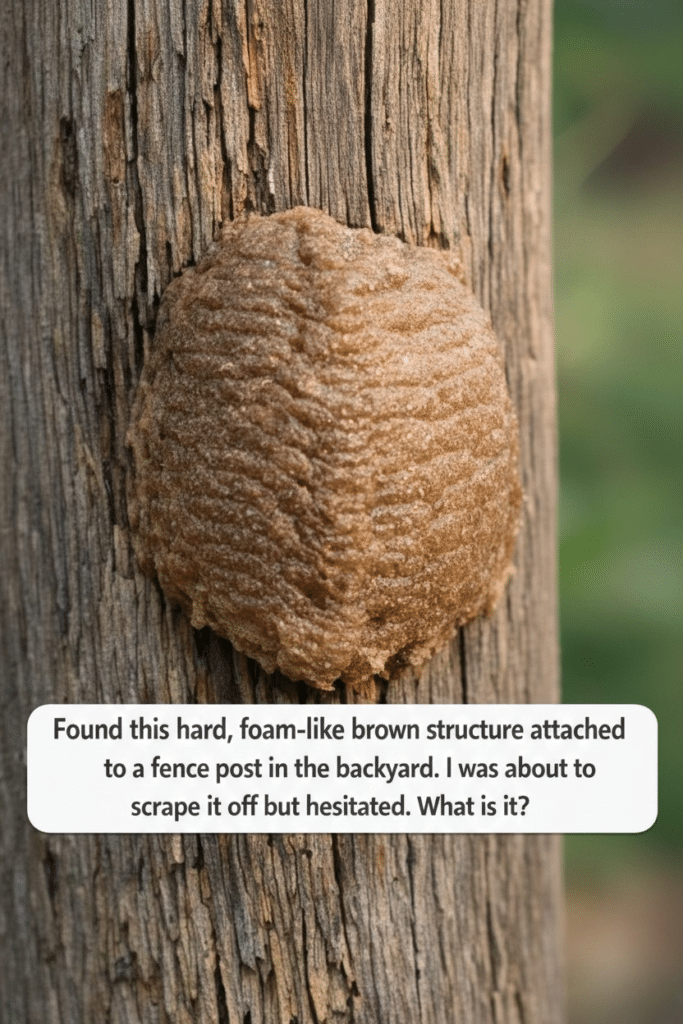
Found a Strange “Foam” in Your Backyard? It Might Be a Praying Mantis Egg Case
Coming across an unusual brown, foam-like structure in your garden can be surprising — and sometimes worrying. At first glance, it may look like something invasive, artificial, or even dangerous.
In most cases, however, this strange object is something natural and beneficial: a praying mantis egg case, known as an ootheca.
Far from being a problem, it is a sign that your yard supports healthy wildlife.
The Curious “Foam” That Catches Attention
A mantis egg case usually looks:
-
Tan to light brown
-
Firm and slightly spongy
-
About 1–2 inches long
-
Attached to branches, fences, or garden furniture
Its rough, foamy texture is not accidental. It forms a protective shell that shields developing eggs from cold, moisture, and predators during winter.
What may seem odd is actually a carefully engineered survival structure.
The Hunter Behind the Egg Case
Praying mantises are among nature’s most effective insect hunters.
With their elongated bodies and folded front legs, they specialize in catching:
-
Flies
-
Caterpillars
-
Mosquitoes
-
Grasshoppers
-
Other garden pests
Because they reduce harmful insects naturally, many gardeners consider mantises valuable allies — a form of built-in pest control without chemicals.
What’s Inside the Ootheca?
In late summer or fall, a female mantis produces a frothy liquid around her eggs.
Within minutes, this substance hardens into a durable case.
Inside, it may contain:
-
Dozens of eggs
-
Sometimes over 100 developing mantises
-
Individually protected chambers
The eggs remain dormant all winter. When temperatures rise in spring, tiny mantises emerge and spread into nearby plants, ready to hunt almost immediately.
Why It’s Harmless — and Helpful
Despite its unusual look, a mantis egg case poses no risk to:
-
People
-
Pets
-
Plants
-
Property
In fact, removing it disrupts the life cycle of a beneficial insect.
Unless it is in danger of being crushed or destroyed, experts recommend leaving it undisturbed.
Doing so helps maintain natural balance in your garden.
Should You Ever Move One?
In rare cases — such as when an egg case is attached to something that will be discarded — you may carefully relocate it.
If needed:
-
Gently cut the branch or surface it’s attached to
-
Place it in a sheltered outdoor area
-
Keep it above ground and protected from heavy rain
Avoid bringing it indoors, as warm temperatures can cause premature hatching.
A Sign of a Healthy Backyard
Finding an ootheca often means your yard provides:
-
Insect diversity
-
Safe shelter
-
Minimal chemical use
-
Natural food sources
In other words, it’s evidence that nature is quietly thriving around you.
Many people never realize how much wildlife exists just beyond their windows.
Reflection: When “Strange” Means “Balanced”
It’s easy to see unfamiliar objects in nature as threats.
But often, they are signs of harmony.
The mantis egg case is a reminder that ecosystems depend on small, hidden processes — unfolding silently over months.
What looks mysterious today becomes life tomorrow.
Conclusion: Leave It, Learn From It, Appreciate It
That brown, foamy structure in your backyard is likely not something to fear.
It is a carefully crafted shelter protecting the next generation of one of nature’s most helpful predators.
By leaving it in place, you allow a natural cycle to continue — one that benefits your garden and supports biodiversity.
Sometimes, the best thing to do with something strange is simply to let it be.