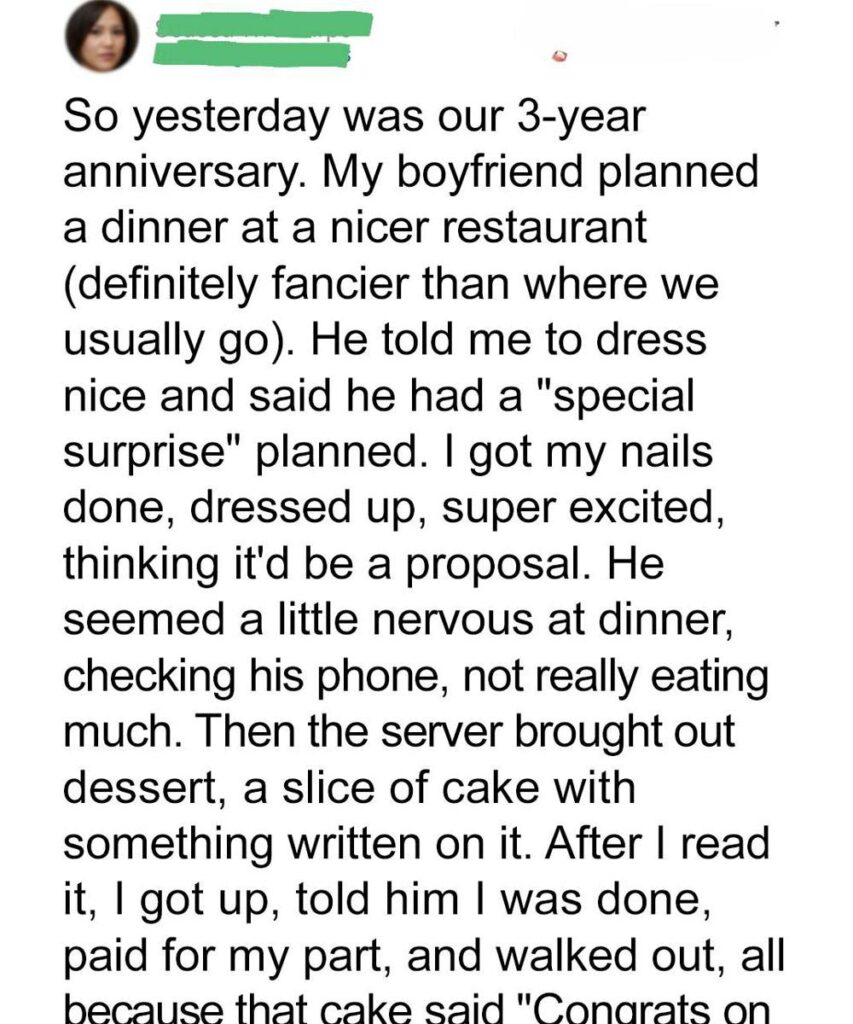
For three years, I gave my energy, patience, and hope to my relationship with Ryan. I stood beside him through job changes and difficult seasons, believing we were slowly building a life meant to last. When our third anniversary approached, everything about his behavior made me think a proposal was coming. He booked the nicest restaurant in town and spoke in careful hints about a “special surprise.” I let myself imagine a future unfolding that night.
I came dressed with care, hands freshly done, heart full — even though I was still carrying the quiet ache of being passed over for a promotion I had worked hard for. Ryan knew how much that loss had hurt me. I needed the evening to feel like something good was still possible.
Dinner was warm and easy, until dessert arrived.
The silver platter didn’t hold a ring. It held words written in chocolate: “Congrats on Your Promotion!”
For a moment I waited for the real surprise to follow. It never did.
Ryan smiled, pleased with himself, and said it was just a joke — a way to “lighten the mood” and help me “manifest success.” When I told him it hurt instead of helped, he brushed it away, calling me too sensitive and telling me not to be so negative.
That was the moment clarity settled in.
It wasn’t humor. It was control.
My disappointment had been turned into entertainment.
I paid my share of the bill, stood up quietly, and left him there — not in anger, but in recognition that something essential had been missing for a long time.
Days passed without an apology.
A week later, I invited our friends over for what I called a “surprise celebration.” When Ryan walked in, he was greeted by a banner congratulating him on his receding hairline — the insecurity he rarely spoke about but deeply felt. There was even a small cake meant to make the point unmistakable.
When he asked, hurt and furious, if I thought it was funny, I answered with the same words he had used on me. I said it was just positive energy. That he shouldn’t be so sensitive.
The silence in the room said everything.
He left, embarrassed and angry. Most of our friends drifted out soon after.
And in that quiet, something inside me finally became clear.
For years I had been shrinking — excusing sharp remarks as jokes, accepting small humiliations, mistaking endurance for love. Ryan didn’t build me up; he fed on making me feel smaller so he could feel larger.
Walking away wasn’t loss.
It was release.
I didn’t leave with a ring. I left with self-respect.
And that was the beginning of a life where my pain was no longer something to laugh at — but something worthy of care, honesty, and dignity.