
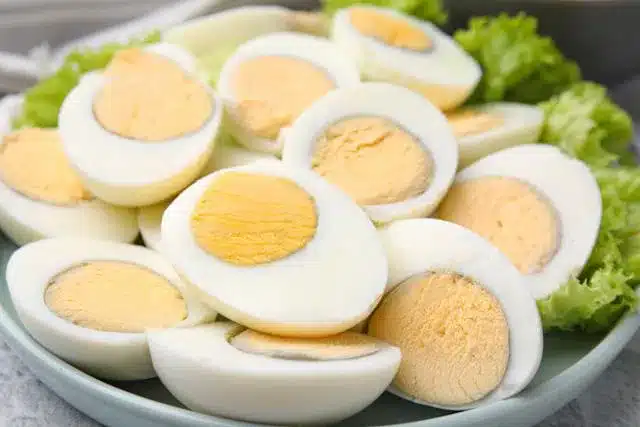
Why the green ring happens (and how to stop it)
That gray-green halo is a harmless compound called iron sulfide. It forms when iron in the yolk reacts with sulfur from the white under two conditions:
-
Too much heat for too long (overcooking)
-
Slow cooling (the reaction keeps going off the stove)
So the two keys are: gentle heating and rapid chilling.
Gold-standard stovetop method
This balances doneness and peelability without special gear.
You’ll need: eggs, saucepan, cold water, ice (or very cold water), slotted spoon.
-
Start cold
Place eggs in a single layer in a saucepan. Cover with 3–5 cm (1–2 in) of cold water. -
Heat, then stop
Bring to a clear boil over medium heat (steady, rolling bubbles). The moment it boils, turn off the heat and cover. -
Set by size & style
Leave covered in the hot water:-
7–8 min: jammy (salads, ramen)
-
9–10 min: classic firm without chalkiness
-
11–12 min: very firm, still no green ring
(Use the longer end for extra-large eggs; shave 30–60 sec for small eggs.)
-
-
Ice-bath shock
Transfer immediately to an ice bath (or the coldest water you can make). Chill 5–10 minutes. This halts the reaction, tightens whites, and loosens shells. -
Peel smart
Crack gently all over, start peeling at the air-cell end (wider end), and peel under cool running water to slide the shell and membrane off.
Peelability: what really matters
-
Egg age: Slightly older eggs (5–10 days) peel way easier. As eggs age, the white’s pH rises and the membrane releases more cleanly. Super-fresh eggs cling.
-
Ice bath: Not just for color — it helps the membranes contract for easier peeling.
-
Start point: The air-cell end gives you a natural “handle” to get under the membrane.
-
Water assist: Running water seeps between shell and membrane — less tearing.
Popular internet tricks (baking soda in the boil, shaking in a jar, blowing eggs out of shells) are hit-or-miss and can damage whites. If you nail age + ice bath + peel under water, you won’t need gimmicks.
Alternate “no green ring” methods
Steaming (super reliable peels)
-
Bring ~2.5 cm/1 in water to a boil in a pot; insert a steamer basket.
-
Add eggs; steam 11–13 min (size-dependent).
-
Ice bath 5–10 min; peel.
Steaming heats more evenly, reducing micro-cracks and giving consistently easy peels.
Pressure cooker / Instant Pot (hands-off)
-
High pressure 5–6 min + 5 min natural release + ice bath.
Very consistent, especially for big batches. Doneness can vary by model; test once and note your exact timing.
(Oven “hard-baked” eggs tend to have more green rings and spotty texture — not recommended if appearance matters.)
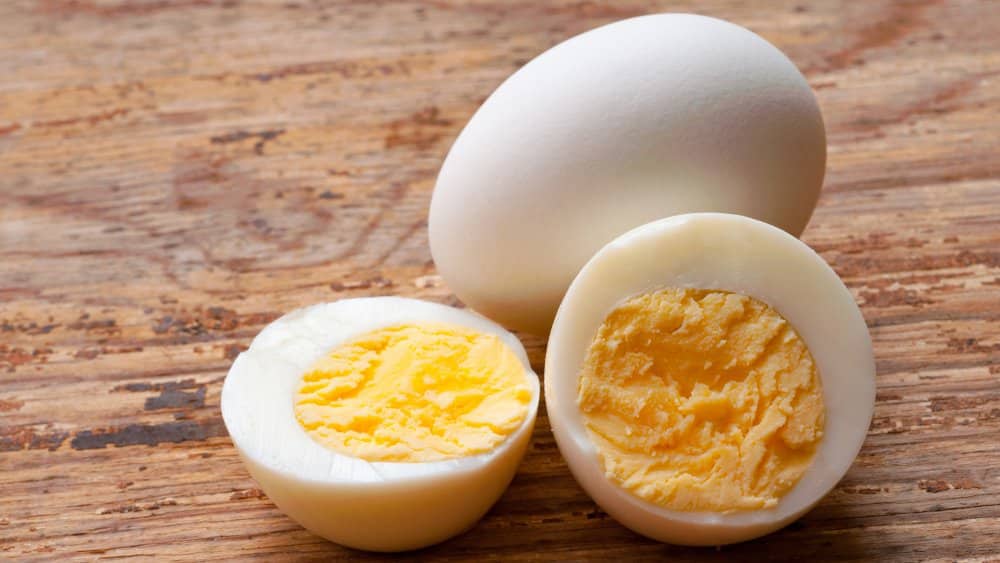
Timings reference (Large eggs, sea level)
-
Soft-set/jammy: 7–8 min rest (stovetop) or 10–11 min steam
-
Medium: 8–9 min rest or 11–12 min steam
-
Hard (tender, no ring): 9–10 min rest or 12–13 min steam
Adjust +30–60 sec for extra-large; –30–60 sec for small.
At high altitude, water boils cooler — add ~1–2 minutes.
Prevent cracks & leaks
-
Don’t crowd the pan; jostling causes hairline cracks.
-
Start cold and heat gradually (rapid temp swings crack shells).
-
A pinch of salt or a splash of vinegar won’t change peelability, but if a shell does crack, they help coagulate leaking whites quickly.
Storage & food safety
-
Fridge life, unpeeled: up to 1 week (keep in shell; it’s a natural barrier).
-
Peeled: best in 2–3 days; store in a sealed container with a damp paper towel.
-
Label the carton “boiled” with the date so you don’t mix them with raw eggs.
Troubleshooting
-
Green ring: Overcooked or slow-cooled → shorten time, ice bath faster.
-
Chalky, crumbly yolks: Overdone → reduce by 30–60 sec.
-
Runny centers: Underdone → add 30–60 sec.
-
Can’t peel cleanly: Eggs too fresh; ensure proper ice bath; peel under water; try steaming next time.
-
Sulfur smell: Overcooked or old eggs. Shorten time and use fresher stock.
For picture-perfect deviled eggs
-
Use steamed or properly shocked eggs for smooth whites.
-
Slice with a damp, sharp knife; wipe between cuts for clean edges.
-
For ultra-bright yolks, choose eggs from hens with a carotenoid-rich diet (often pasture-raised). Color doesn’t affect taste, just presentation.
Quick science refresher (in plain English)
-
The white (albumen) has sulfur compounds; the yolk has iron.
-
Heat + time creates hydrogen sulfide, which migrates to the yolk and reacts with iron near the surface → iron sulfide (that gray-green ring).
-
Rapid chilling stops diffusion and the reaction, protecting the yolk’s color.
TL;DR (but longer!)
-
Gentle heat (bring to boil, then cover and cut heat), precise timing, immediate ice bath, slightly older eggs, and peel under water.
Follow that, and your hard-boiled eggs will be tender, bright-yolked, and shell off like a dream — no Michelin stars required.