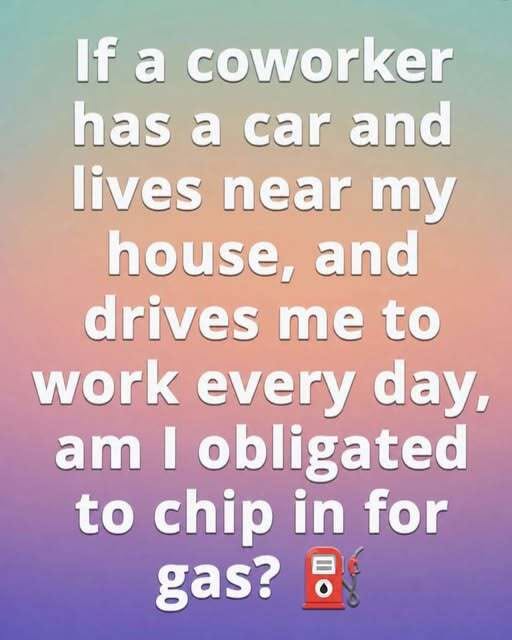
That approach accomplishes something important even if your coworker refuses the money. It demonstrates that you recognize the ride as a favor rather than an entitlement.
If they’re comfortable accepting money, you don’t necessarily need to calculate exactly how much every individual journey costs. A reasonable weekly or monthly contribution toward fuel may be simpler. The amount can depend on the distance, how often you’re riding together, whether the driver makes a detour, and local fuel costs.
For example, someone who is picked up five days a week and adds several miles to the driver’s commute should probably contribute more than someone whose home is directly along the existing route.
But money isn’t the only way to make the arrangement feel fair.
If your coworker insists that they don’t want anything for fuel, you can still show appreciation. Buying coffee or breakfast occasionally, treating them to lunch, giving them a fuel gift card, or helping them with something they need can communicate the same basic message: I notice what you’re doing for me, and I appreciate it.
There are also smaller considerations that can make a surprisingly big difference. Be ready when your coworker arrives rather than making them wait. Give them plenty of notice when you don’t need a ride. Don’t automatically expect them to change their plans around yours, and understand that there may be days when they simply cannot drive you.
Those behaviors demonstrate respect for something even more valuable than fuel—their time.
It’s also worth remembering that generosity doesn’t always require perfect financial equality. Healthy relationships aren’t built by calculating every favor down to the last dollar. Sometimes people genuinely enjoy helping each other, and insisting too aggressively on repayment can make a friendly gesture unnecessarily transactional.
The important distinction is between accepting someone’s generosity and expecting it.
If you’ve offered to contribute and your coworker sincerely tells you not to worry about it, accepting their answer is perfectly reasonable. You can continue showing gratitude in smaller ways without turning every morning commute into a financial negotiation.
Ultimately, the best approach is simple: acknowledge the favor.
A free ride may not come with an invoice, but that doesn’t mean it costs nothing. Fuel, mileage, maintenance, time and flexibility all have value. Recognizing those things tells your coworker that you see their effort and don’t take their kindness for granted.
Sometimes a few sincere words—and an occasional cup of coffee—are enough to keep a convenient arrangement from becoming an uncomfortable one.