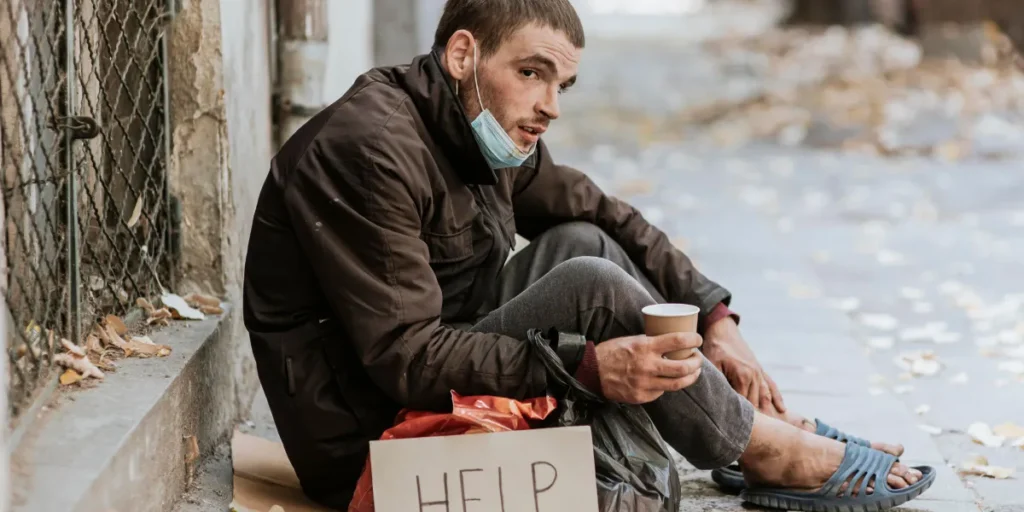
The morning after my mother’s funeral, Victor’s shelter behind her house was empty.
For most of my childhood, he had lived near the back fence beneath a rough roof made from plastic tarps and pieces of discarded wood. No matter how little money we had, my mother prepared a meal for him every day.
That morning, I carried the beef stew she had begged me to bring him, expecting to find him wrapped in an old blanket near the fence.
Instead, he stood beside a black SUV wearing a clean, dark coat.
His tangled beard was gone.
Without it, he looked older and strangely familiar.
But it was the object in his hand that made me stop breathing.
My mother’s silver locket.
The one she had sworn was lost decades ago.
“I thought you might not come, Fiona,” Victor said.
I nearly dropped the container.
“Victor?”
His eyes were red, as though he had been crying.
“What is happening?” I asked. “Whose car is that? And where did you get my mother’s necklace?”
He looked down at the locket, closing his fingers around it protectively.
“Before Stephanie died, she made me promise I would keep quiet.”
My blood turned cold.
“Keep quiet about what?”
Victor slowly lifted his gaze toward the kitchen window. It was the same window where my mother used to stand and watch him whenever she thought I wasn’t paying attention.
“About who I am.”
My childhood had been defined by that kitchen.
Every afternoon, my mother packed three meals.
Two remained on our chipped table—one for her and one for me. The third always went into a mismatched plastic container for Victor.
I hated that third meal.
I hated watching her place the largest piece of chicken in his container when my shoes were held together with tape.
We were poor too.
The electricity had been shut off twice during one especially cold winter, yet Victor never missed lunch.
I was eleven when I finally said what I had been thinking for years.
“He eats better than I do.”
Mom stood at the stove stirring soup. She didn’t turn around.
“Fiona, please don’t start.”
“The lights were cut off again, but you still give him food every day.”
“He needs help.”
“So do we.”
The wooden spoon slipped from her hand and struck the sink.
I folded my arms, angry in the fierce and careless way only a wounded child can be.
“You treat him like he’s family.”
Mom’s face went pale.
“Don’t talk about Victor that way.”
“Why not? He’s just some homeless man behind our house.”
Her hand struck the counter so hard that I jumped.
“He is not just some man.”
For a moment, neither of us moved.
“Then who is he?” I demanded.
Her lips parted, and I thought she might finally answer.
Instead, she pushed the warm container into my hands.
“Take him his lunch.”
“Maybe if you stopped feeding strangers, we wouldn’t have to live like this.”
Her eyes filled with a pain I didn’t understand.
“You have no idea what that man gave up.”
“Gave up for who? For you?”
Her entire body trembled.
Then she turned away.
“This conversation is over.”
I carried the soup outside.
Victor was sitting near the fence, rubbing his hands together against the cold.
“Your mother make chicken soup?” he asked.
“Yeah.”
A faint smile appeared on his face.
“That’s her best one.”
“You don’t even know her,” I snapped.
The smile disappeared.
After a long silence, he said, “I know her soup.”
I hated him even more for answering that way.
As the years passed, I moved away, and Mom and I stopped arguing about Victor because I stopped asking questions.
But he remained behind the house.
Whenever storms knocked branches into the yard, Victor cleared them before Mom woke up. When the porch step loosened, it was mysteriously repaired. After heavy snowfalls, the path from the back door was always cleared.
Once, during high school, the soles of my boots split apart.
The next morning, a pair of secondhand boots appeared beside my backpack.
“Where did these come from?” I asked.
“A church donation,” Mom replied too quickly.
Through the kitchen window, I saw Victor brushing snow from the porch.
I noticed these things.
I simply didn’t understand them.
Then cancer came and slowly erased the strong woman I had known.
My mother had once carried grocery bags in both hands while opening doors with her elbows. By the end, her wrists were so thin that I could see every bone beneath her skin.
Two weeks before she died, I sat beside her hospital bed while she picked nervously at the edge of her blanket.
“Fiona,” she whispered.
“I’m here.”
“You need to promise me something.”
“Mom, you need to rest.”
“No.”
Her fingers wrapped around my wrist with surprising strength.
“Victor.”
My stomach tightened.
“Please don’t start this again.”
“Promise me you’ll keep feeding him.”
The old resentment rose inside me.
“Why?” I whispered. “Why is it always him? Why has it always been him?”
Tears gathered in her eyes.
“I never chose him over you.”
“It felt like you did.”
“I know.”
Her voice broke.
“And I am so sorry.”
“Then tell me why.”
She glanced toward the hospital-room door, as though someone might be listening.
“If Mark comes around after I’m gone, don’t let him touch the blue box.”
I stared at her.
“Uncle Mark?”
“Promise me.”
“What does he have to do with Victor?”
Her grip tightened.
“He’ll erase him completely.”
“Erase who?”
She shook her head.
“Just promise me, Fiona.”
I wanted to demand the truth, but she looked frightened and exhausted. I was still her daughter, and she was dying.
“I promise.”
A tear slipped down her cheek.
“He was my safe place,” she whispered.
She died several days later.
After the funeral, the house filled with relatives carrying casseroles, sandwiches, and sympathy spoken in hushed voices.
My uncle Mark stood in the hallway opening boxes before my mother’s flowers had even begun to wilt.
“What are you doing?” I asked.
He gave me the patient, condescending smile he had used on me since childhood.
“Helping.”
“By going through her belongings?”
“Your mother kept too many useless things. Old papers. Broken dishes. Objects that only reminded her of painful times.”
“I’ll decide what stays.”
His smile tightened.
“You’re grieving, Fiona. This isn’t the right time for emotional decisions.”
I looked toward the back window.
Victor’s shelter was visible through the weeds.
“Funny,” I said. “Mom warned me about you.”
Mark’s hand froze over a cardboard box.
“What did Stephanie say?”
“She told me not to let you touch the blue box.”
For one brief second, panic flashed across his face.
Then he laughed.
“She was very sick at the end.”
“She was afraid.”
“Of me?”
“You tell me.”
His eyes moved toward the relatives gathered in the living room.
Then he leaned closer and lowered his voice.
“Some pain should remain buried.”
The next morning, I prepared beef stew because it was the only meal I knew I couldn’t ruin.
I placed it in one of Mom’s old containers and returned to the house.
That was when I noticed Victor’s shelter was empty.
The blanket was neatly folded. The coffee cans he used to collect rainwater were gone. Even the small stack of firewood had been arranged carefully beside the fence.
“Victor?” I called.
“Fiona.”
I turned.
He stood beside the back steps in a clean coat, with the unfamiliar black SUV parked nearby.
Before he could explain, our elderly neighbor, Mrs. Bell, stepped from the driver’s side.
“The vehicle belongs to my nephew,” she said. “Victor wanted to visit your mother’s grave without Mark causing trouble.”
Victor touched the sleeve of his coat, looking embarrassed.
“This is borrowed too.”
Then I saw the necklace.
“Where did you get that?”
Victor looked down at the locket.
“It belonged to your mother.”
“I know. She told me she lost it when I was eight.”
“No,” he said softly. “She only told you that.”
My chest tightened.
“Why would she lie?”
“Because she gave it to me.”
“Why?”
Victor’s thumb moved across the dented silver edge.
“Because I gave it to her first.”
I stared at him.
“When?”
“When she was about ten. Maybe younger. She’d had a terrible day. I told her that if she wore it, she could pretend I was walking beside her.”
He opened the locket.
Inside was a faded photograph of two children sitting on porch steps. The little boy had one arm around the girl’s shoulders.
On the back, carved into the metal in childish handwriting, were three words.
“My safe place.”
My throat went dry.
“That’s my mother.”
Victor nodded.
“And the boy?”
“Me.”
I stepped away from him.
“No. Mom only had one brother.”
“Mark was the youngest.”
“You’re lying.”
His face tightened with pain.
“I wish I were.”
“If you were her brother, why did she force you to live outside?”
Victor flinched as though I had struck him.
Mrs. Bell answered.
“Because Mark frightened her.”
I turned toward her.
“How?”
“He told Stephanie that people would call her an unfit mother if she allowed Victor near you. She was young, poor, unmarried, and terrified of losing her child.”
Victor closed the locket.
“Your mother did what she believed she had to do. She kept me close enough to help but far enough away that Mark couldn’t use me against her.”
The memory of Mom’s hospital room returned with sudden force.
“The blue box.”
Victor looked up sharply.
“She told you about it?”
I nodded.
“She said Mark would erase you.”
Mrs. Bell pointed toward the house.
“Then you need to find that box before he does.”
I ran inside and searched my mother’s bedroom.
Beneath a pile of old blankets in the closet, I found a blue wooden box with my name written across the lid.
Inside were photographs, yellowed envelopes, and carefully folded letters.
The first photograph showed my mother as a child standing beside Victor. Her knees were scraped, and his lower lip was split.
On the back, she had written:
“Victor walked me home again.”
I found an envelope bearing my name.
My hands shook as I opened it.
“Fiona,
If you are reading this, then I was not brave enough to tell you the truth while I was alive.
Victor was my brother before he became anything else.
When we were children, he packed my lunch, walked me to school, and gave me the only warm blanket when our house was freezing.
Once, he took our mother’s bracelet and tried to sell it. He wasn’t buying candy or running away. The pipes had frozen, and he wanted to buy blankets so we wouldn’t freeze.
Our family never forgave him.
Mark repeated the story for years. He told everyone that Victor was a thief, even though Victor had only been trying to protect us.
Later, when Victor became sick and struggled to live normally, the family treated him like the criminal they had always wanted him to be.
Mark told me Victor was dangerous. He said I was too poor and foolish to understand the risk. When you were little, he warned me that if I allowed Victor near you, people might question whether I was fit to be your mother.
I believed he had the power to take you away.
So I made the worst bargain of my life.
I kept Victor fed and close, but I allowed you to believe he was a stranger.
Please don’t let Mark put him outside again.
Love, Mom.”
I read the letter three times.
Then I carried the box next door to Mrs. Bell’s house.
She opened the door before I could finish knocking.
“You know now,” she said.
I held up the photograph.
“Tell me I’m not losing my mind.”
“No, honey.”
Her voice was gentle.
“You’re finally being told the truth.”
“Why didn’t anyone tell me?”
“Your mother was afraid.”
“Of Mark?”
“Of Mark, and of the story your family repeated for so long that everyone began treating it as fact.”
“They punished Victor for stealing.”
“For surviving,” Mrs. Bell corrected. “He was a frightened boy trying to keep his sister warm.”
My thoughts returned to the boots, the repaired step, and the firewood stacked after storms.
Victor had been protecting us all along.
He had remained as close as my mother allowed him to be.
When I returned to the house, Uncle Mark was already standing in the living room with the blue box in his hands.
“Put that down,” I said.
He gave me his calmest smile.
“You’re upset, Fiona. Let me handle this.”
“No. You’ve handled enough.”
Victor entered behind me.
The moment Mark saw him, his face hardened.
“Get him out of this house.”
I stepped between them.
“His name is Victor. He’s Mom’s brother.”
My aunt Linda gasped.
“But you told us Victor died.”
Mark turned toward her.
“Because that was easier.”
“Easier for whom?” I asked.
I lifted Mom’s letter.
“She wrote down everything. You threatened her. You used her poverty to frighten her. You made her believe that loving her own brother could cost her daughter.”
Mark straightened his shoulders.
“I protected this family.”
“No. You protected a lie—the version where Victor didn’t exist.”
Victor stood beside me, his hands trembling.
“I chose Stephanie when you chose appearances.”
Mark grabbed his coat.
“You’ll regret this, Fiona. He will destroy your life the way he destroyed your mother’s.”
“I already regret too much,” I said. “But I will never regret bringing him inside.”
Aunt Linda stepped between Mark and the hallway.
“Leave the box.”
He stared at her.
“Linda.”
“You told us he was dead.”
No one defended him.
No one looked away from him either.
The silence in the room had changed. It was no longer confused or uncertain.
It was judgment.
Mark dropped the box onto the table, pulled open the front door, and walked out.
I turned toward Victor.
For most of my life, I had called him a stranger.
Now, for the first time, I saw my mother’s eyes in his face.
“Uncle Victor,” I said.
His chin trembled.
I pulled out a chair at the chipped kitchen table and placed two bowls of soup in front of us.
Victor stopped in the doorway.
“I can eat outside.”
“No.”
I shook my head.
“You don’t eat outside anymore.”
He looked toward the back door, as though twenty years of habit were pulling him toward it.
“Tonight, you stay here,” I continued. “Tomorrow, we’ll figure out everything else together.”
Victor slowly took his seat, clutching the silver locket in his hand.
For the first time in twenty years, the third meal did not leave through the back door.
It remained on my mother’s chipped kitchen table, exactly where it had always belonged.
With family.
{"post":106027,"page":2,"next":[{"id":106021,"title":"I Married a Janitor to Spite My Wealthy Dad \u2014 When My Dad Came to Speak with My Husband, He Fell to His Knees at His Words","url":"https:\/\/new24.info\/106021"},{"id":106023,"title":"Giant Eagle captured in Bro!","url":"https:\/\/new24.info\/106023"},{"id":106019,"title":"Benefits of Drinking Water on an Empty Stomach: Morning Hydration, Energy Boost, and Digestion Support Explained While Separating Health Facts From Myths About Detox, Metabolism, and Wellness, Emphasizing That Consistent Daily Hydration Matters More Than Timing for Long-Term Health, Focus, and Overall Body Function \ud83d\udca7","url":"https:\/\/new24.info\/106019"},{"id":106012,"title":"He Invited His \u201cChildless\u201d Ex-Wife to Christmas to M0ck Her\u2014Then She Walked In with the Quadruplets He Abandoned.","url":"https:\/\/new24.info\/106012"},{"id":106009,"title":"Dog Barks at Coffin during Funeral, Suspicious Son Opens It and Finds It Empty","url":"https:\/\/new24.info\/106009"},{"id":106006,"title":"Mom Installs Baby Monitor in Son\u2019s Room and Gets Scared When She Sees Movement There","url":"https:\/\/new24.info\/106006"},{"id":106003,"title":"I OVERHEARD MY NEIGHBOR\u2019S DAUGHTER AND MY HUSBAND DISCUSSING THEIR AFFAIR \u2013 INSTEAD OF MAKING A SCENE, I INVITED HER TO OUR HOUSE THE NEXT DAY","url":"https:\/\/new24.info\/106003"},{"id":106000,"title":"Mocked for Marrying Her, Years Later They Regret Their Words","url":"https:\/\/new24.info\/106000"},{"id":105997,"title":"From Fear to Joy: How One Mom Overcame Pregnancy Challenges","url":"https:\/\/new24.info\/105997"},{"id":105994,"title":"David Letterman\u2019s question that left Jennifer Aniston very uncomfortable","url":"https:\/\/new24.info\/105994"},{"id":105990,"title":"US Senator and close Trump Ally Lindsey Graham Dead at 71","url":"https:\/\/new24.info\/105990"},{"id":105987,"title":"I Thought I\u0027d Be Alone at Graduation After My Parents Passed Away \u2013 Then Someone Covered My Eyes","url":"https:\/\/new24.info\/105987"},{"id":105980,"title":"Why Daily Showers After 65 May Do More Harm Than Good","url":"https:\/\/new24.info\/105980"},{"id":105981,"title":"If You Get Leg Cramps at Night, You Need to Know This Immediately","url":"https:\/\/new24.info\/105981"},{"id":105977,"title":"An Elderly Woman Asked Me to Marry Her as Her Final Wish \u2013 After She Passed Away, Her Lawyer Handed Me Her Hospital Bag and Said, \u2018She Chose You for a Reason\u2019","url":"https:\/\/new24.info\/105977"},{"id":105972,"title":"My Husband Returned from His Cruise with Shocking Surprise \u2014 He Missed One Tiny Detail That Made His Smile Disappear in Seconds","url":"https:\/\/new24.info\/105972"},{"id":105968,"title":"His Father Burned His Life, Then a Letter Arrived Years Later","url":"https:\/\/new24.info\/105968"},{"id":105957,"title":"\u201cShe Married an African Man at 21 and Left Us\u2026 But Every Year She Sent the Same Message\u201d","url":"https:\/\/new24.info\/105957"},{"id":105954,"title":"NBC and CBS Acto, at 39\u2026 -","url":"https:\/\/new24.info\/105954"},{"id":105951,"title":"At 55 Years Old, Jennifer Lopez Stuns Fans with Bold On-Stage Kiss During Pride Celebration -","url":"https:\/\/new24.info\/105951"}]}