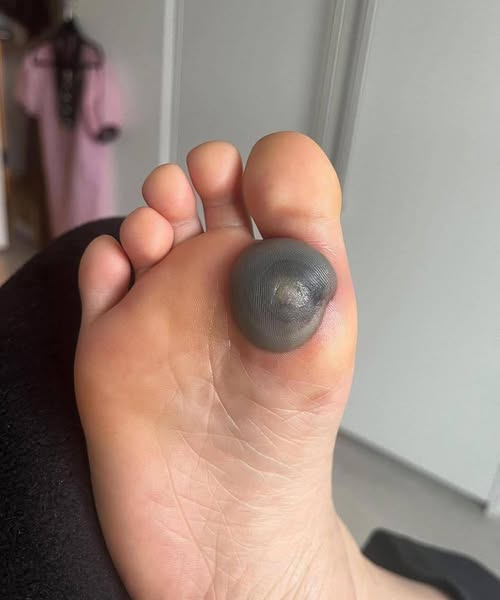
Many blood blisters look more serious than they ultimately prove to be.
When the skin remains unbroken and the area is protected from further irritation, the blister will often gradually flatten and heal as the body reabsorbs the trapped blood. This process may take several days to a couple of weeks, depending on the size and location.
Basic care generally involves keeping the area clean, reducing pressure on the foot, wearing comfortable footwear, and avoiding the temptation to pop or drain the blister. Leaving the skin intact helps protect against infection and supports natural healing.
When Additional Evaluation Is Wise
Not every painful dark spot is a simple blood blister.
If a child is experiencing significant pain, is reluctant to walk, or cannot move the foot normally, it is reasonable to seek medical advice. These symptoms do not necessarily mean something serious is occurring, but they suggest the situation deserves a closer look.
Medical evaluation becomes more important if the area continues to enlarge, becomes increasingly swollen, develops warmth, produces drainage, or is accompanied by spreading redness. Likewise, if similar blisters occur repeatedly or appear without any clear source of pressure or injury, a healthcare professional can help determine whether further investigation is needed.
A Practical Approach
Until the area can be properly assessed, it is best not to squeeze, cut, or puncture it. Protect the foot, limit unnecessary pressure, and monitor for changes.
Many blood blisters heal without complications. At the same time, the body often signals when something deserves more attention. When pain is significant or normal movement becomes difficult, seeking professional medical guidance is a prudent and responsible next step.
Most importantly, there is no need to panic. Careful observation, sensible protection of the area, and timely medical advice when symptoms seem out of the ordinary are usually the best course forward.