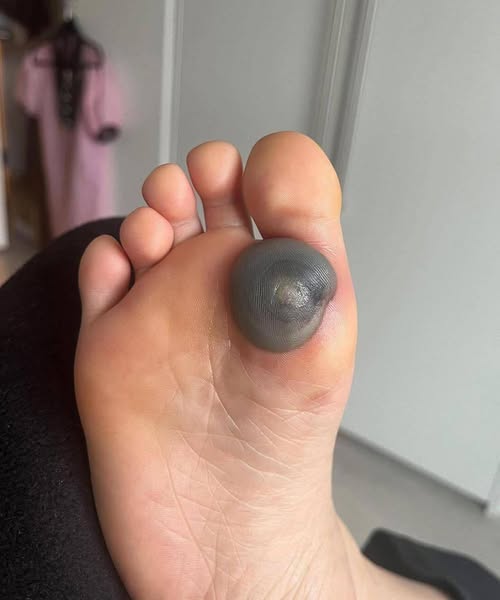
A blood blister forms when small blood vessels, known as capillaries, break beneath the skin’s surface while the outer layer remains intact. The blood becomes trapped underneath, creating a swollen pocket that is usually tender to the touch.
These blisters most commonly develop on areas of the body exposed to pressure or friction, including the fingers, palms, toes, and soles of the feet. They can also appear inside the mouth, affecting the cheeks, gums, or tongue.
In many cases, blood blisters are caused by sudden trauma. Slamming a finger in a door, wearing shoes that fit poorly, or repeatedly using tools and sports equipment can all lead to the condition. Inside the mouth, blood blisters may occur after accidentally biting the cheek or tongue, undergoing dental work, or wearing dental appliances that rub against soft tissue.
Some people may be more prone to developing blood blisters than others. Individuals with fragile skin, circulation problems, diabetes, or certain blood-clotting disorders may notice that these blisters appear more easily or take longer to heal.
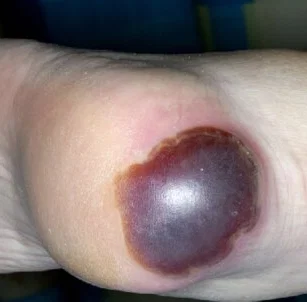
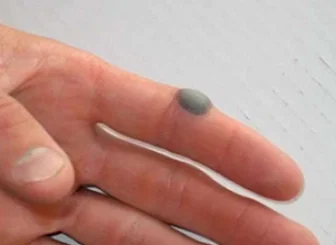
Symptoms are usually easy to recognize. A blood blister often appears as a raised, fluid-filled bump with a dark red, purple, or black coloration. The area may feel tender, sore, or slightly swollen. In most situations, the discomfort is temporary, and the blister resolves within one to two weeks.
Although it may be tempting to pop a blood blister, medical experts generally advise against doing so. The skin covering the blister acts as a natural protective barrier, helping prevent bacteria from entering and causing infection. Opening the blister prematurely can increase the risk of complications and delay healing.
If a blood blister bursts on its own, gently wash the area with soap and water, apply an antiseptic, and cover it with a clean bandage. Keeping the area protected and dry can help reduce the chance of infection.
For simple home treatment, reducing pressure on the affected area is often the most effective step. Applying a cold compress for 10 to 15 minutes can help ease swelling and discomfort. Wearing comfortable footwear, protective gloves, or avoiding activities that irritate the blister may also speed recovery.
Blood blisters that develop inside the mouth can be particularly uncomfortable. Warm saltwater rinses may help soothe irritation and keep the area clean. Avoiding spicy, acidic, or sharp foods until healing occurs can also reduce discomfort.
While most blood blisters are harmless, there are situations where medical attention is recommended. A healthcare professional should evaluate a blister that becomes increasingly painful, grows larger, shows signs of infection, or fails to heal within two weeks. Repeated blood blisters that appear without any obvious injury may also warrant further investigation.
Prevention is often straightforward. Wearing properly fitted shoes, using protective gloves during manual work, cushioning sports equipment, and maintaining healthy skin can all reduce the likelihood of developing blood blisters. Managing underlying medical conditions is equally important for those at increased risk.
Although blood blisters may look concerning, they are usually the result of minor injuries and heal without significant treatment. Paying attention to how they develop, where they appear, and whether they recur can provide valuable clues about your overall health. If something seems unusual or the blister does not heal as expected, seeking medical advice is always the safest approach.