My mother leaned in, her smile fixed for the guests while her voice turned icy. “Go get the gift from your car. Stop acting so neurotic; Natalie will watch her. You’re embarrassing yourself.” I hesitated, but the pressure of their collective judgment was a weight I had carried my entire life. I let go of Rosie’s hand, trusting the lie that I was just being dramatic. Fifteen minutes later, I returned to find the yard full of life, but my daughter was gone.
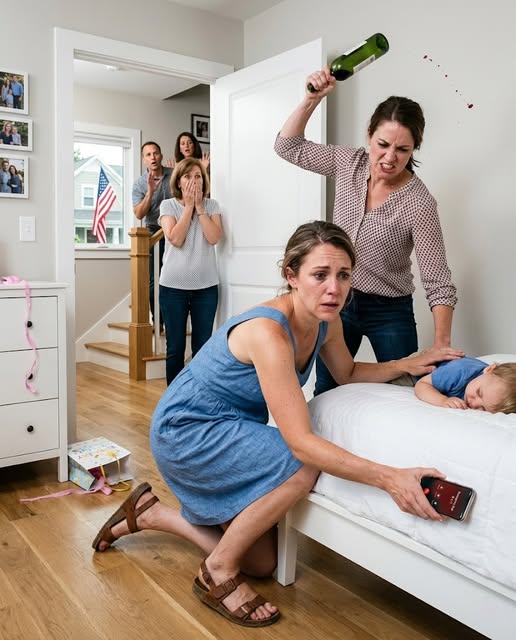
When I demanded to know where she was, Natalie didn’t even stand up. She smirked, swirling her wine. “She was ruining the party. She needed to calm down, so I gave her some Benadryl. She’s upstairs.” Panic, cold and absolute, surged through me. I sprinted inside, my heart hammering against my ribs. In the guest room, I found Rosie on the bed, her head at an unnatural angle, her lips a terrifying, bruised blue. She wouldn’t wake up.
I screamed for 911, my voice cracking with the primal terror of a mother watching her miracle fade. My mother stood in the doorway, paralyzed by her own complicity, but Natalie’s reaction was pure, unadulterated rage—not at the situation, but at me for exposing it. As I reached for my phone, she lunged, smashing a wine bottle against my head. The world fractured into glass and blood, but as I hit the floor, my thumb found the screen. The call went through.
That single, recorded moment of 911 audio became the anchor that held the truth in place. While Natalie tried to dismiss her actions as a minor lapse in judgment, the dispatcher’s voice and the paramedics’ arrival turned the “perfect” party into a crime scene. The toxicology report confirmed the dosage was life-threatening. My family’s culture of silence, built on decades of gaslighting and social posturing, shattered against the hard reality of medical charts and police statements.
Rosie survived, but the life I knew did not. The recovery was not found in grand speeches or dramatic confrontations, but in the quiet, steady work of building a fortress of safety. I secured a protective order, cut the toxic ties that had suffocated me for years, and learned that my daughter’s right to exist—loud, shy, or otherwise—was worth more than any family legacy. Now, when I watch Rosie play in the park, I don’t tell her to be quiet. I watch her laugh, loud and unashamed, and I know that I finally broke the cycle of cruelty that once held us both hostage.